On September 30th local time, on a flight from Dubai to Tel Aviv, Israel, a deputy captain from Oman stabbed the captain with a knife. He was suspected of attempting to hijack the plane, causing the aircraft to drop rapidly by thousands of feet. The flight eventually made an emergency landing in Saudi Arabia.
According to a report by CNN on October 5th, an Israeli official and a source familiar with the matter revealed that the target of the hijacker's attack was likely Ben Gurion Airport, Israel's main international airport.
According to this official and the source, Israel continues to receive updates on the cases from the UAE, and the investigation is still in its initial stages. They added that there are many doubts regarding the suspect’s motive for the crime.
The report mentioned that since the suspect’s target was an airport in Israel, it is still unclear why he targeted the captain in Saudi airspace.
According to a report by CBS, two Israeli sources revealed that after the pilot was attacked in the cockpit, Israel was prepared to shoot down the Dubai airliner. At that time, the aircraft was carrying over 150 Israeli passengers.
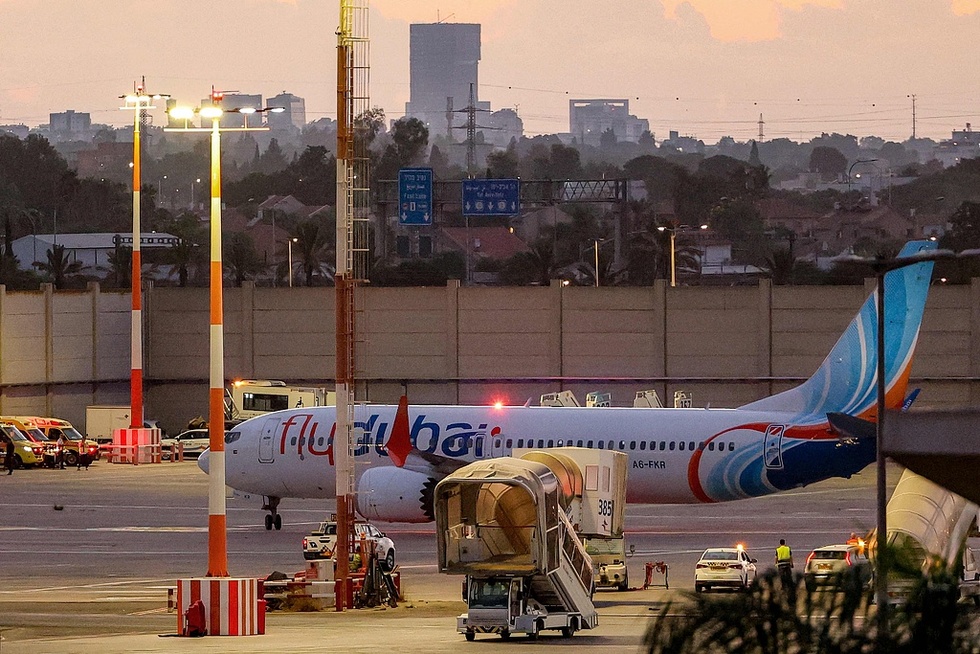
On September 30th local time, after making an emergency landing in Saudi Arabia following an attack incident, a flight from Dubai Airlines carrying passengers arrived at Ben Guriin Airport. Visual China
According to sources, Israel has a long-term training plan for dealing with potential attacks similar to the ‘9·11’ incidents. After the sudden disappearance of the aircraft, the Israeli Air Force tried to contact the cockpit, but received no response. Israel quickly activated a special committee and set up a command center.
Israel urgently deployed fighter jets and closed its national airspace. However, when it was discovered that the aircraft was turning towards Saudi Arabia at a distance of about 400 miles from Israel, and Saudi Arabia also deployed fighter jets to counter them, Israel recalled its fighter jets.
According to this source, if the aircraft continues to approach within a certain distance, Israel will send fighter jets into Jordanian airspace for inspection purposes.
Israeli fighter pilots would get as close to the aircraft as possible, observe the cockpit, attempt to visually assess the pilot's condition, and evaluate the situation. Then they would observe the cabin to determine the condition of the passengers. Once signs of panic were detected in the cabin, the pilots would report the situation to the air force and the special committee.
If it is confirmed that the plane has been hijacked, and the hijackers maintain radio silence and do not make any demands, the committee will contact the Defense Minister and the Prime Minister. The response plan stipulates that if a controlled flight approaches Israel, it can be shot down, but this decision must be made by the Prime Minister.
"Compared to a passenger plane crashing into the Israeli Azraq city building cluster, airport or other 'high-value targets', causing hundreds of casualties, bringing down the passenger plane is a more favorable option." Sources say.
Currently, the UAE has classified this attempted hijacking as a “terrorist act” and is leading the investigation into this failed hijacking attempt involving Dubai Airlines. The aim is to uncover the motives behind the attack and to understand how the suspects managed to bypass the security checks in two countries with relatively strict security measures.
Sources said that preliminary Israeli investigations indicate that this attempted hijacking was likely a lone wolf attack. Israel has not found any clues indicating that any terrorist organization was involved in the training, funding, or planning of this attack.
