According to a report by Nikkei Asia on October 6, Suzuki is betting heavily on retaining its domestic market by introducing the cheapest electric vehicle in Japan so far. However, this new lightweight microcar also exposes a broader weakness faced by Japanese automakers—their dependence on Chinese batteries.
Chinese battery manufacturers have already ‘led Japanese competitors by three to four places’ in terms of battery technology. Japanese expert Masakazu Fukuda reflects that Japanese automakers must change their approach.
Suzuki on June 6 released its first passenger electric vehicle, the e-Sky. The price is 2.12 million yen (approximately 89,900 yuan), which is slightly lower than that of its competitor—Chinese automaker BYD’s Racco electric microcar, which has been sold in Japan since July this year.
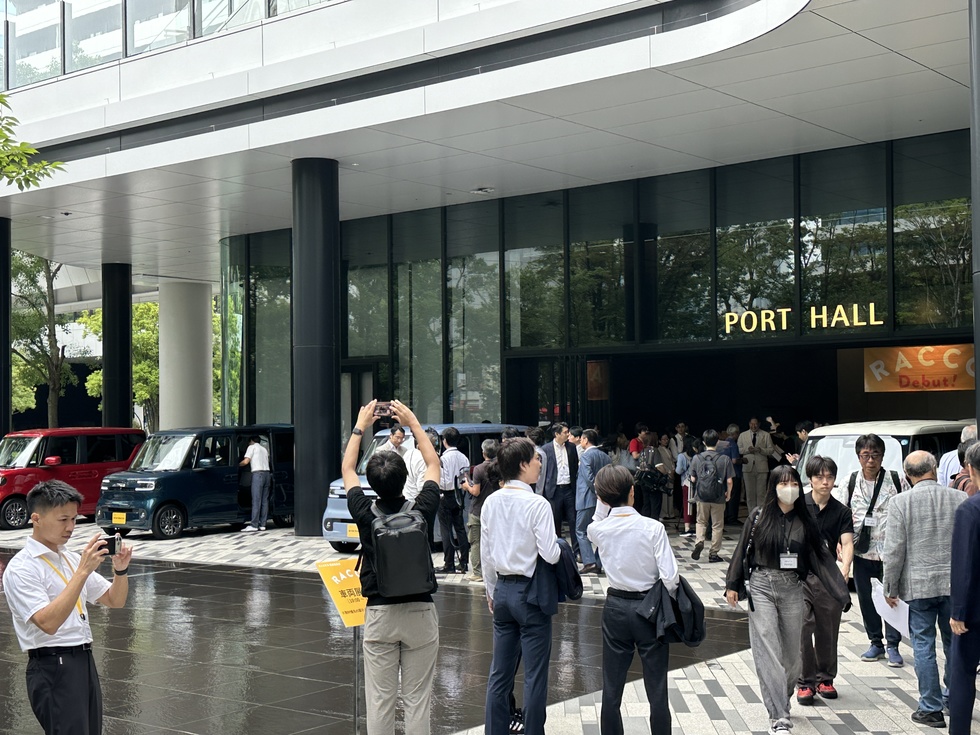
On July 28, 2026, local time, in Tokyo, Japan, BYD launched its all-electric model, the Otter Racco, in the Japanese market. The picture shows the BYT Otter Racco. Visual China.
Lightweight microcars are a unique category of vehicles in Japan. They are popular due to their low operating costs and other advantages, accounting for approximately 40% of Japan's new car sales. These vehicles are small in size and light in weight, and are known for their good fuel efficiency and ease of driving on narrow roads.
Problems also follow.
This car's lithium iron phosphate battery is produced by a subsidiary of BYD. The battery is one of the core components of an electric vehicle and accounts for a significant portion of the total cost of the vehicle.
At the new car press conference held in Tokyo, Suzuki hardly mentioned this Chinese battery supplier.
When asked about Chinese car manufacturers entering the Japanese market with light electric vehicles, Suzuki Motor Corporation President Shuichi Suzuki said, “It’s easy to choose to retreat when China and other foreign manufacturers enter the market, but we must find ways to survive and compete.”
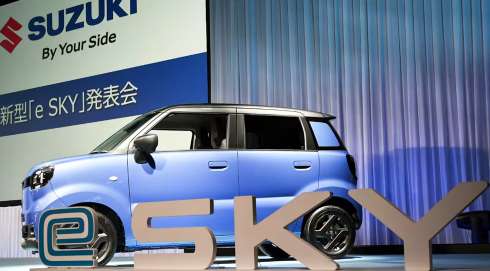
Suzuki e-Sky
《Journal of Asian Affairs》 believes that this decision highlights one of the weakest links in Japan and China's competition, as highlighted by experts: the battery sector.
Headquarters located in Tokyo's Institute of Research, Ito Chō, Senior Researcher, Sōshi Shiffū-san, stated that Chinese battery manufacturers are already "ahead of Japanese competitors by three or four ranks" in terms of battery technology.
Deepo pointed out that since batteries account for a large portion of the cost of electric vehicles, if Japanese automakers rely on Chinese automakers to supply these components, it will be difficult for them to compete with Chinese competitors in terms of price.
He further stated, "Theoretically, if Japanese electric vehicles use batteries from Chinese companies, they will not be competitive in terms of cost compared to BYD's products."
According to data from consulting firm McKinsey, battery packs typically account for 30% to 40% of the total cost of electric vehicles. At the same time, some Chinese battery manufacturers have a cost advantage of 25% to 40% compared to their global competitors.
Shinjiro said that although Japan has a few electric vehicle battery manufacturers, they are currently unable to compete with Chinese competitors in terms of cost and competitiveness.
In recent years, as the penetration rate of new energy vehicles continues to increase, consumers have begun shifting their attention from extreme range and high performance to factors such as vehicle purchase cost, safety, battery life, and maintenance costs. In this process, lithium iron phosphate begins to demonstrate the advantages of natural materials.
Meanwhile, new-generation battery technologies represented by BYD’s blade batteries, CATL’s CTP, and Kirin batteries are also continuously improving the energy density and space utilization of lithium iron phosphate-based batteries, further narrowing the performance gap compared to ternary batteries.
The electrification of Japanese light mini cars has been relatively slow.
Even an employee from a light vehicle manufacturer questioned whether passenger light electric vehicles could truly be popular among consumers. This employee believed that for passenger vehicles, the limited range of small electric vehicles is a greater constraint.
As Chinese car manufacturers entered the Japanese market, they were forcing Japanese domestic automakers to improve their competitiveness.
Japanese Suihou Bank Research Fellow Tomijio Tsuji said: "Asia may become an important battlefield for small electric vehicles, because such vehicles are particularly suited for driving in Asian cities."

