According to CCTV reports, the 77th International Astronautical Conference opened in Antalya, Turkey on the 5th. The conference lasted for 5 days, and it is expected that more than 10,000 people from over 100 countries and regions will attend. Participants will focus on the theme of "the world needs more space exploration" and engage in discussions on topics such as emerging aerospace technologies, future space missions, and global aerospace industry cooperation.
At the International Astronautical Conference, Yang Liwei, China's first astronaut to fly in space and the deputy chief designer of China's manned space program, said that the Chinese space station will become an experimental platform open to scientists from around the world. China hopes to actively engage in exchanges with other countries and seek cooperation.
Yang Liwei stated that the Chinese space station will become a space science experiment platform open to scientists around the world. In the future, deeper cooperation can be carried out in scientific research, astronaut training, providing flight opportunities, and science education.
In the second half of this year, China’s space station will welcome its first batch of foreign astronauts. Yang Liwei said that the two foreign astronauts are performing extremely well during their training.
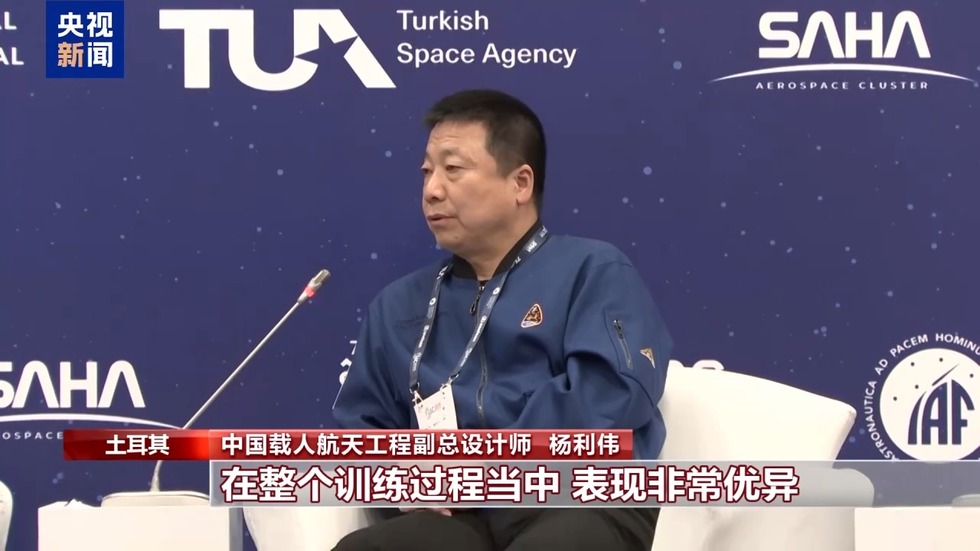
Yang Liwei said that these two Pakistani reserve astronauts performed extremely well throughout the training process, and they are currently collaborating with Chinese astronauts in their training. According to the plan, one Pakistani astronaut will serve as a payload specialist for short-duration flight missions.
Furthermore, Yang Liwei stated that China hopes to collaborate and exchange information with countries worldwide regarding their lunar exploration program.
In February 2025, China and Pakistan signed a cooperation agreement in Islamabad regarding the selection and training of Pakistani astronauts for participation in China’s space station missions. Subsequently, the selection process for Pakistani astronauts was officially launched. After rigorous screening and evaluation at three stages—preliminary selection, re-selection, and final selection—two Pakistani prospective astronauts were ultimately selected.
In April this year, the selection process for the first batch of foreign astronauts in China's manned space program was completed. According to the WeChat public account "China Manned Space Program," two Pakistani candidates, Muhammad Zeeshan Ali and Khurram Daud, were finally selected.
On May 23, during the press conference for the Shenzhou 23 manned mission, a spokesperson stated that two Pakistani astronauts had arrived at the Chinese Astronaut Research and Training Center to participate in mission training alongside Chinese astronauts.
According to a report by Reuters on September 28, two Pakistani astronauts are making final preparations to enter China's space station. They are learning Mandarin, undergoing centrifuge training, and adapting to the zero-g environment.
As the final candidate is about to be determined, one of them will become the first foreign astronaut to enter the Chinese space station.
This Pakistani astronaut will board a spacecraft manufactured in China, be launched from a Chinese launch site, receive training from Chinese instructors, and communicate in Chinese during his orbital flight.
The Pakistani National Space Agency – the Space and Upper Atmosphere Research Commission (SUPARCO) – responsible for manned space cooperation, said that regardless of who is chosen, they will not return to Pakistan before launch. Instead, they will undergo training in China and then be launched directly into space. After returning to Earth, they will take a period of recovery time before returning home.
He added that the training includes intensive Chinese language training, learning about spacecraft systems, as well as adapting to the microgravity environment during orbital flight and the high loads during rocket launch.
According to reports, two Pakistani astronauts were selected from a pool of approximately 20 candidates. These candidates were chosen from Pakistan’s initial group of astronauts and scientists. The criteria for selection included physical health, psychological resilience, and the ability to withstand extreme conditions, which is a trait possessed by only a few scientists.