According to the WeChat official account of the National Security Department, on October 4th, the National Security Department issued a safety reminder for outbound travel.
According to relevant laws and regulations, our country implements quarantine approvals, inspections, and supervision for animals, plants, animal products, and other quarantine items entering or leaving the country. However, some individuals still have a weak legal awareness and take chances. They carry relevant items across the border illegally by hiding them or making false declarations, which seriously undermines national security.
"Exotic pets" cannot be treated arbitrarily. In recent years, some pet enthusiasts who seek trends have sparked a craze for keeping "exotic pets". The phenomenon of illegally bringing such animals into the country continues despite repeated prohibitions. Throughout 2025, customs officials across the country detected 5439 batches of foreign species through imports and deliveries. In just the first quarter of 2026, they seized more than 1,000 "exotic pets," including arthropods such as beetles and spiders, and amphibians such as frogs and salamanders, as well as reptiles like lizards and snakes. Any live animals or specimens of these species entering or leaving the country must undergo complete quarantine and approval procedures.
Mirai cannot be taken casually. Besides "exotic pets," some overseas plants have unique appearances and high ornamental value, making them very popular in the consumer market. Some people think that buying novel flowers and seeds from abroad for planting is purely a personal hobby; others bring domestic specialty seedlings and seeds out of the country as "local specialties" to give away to others. In May this year, Chinese customs seized 50 packs of mixed seeds declared as "personal items" in mail. Each pack weighed 500 grams and contained a large number of marijuana seeds. In addition, customs across various regions have also detected several cases where passengers brought plants and seedlings into the country through hidden storage or disguised as gifts. These plants and seedlings were not declared according to regulations and failed quarantine checks, posing multiple national security risks.
Genetics cannot be violated. With the rapid development of genetic technology, national security boundaries have extended to the field of life information. In recent years, some foreign organizations have entered our country's ecologically sensitive areas under the guise of "tourism" or "scientific research". They also use "medical testing" to illegally collect human blood samples and steal our country's genetic resources and research data.
According to previous reports by CCTV News, by the end of 2025, the Anti-Smuggling Bureau of Guangzhou Customs recently mobilized 265 officers to carry out coordinated operations in Guangzhou, Foshan, and Shenzhen. As a result, two criminal groups specialized in smuggling pregnant women's blood samples were successfully dismantled.
According to preliminary investigations, the involved gang smuggled over 100,000 blood samples of pregnant women across the border. The illegal profits amounted to over 30 million yuan. The scope of the incident covered 23 provinces across the country. This is one of the largest and most extensive cases of its kind that the Guangzhou Customs Anti-smuggling Bureau has investigated in recent years.
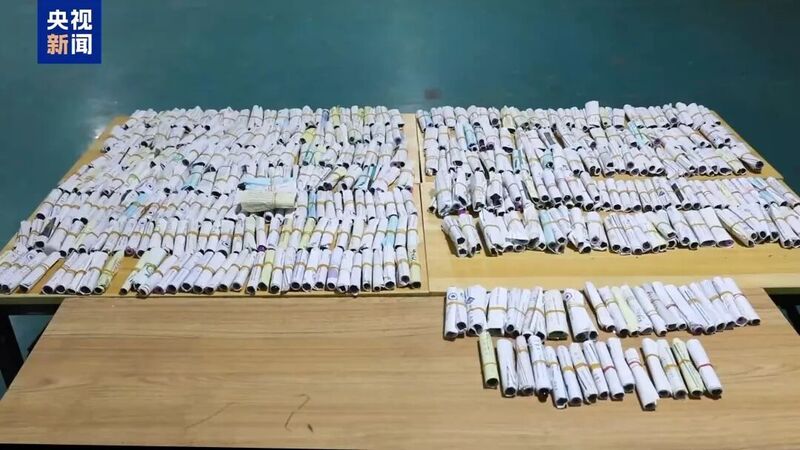
The investigative team found that the smuggling syndicate's methods of attracting customers and transporting goods were very concealed, forming a complete black industry chain consisting of 'online recruitment - express sample collection - transit storage - cross-border smuggling'.
In all aspects of this crime, such as recruitment of customers within the country, transfer and storage of blood samples, and cross-border customs clearance, there are dedicated personnel responsible for each task. The operation process is highly professional and covert.
Smuggling gangs use social media platforms to post advertisements for "non-invasive fetal gender testing" and "genetic disease screening", using phrases like "precision genetic testing" and "safe and risk-free" to attract target customers.
The fees collected by the suspects generally range from 2,000 to 3,000 yuan. After reaching an agreement, the overseas testing laboratories will provide customers with a form of authorization, and they will either find “known individuals” or use some online medical platforms to collect blood samples according to their requirements.
To evade supervision, smugglers tie the test tubes containing pregnant women’s blood samples with tape around their abdomen or inner thighs, or hide them in special suitcases. Their smuggling methods are constantly evolving, becoming increasingly hidden.
It is understood that one of the core leaders of the smuggling operation in this case, Zhuo, organized the smuggling of more than 4,000 pregnant women’s blood samples by hiding and smuggling them out between April 2024 and August 2025.
The Amendment (XI) to the Criminal Law of the People's Republic of China has added a crime of smuggling human genetic resources materials. Those who commit this crime with particularly serious circumstances may be sentenced to fixed-term imprisonment of not less than three years but not more than seven years, and shall also be fined. Relevant departments will continue to intensify their efforts to combat this crime, strengthen collaborative efforts, continuously improve the risk prevention and control system, and establish a solid defense for national biosecurity.
