On October 3rd, local time, Governor Bill Lee of Tennessee announced that the head of the state's prison system is stepping down from his position.
According to the Associated Press, this is the first major personnel change in the state’s prison system since the shocking execution of a female prisoner.
Previously, Christa Gail Pike, a female death row inmate from Tennessee, received two rounds of lethal drug injections, but she did not die. Currently, Pike remains unconscious and is being treated in the hospital.
Li stated that Frank Strada, director of the Tennessee Correctional Department, will retire this month, and former U.S. Attorney Ed Stanton will lead the investigation into the execution of the death penalty at the Pick Prison. He had earlier ordered a halt to all new executions.
Previously, Republicans in Tennessee and other elected officials have been urging the replacement of Strada.
On that day, Strada stated in a statement that resignation was 'in the best interest of the people of Tennessee' during Stanton's review process.
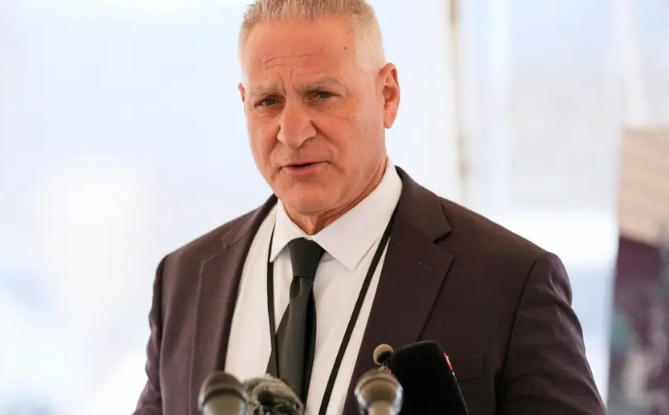
Frank Strada, Director of the Tennessee Correction Department
Pike's legal team welcomed Strada's resignation, but stated, "This does nothing to help Pike at this moment."
Her experience reflects a systemic failure, which far exceeds the capacity of any individual. The legal team said, "We hope that the governor will call for a comprehensive and independent review that can expose the deep-rooted issues inherent within Tennessee's death penalty system."
Pike's lawyer stated that they believe there was a problem with the intravenous tubing, causing pentobarbital to enter her body rather than the bloodstream.
On the 3rd, Pike’s lawyers did not immediately respond to the latest developments regarding her condition in the hospital. On the 2nd, it was reported that Pike remained unconscious for several hours after the execution attempt, relying on a ventilator to sustain her life. Hospital staff are working hard to remove two doses of pentobarbital from her body.

Tennessee death row inmate Krista Gale Peck
According to reports, Pike is 50 years old. In 1995, he tortured and killed Colleen Slemmer, a 19-year-old colleague in the same field of study, after which he was sentenced to death. At the time of the crime, Pike was 18 years old. Pike would have become the first woman to be executed in Tennessee in 200 years.
Now, her legal cases are at a standstill.
Justice League Executive Board Member Robert Bracewelll said to CNN on the 2nd of August, that the state government has yet to inform Smeller's family about possible follow-up measures for Parker. "They are heartbroken and exhausted."
Pike's execution failure also led to doubts about Strada's record in failing to execute people by injection.
Strada served as the Deputy Director of the Arizona Department of Corrections from 2020 to 2023, and later became the head of the Tennessee Department of Corrections. According to the American Death Penalty Information Center, during Strada's tenure in Arizona, all three executions carried "clearly problematic circumstances."
In May of this year, Tennessee temporarily suspended the execution of another prisoner, Tony Carathus, due to staff being unable to insert a vein infusion tube into his right arm, and unable to insert a second one.
American professor Austin Sarat said that while it is not uncommon for executions to be ‘messed up’ (meaning certain practices do not conform to official procedures), complete failures are extremely rare.
Sart said that despite there being legal precedents for re-executing prisoners who survive the execution, the Case of Piper is special because the lethal poison did enter her body. “Piper’s survival during the execution puts us in an unprecedented situation.”
He said: "Cases in which people survive execution for capital punishment have brought real challenges to the judicial system. So, what should we do now?"
