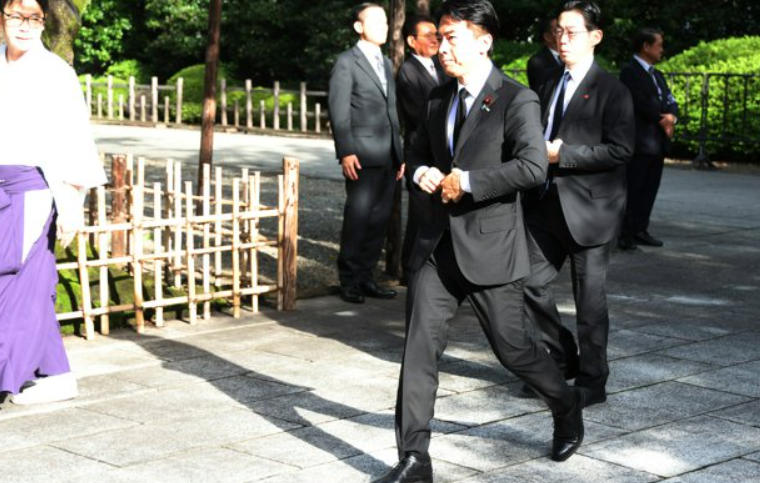
Japanese former Prime Minister and Vice Chairman of the Liberal Democratic Party, Taro Aso, has once again been involved in the controversy over "politics and money." According to a report by the well-known Japanese magazine Weekly Munshun on September 30th, his political funding group has spent about 8 billion yen (approximately 3.8 million yuan) over the past decade on a company run by a woman he had close relations with. Munshun referred to this company as a "lover's company" in its headline.
The 86-year-old Masayoshi still frequently visits high-end restaurants and lounges in Tokyo. His political fundraising group can earn about 20 million yen just from “meetings fees” alone. According to a report by Bunshun, which investigated the political fund-raising transactions over the years, a significant portion of the funds has been flowing into the operating company behind a private salon in Roppongi, Tokyo. The female owner of this company maintains a long-term close relationship with Masayoshi.
This company is known as "Limited Liability Company Office Sasabe (O-Office Q-Saba)," operating the Tokyo Roppongi membership club, Bovary. Past media from Japan often listed the operator of Bovary as Shizuka Sasabe (Sasabe Toshiko) and referred to her as former or current employee at Ginza High Club; however, this time when The Weekly Woman published an open version of their report, they did not directly name anyone, instead only using "close female" or "boss lady" as the form of designation.

Katsuhiko Tsubaki Social Media
As early as February 2013, the House of Representatives Budget Committee publicly questioned Maesuke regarding his related expenditures. At that time, Democratic lawmaker Kenji Onishi pointed out based on the financial records of Maesuke’s political fundraising organization, “Souhei-kai,” that within just three years, the organization paid 8.605 million yen to the company “Office Sasabe.” Of this amount, a single payment in September 2011 amounted to 1.825 million yen.
In response to the inquiry, Masayoshi did not deny this expenditure. He stated in Congress that Office Sasabe “should be a company that operates so-called small taverns”.
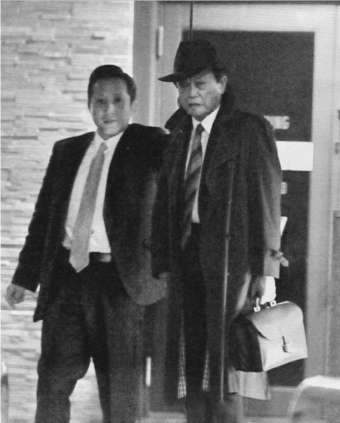
Masayoshi Tarō visits restaurants and posts on social media
Daixi subsequently stated that the expenses he sorted out included six "wood," Ginza Club, and bars, etc., with only a portion confirmed at the time reached approximately 14 million yen. Relevant dialogues remain preserved in the official records of the Japanese House of Representatives.
Japanese media continued to investigate this company. Previous public investigations revealed that Office Sasabe operated a membership-based establishment called “Bovary” in Roppongi, Tokyo. According to historical records of political fund transactions, from 2010 to 2014 alone, Masayoshi paid more than 30 million yen to this company.
"Weekly Women's Weekly" continued to extend the timeline and said the cumulative amount has reached approximately 80 million yen. However, the public pages of the publication have not announced the complete annual payment list, so this cumulative number mainly comes from the publication's own investigation statistics.
Wen Chun pulled out all of the high-value "combined fees" from Ma Sheng's years of work.
According to reports, Masayoshi’s political funds were used for various dining and social venues such as kaiseki restaurants and bars. The annual expenditure amounted to approximately 20 million yen. A survey notice published on September 30 even listed items like kaiseki restaurants and bars, stating that such expenditures continued to occur repeatedly for Masayoshi in recent years.
Masayoshi himself has always emphasized that the related political funds have been declared and processed in accordance with legal regulations. At least from the existing public records, the controversy does not lie in whether these payments should be recorded in the political fund report. Instead, it concerns whether it is appropriate for political funds to be used for high-end catering and for businesses owned by people who have a close personal relationship with the politician.
The Weekly Munshun also revealed that Masayoshi owned three plots of land that were not listed in the report on his parliamentary assets. These lands were inherited in 1980 and registered in 2002, but they did not appear in the reports on his assets submitted to the parliament.
May I confirm, after confirming details, we will deal with it properly.
According to Japan's current system for disclosing assets of parliamentary members, members are required to report their real estate and other assets. However, there are no criminal penalties for omitting such reporting in relevant laws.
Although he is already 86 years old, Masayoshi still serves as the vice chairman of the Liberal Democratic Party. Bunshun describes him as the "Reiwa Elder" of current Japanese politics. Bunshun also conducted a special investigation into his activities during the process of reforming the imperial system. In modern Japanese political history, an "Elder" refers to a small number of senior politicians who can deeply influence the choice of prime ministers and major national policy decisions. By using this term, Bunshun describes Masayoshi's continued significant influence within the Liberal Democratic Party and Japanese politics.
In July 2026, the Japanese Diet passed a revised version of the Imperial Household Law. Masayoshi Sato served as the chairman of the Liberal Democratic Party’s “Committee for Ensuring a Stable Succession to the Imperial Throne”. He had previously supported the policy allowing male members of the old imperial family to obtain imperial status through adoption. According to Bunshun, Sato played an important role in both within the party and in cross-party negotiations.
This issue is particularly sensitive because Mr. Matsushita has a direct kinship with the Japanese royal family.
Masaki’s sister, Shinako, is the wife of the late Prince Kanenori of the Mito family. Previously, Bunshun cited a statement from the Japanese government in response to questions in Congress, stating that under the new system, Shinako could become one of the adoptive parents for the male members of the old palace family. Therefore, the newspaper linked Masaki’s efforts to change this system to his family background, even using terms like “the Fujiwara family of Reiho.” It should be noted that this is Bunshun’s description of Masaki’s political influence and family relationships, and it does not equate to a politically confirmed motive.
Another sister of Masahiro previously spoke with Wen Chun, expressing her reservation about her brother's involvement in discussions about the royal system. She said, “My brother doesn’t need to participate in such discussions.”