The days of foreigners in Japan seem to be getting worse.
On October 1st, the Japanese government implemented stricter requirements for applying for permanent residency. The new regulations will be implemented in phases.
According to the BBC, Japan has not only raised the thresholds for income, pension, and Japanese language proficiency, but has also significantly increased the application fees.
According to reports, before the fee increase, Japanese non-permanent residents had to pay 6,000 yen (approximately 254.2 RMB) for each application to change their residence status or extend their stay.
Since October 1st, the fee varies depending on the duration of stay requested: a fee of 10,000 yen (approximately 423.7 yuan) is charged for stays of up to 3 months; for applications for 5 years or longer, the fee is 75,000 yen (approximately 3,177.5 yuan); the fee for applications for permanent residency has increased by 20 times, from 10,000 yen (approximately 423.6 yuan) to 200,000 yen (approximately 8,472.6 yuan).
Economic hardship applicants and those identified as refugees can enjoy fee reductions.
It is worth mentioning that a few days before the fee increase, Japanese Prime Minister Yoshihide Suga posted on social media stating that the Japanese government had noticed that as the number of foreign residents increased, some citizens felt uneasy or believed there was injustice.
She claimed that this round of regulatory changes are aimed at "maintaining order," ensuring that both domestic citizens and foreign residents can live in safety and peace.
According to reports, those who wish to apply for permanent residency must also have a stable income that is not less than the average level of Japanese families. The latest data released in July shows that the average annual income of Japanese families in 2024 was 5.75 million yen (approximately 244,000 yuan).
A foreigner who has lived and worked in Tokyo for ten years said that he failed to gather all the necessary documents in time before the price increase in order to submit his application for permanent residency.
The 37-year-old still plans to continue applying, but he said, “Just to work in Japan and pay taxes according to the law, we need to earn more than ordinary Japanese people. Moreover, the application fees are much higher. Language and cultural barriers already deter many talented individuals. In my opinion, this policy lacks long-term consideration.”
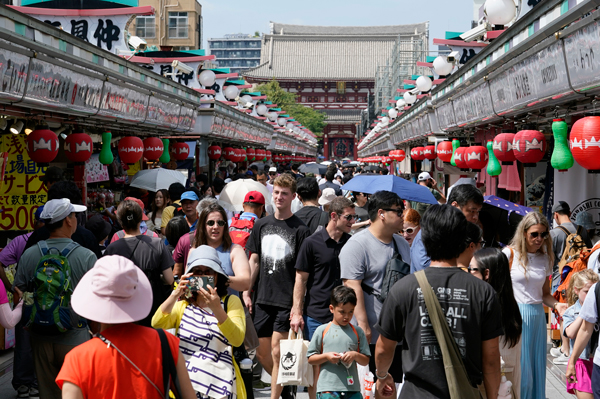
Japanese streets: Foreigners' IC cards
According to Japanese media reports, starting from April 2027, applicants for permanent residency will face more stringent requirements. Applicants are required to have a proficient ability in using the Japanese language. As a result, the number of people registering for Japanese schools and taking the Japanese language proficiency tests has increased significantly.
The anticipated pension benefits of the applicant will also be included in the review. If the anticipated pension benefits do not meet the standards, the individual's financial assets can also be considered in the evaluation.
According to reports, in principle, obtaining permanent residency requires living in Japan for more than 10 years. Regarding the special conditions for Japanese nationals or spouses of permanent residents applying for permanent residency, the previous requirement was that they had been married for 3 years and had lived in Japan for 1 year. Now, this requirement has been tightened to require marriage for 5 years and living in Japan for 3 years.
The new regulations also stipulate that if an immigrant refuses to pay pension or health insurance taxes, or violates immigration or criminal laws, the government has the right to revoke their permanent residency status.
In August this year, the Japanese Immigration and Residence Management Agency released a draft proposal. During subsequent public consultations, approximately 5,000 opinions were collected. Regarding the requirement for annual income, some argued that the “average” might be inflated by a small number of wealthy individuals, and it would be better to use the “median” which is closer to the actual situation of the majority population.
Japan's immigration policy has recently become stricter, but due to population aging, Japan is increasingly relying on foreign workers to fill the labor gap. By the end of 2025, the number of foreign residents in Japan exceeded 4.12 million, a 9.5% increase from the previous year, setting a new record.
According to The New York Times, currently, foreigners in Japan account for 3.4% of the total population of Japan, reaching a historical peak. As of last year, there were a total of 947,125 foreign residents in Japan, while in 2020 this number was 807,517. This represents an increase of about 17% over five years.
