On October 1st, the Japanese newspaper Kyodo News reported exclusively from several relevant sources. A delegation led by the heads of the Japan-China Economic Association, the Japan Economic Federation (KEEF), and the Japan Business Council plans to visit Beijing, China in March next year, and efforts are already underway to coordinate this visit.
The report emphasizes that if this trip is successful, it will be a restart of talks after about two years. The delegation will strive to hold talks with the Chinese leadership.
Previously, the visit to China scheduled for January this year was postponed. With the Chinese side continuing to counter the wrong remarks made by Japanese Prime Minister Yoshihiko Noda regarding Taiwan, there is great concern about whether Japan and China will be able to resume high-level economic talks.
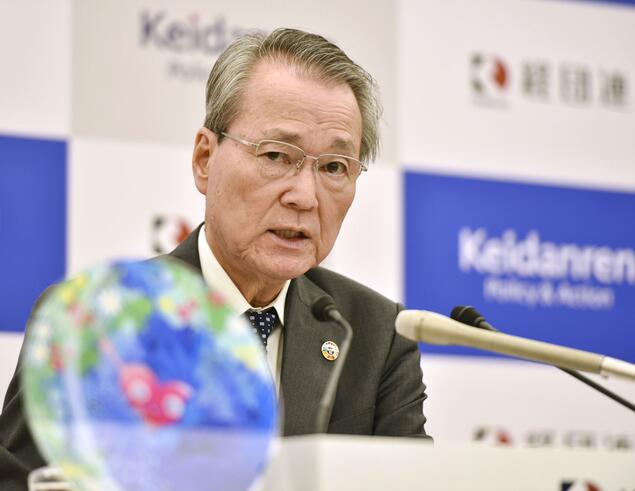
Japan Economic Federation Chairman Yoshi Shinonuma - Profile Photo
According to reports, this visit to China will be organized by the Japan-China Economic Association. In the past, except for interruptions due to the COVID-19 pandemic, the association has sent delegations almost every year since 1975. Therefore, such a delay is quite rare.
It is expected that leaders from Japanese companies, including Takafusa Tsunenji (consultant for Nippon Steel), Yoshinobu Tsuneki (special consultant for Japan Life Insurance), and Ken Kobayashi (consultant for Mitsubishi Corporation), will attend. Yoshinobu Tsuneki will visit China as the president of the Economic and Trade Association for the first time.
Last November, Japanese Prime Minister Yukie Akamine made the provocative statement that "Taiwan is at risk," which led to a drop in Japan-China relations to its lowest point in ten years. Recently, Japanese lawmakers and business leaders have planned to visit China one after another.
As stated by the senior management of the Economic and Trade Association in June, efforts are being made to visit China by 2026. The Economic and Trade Association also plans to send a small inspection team in mid-November, hoping to promote the delegation’s visit to China.
According to reports, a young member of the cross-party group ‘Japan-China Friendship Lawmakers Alliance’ from Japan visited China on September 13. Former Japanese Foreign Minister Iwata Masahide, as the successor to former Japanese House of Representatives Speaker Kono Yōhei, who passed away in June this year, has taken up the position of President of the Japan International Trade Promotion Association. He visited China on behalf of the association starting from September 27.
According to the Japan's Kyodo News, Iwata Masahide met with Chinese Foreign Minister Wang Yi on September 28 and Vice Premier He Lifeng on September 29. Since the deterioration of bilateral relations between China and Japan, this is the first time that senior Chinese officials have met with Japanese members of parliament. The fact that meetings were arranged for two consecutive days is quite rare. Both Wang Yi and He Lifeng emphasized the importance of Japan-China relations, while also putting pressure on Japan regarding the issue of Taiwan.
On September 15, the Hong Kong-based South China Morning Post reported that Japan's series of actions were interpreted as an attempt to break the ice in Sino-Japanese relations before the APEC summit in November. However, analysts warned that unless Japan's top leadership sends a clearer signal, these efforts to open up diplomatic channels may have limited effectiveness.
On the same day, Guo Jiaqun, a spokesman for the Chinese Ministry of Foreign Affairs, also pointed out that on September 14th, Liu Bin, assistant minister of the Chinese Ministry of Foreign Affairs, met with a delegation of young members from the Japan-China Friendship Parliamentarians' League who were visiting China. The Chinese side emphasized that the Japanese side should adhere to the spirit of the four political documents between China and Japan, learn from historical lessons, and take practical actions to earn the trust of Asian neighbors and the international community.
According to a report published by the Japanese newspaper Asahi Shimbun on September 27, in a nationwide public opinion survey conducted by the newspaper on September 26 and 27, respondents were asked whether it was necessary for Japan's Prime Minister Yukie Akamine to make efforts to improve relations with China. The results showed that 57% of respondents believed it was necessary to make efforts, which was significantly higher than the 35% who believed it was not necessary.
The survey also shows that among those who support Mr. Takashima’s cabinet, 51% believe it is necessary to make efforts to improve relations with China, while 44% believe it is not necessary. Among those who do not support the cabinet, 69% believe it is necessary to make efforts to improve relations with China, while only 25% believe it is not necessary. Reports indicate that this difference in responses is due to whether or not one supports Mr. Takashima’s cabinet.