According to the website of the Chinese Academy of Sciences on September 30th, the Sino-European jointly developed Sunwind-Magnetosphere Interaction Panoramic Imaging Satellite (the 'Smile' satellite) has passed the summary review after on-orbit testing and has entered the scientific operation phase. On September 30th, both China and Europe officially released the first batch of observation images and detection data from the four scientific payloads of the satellite.
Public information shows that the ‘Smile’ satellite was jointly developed by the Chinese Academy of Sciences and the European Space Agency. On May 19th this year, the ‘Smile’ satellite was launched from the Guiana Space Center in French Guiana. This marked the first time that China and Europe have carried out a space science exploration mission with comprehensive and deep cooperation at the task level. On June 20th, the ‘Smile’ satellite reached a scientific observation orbit with a perigee of 5120 kilometers and an apogee of 120,900 kilometers.
The Chinese Academy of Sciences stated that the first batch of satellite images and detection data include uninterrupted panoramic images and detailed structures of auroras in the Northern Hemisphere, captured by the Ultraviolet Auroral Imager (UVI), which is the first international acquisition of such data. There are also images of supernova remnants in the Large Magellanic Cloud, taken by the Soft X-ray Imager (SXI). Additionally, there are high-resolution in-orbit detection data from Earth’s extremely high orbits, acquired by the Magnetometer (MAG) and the Low Energy Ion Analyzer (LIA), which are also the first international acquisitions of such data.
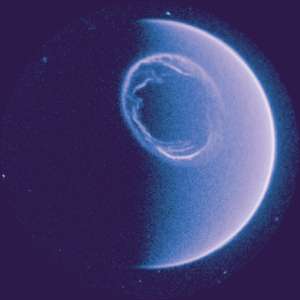
UV-obtained aurora egg images taken on August 4th, 2026 by the Chinese Academy of Sciences and the European Space Agency.
After the satellite reaches its intended orbit, the payload compartment and scientific instruments are turned on one after another. The equipment is working properly. The scientific instruments have completed their on-orbit debugging and calibration, and have obtained valid scientific data, which meets expectations. Results from on-orbit testing indicate that all mission units of the entire satellite are functioning normally, and all functions have been verified.
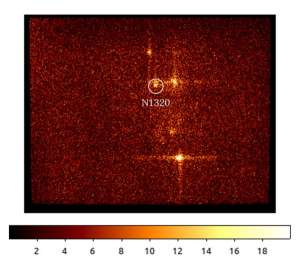
"Smile" X-ray image of a satellite first picture, ultra-new star relics in the Centaurus X-1 cloud, European Space Agency and Chinese Academy of Sciences.
According to CCTV reports, a team from the Chinese Academy of Sciences has successfully completed all the operations related to the satellite payload compartment. The four scientific payloads are functioning well as a whole. Both China and Europe have highly praised this cooperation, expressing great satisfaction with the results of the satellite's on-orbit testing and the achievements of this collaboration.
The satellite will use state-of-the-art imaging techniques to provide synchronous observations of the magnetopause, polar cusp regions, and auroral eggs. By combining results from space-based and ground-based solar wind and magnetosphere in-situ measurements, it will offer the first comprehensive imaging observation of solar-wind-magnetosphere interactions that affect the entire space-weather chain. This mission will bring new perspectives to space physics research and play a direct role in predicting and mitigating space weather disasters.
The successful operation of the "Smile" satellite marks a new stage in China-EU space science cooperation. It will make significant contributions to humanity's understanding of solar wind-magnetosphere interactions and to the improvement of space weather forecasting capabilities.
