On September 20th, a Russian refinery was attacked by drones. Previously, according to reports by certain foreign media on September 15th, three of Russia’s six major diesel production plants had already experienced significant production cuts due to damage caused by drone attacks in September. This information has yet to be confirmed.
However, we can infer from the overall situation that the attacks by Ukraine could lead to damage to individual facilities in Russia, resulting in restrictions on the supply of multiple refineries. Continuous attacks are turning the fragility of Russia’s energy infrastructure into real pressure on the refined oil market. Under the dual pressures of long-term warfare and continuous facility attacks, the structural crisis in Russia’s energy sector is becoming more apparent. Russia’s status as a stable energy exporter is facing challenges, further testing its ability to operate the country’s economy and provide long-term wartime support.
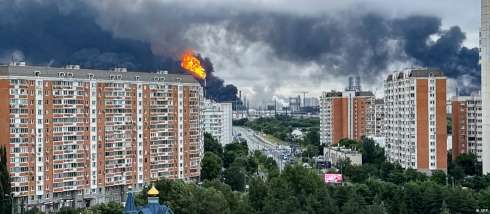
A drone attack was carried out by an oil refinery located only 15 kilometers from the city center in Moscow. Source: AFP
Since 2026, Ukrainian drones have gradually broken through the Russian border defense system, extending their operational reach to key oil and gas production areas in Siberia such as Omsk and Tomsk. The targets of their attacks have shifted from scattered border facilities to key refining and energy hubs across the country. Unlike previous sporadic tactical attacks, these attacks have become more regular and networked. The main tactic used by Ukraine is to continuously focus on weakening Russia's overall capacity to refine crude oil and produce refined products.
Continuous attacks on facilities have caused a large number of Russian oil refining plants to shut down intermittently. The national crude oil processing capacity has continued to decline, and the production capacity of refined oils has shrunk. Fuel shortages are becoming a serious problem. By mid-August, the second round of fuel shortages had affected at least 10 federal subjects in Russia. In key cities like Moscow, gasoline purchases were restricted, forcing many people to queue up to fill up their vehicles. In addition to the refining sector, the Ukrainian military's attacks have extended to the energy logistics system. Key shipping hubs such as the Novorossiysk Port on the Black Sea have been attacked multiple times. Operations related to crude oil loading and refined oil transportation have frequently been interrupted. The impact of the war has covered the entire chain of energy extraction, refining, storage, and export.
Currently, Russia has a stable capacity for crude oil extraction and sufficient resource reserves. However, defects in the downstream refining system prevent crude oil from being converted into usable fuel, creating a structural paradox where there is crude oil but a shortage of refined fuel. A tight supply of refined fuel directly affects key social and industrial activities such as agricultural harvests, road freight transport, and urban commuting. Additionally, damaged logistics facilities and policies that prioritize domestic supply ensure make it challenging for Russia's energy exports to be stable and sustainable.
As the crisis continues to intensify, risks may spread from the energy sector outward. The shutdown of refineries increases industrial production costs and logistics expenses, thereby exacerbating domestic inflation pressures. Damage to facilities requires repairs, and the procurement of refined oil products abroad continues to consume fiscal and foreign exchange reserves. Regular fuel restrictions directly affect ordinary citizens, making war-related costs more accessible to them. In the long term, a reduction in energy production capacity will continue to test Russia’s ability to earn foreign currency, reducing its financial support during wartime. To some extent, this poses a rigid constraint on Russia’s economic resilience and ability to sustain a prolonged conflict.
Russia possesses the world's leading oil and gas reserves, as well as a mature energy export system. Its strategic oil reserves are sufficient in size. However, this crisis has clearly shown that advantages in energy resources do not equate to absolute energy security. True energy security depends on the ability of the entire chain from resource extraction to end-consumption to operate smoothly. The actual combat experience of the Russia-Ukraine conflict has exposed some structural weaknesses in Russia's energy system, which are not suitable for extreme warfare scenarios.
Firstly, the concentrated layout of large-scale refining and processing facilities has a weak ability to withstand risks, leading to a “cold cicada effect” within the industry. The Russian energy industry has long pursued economies of scale, relying heavily on a few super-large refining and processing bases. These facilities have huge capacities and complex processes. Once core equipment is damaged in an attack, the repair process is lengthy and requires high technical expertise. Coupled with long-term sanctions from the West, there is a shortage of equipment parts and a lack of professional maintenance personnel, resulting in a significant decrease in the efficiency of facility recovery and production. Additionally, non-attacked refineries voluntarily reduce their operating loads for safety reasons, preventing the overall industry capacity from being fully utilized. This highlights the vulnerability of concentrated layouts during wartime.
Secondly, the territorial spatial pattern leads to a mismatch between production, sales, storage, and transportation, exacerbating regional supply shortages. Russia has a vast territory, with its main oil and gas production areas and refining bases located in the hinterland of Siberia. Meanwhile, the consumer markets with high population and industrial density are concentrated in western Europe. The supply of terminal fuels is highly dependent on long-distance pipelines, railways, and port transport systems. Once key logistics nodes are damaged, the cost of cross-regional fuel distribution increases significantly, and response times become delayed. To ensure supply for core cities like Moscow, Russia has to allocate large amounts of transport capacity to transport refined products over long distances, further squeezing social logistics resources and worsening regional supply-demand imbalances.
Third, there is a consistency between the core goals of ensuring supplies during wartime and generating foreign exchange through exports. Oil exports are a key source of Russia’s fiscal revenue and foreign exchange reserves, and they are a crucial pillar supporting the economy during wartime. However, shortages of fuel domestically have forced a shift in policy. Russia has had to introduce measures such as bans on the export of refined oil products and controls on quotas, prioritizing the supply of fuel for domestic civilian needs, industry, and military use. This forced transition from an “export-oriented” approach to one that prioritizes “safety” may reduce revenue from energy exports, creating a dilemma between energy security during wartime and economic benefits.
Apart from the core structural shortcomings, various factors such as increased fuel demand due to the peak agricultural production in summer and the peak travel demands of residents could further widen the supply gap. Overall, drone strikes are a direct cause of the crisis, while the structural fragility of the refining and processing system is a risk amplifier. Regional logistics bottlenecks and seasonal demand fluctuations are important contributing factors.
This crisis has also driven the global energy security evaluation system to evolve. Traditional energy security assessments focused on static indicators such as resource reserves, production levels, strategic storage capabilities, and import diversification. However, modern conflict scenarios show that dynamic resilience indicators such as infrastructure resistance to damage, emergency repair efficiency, industrial layout redundancy, domestic production of key equipment, and cross-regional emergency coordination capabilities have become crucial dimensions for measuring energy security. While Russia's faced unique conditions, such as widespread warfare, comprehensive sanctions, and long-distance logistics, these conditions are not universal. However, structural risks like concentrated energy nodes, insufficient alternative capabilities, and limited emergency coordination hold significant warning implications for the energy system planning of other countries.
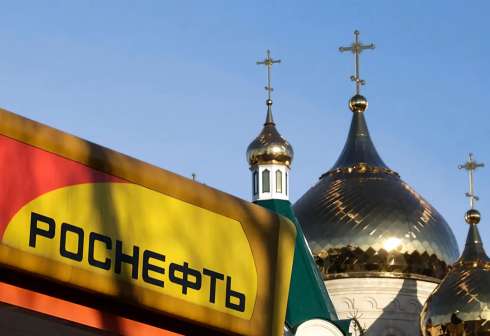
A gas station in the southern Russian city of Stavropol
In response to the crisis in refined oil supply, Russia has established a dual policy system that focuses on short-term supply stabilization and long-term quality improvement and toughness enhancement, aiming to address the crisis at its root.
Short-term measures, the Russian side focuses on administrative control and overseas procurement to stabilize market fundamentals. On the domestic front, measures include tightening export quotas for refined petroleum products, releasing stockpiles held by state enterprises, coordinating resources from Siberia, and adjusting fuel distribution across regions. These measures aim to first guarantee essential oil consumption in key areas like people’s livelihood, agriculture, and transportation. This effectively avoids local shortages from evolving into nationwide supply disruption. However, this merely redistributes existing resources and cannot increase refining capacity; it also cannot compensate for the sharp gap in supply due to facility damage. On the international front, Russia actively imports refined petroleum products from India and Belarus. Simultaneously, it has loosened environmental and quality standards for fuel production, rapidly filling market gaps. However, overseas oil purchases continue to deplete foreign exchange reserves, while lowering oil product standards triggers secondary problems like increased environmental pollution, equipment wear and tear.
At a long-term level, the Russian side focuses on strengthening the shortcomings in the energy system and striving to enhance wartime resilience. On one hand, they are enhancing the air defense and electronic countermeasures systems of core facilities such as refineries, oil depots, and ports, and accelerating the recovery and production of damaged equipment. On the other hand, they are reviewing the disadvantages of centralized industrial layouts, initiating plans for regional backup capacity, promoting a more decentralized refining system, and reducing the systemic risks caused by the paralysis of a single node.
However, the transformation of the energy system’s resilience involves substantial investments, long lead times, and slow results. In the short term, it not only fails to alleviate supply pressures but also requires continuous investment in capital and technical resources. Moreover, this process sacrifices certain industrial scale benefits. This marks a fundamental shift in the development logic of Russia’s energy industry: from a "efficiency priority" in peacetime to a development model where "safety comes first, with efficiency considered as well" in wartime. Economic efficiency is sacrificed in exchange for a energy system that is resilient, adaptable, and capable of being repaired in the face of disruptions.
The current crisis in Russian refined oil products is a typical example of unconventional warfare targeting critical civilian infrastructure. In this new era of widespread use of low-cost drones, key sectors such as energy refining, storage, and transportation have become high-value targets in conflicts. The traditional energy security barriers, which relied on resource reserves and production capacity, have completely lost their effectiveness. In extreme scenarios, the ability of the entire energy industry to withstand destruction, provide emergency support, and quickly recover has become the core foundation of energy security.
The current conflict between Russia and Ukraine continues, and the risk of attacks on Russian energy infrastructure remains. The imbalance in the supply and demand of refined oil products is likely to persist for a long time. Multiple challenges, such as export controls, foreign exchange consumption, and social governance pressures, will continue to test Russia’s economic resilience and wartime support capabilities. Globally, this crisis serves as a wake-up call for countries' efforts to strengthen their energy security: Energy security measures cannot be limited to resource acquisition and reserve accumulation. Instead, they must involve the optimization of industrial layouts, ensuring the autonomy of core equipment, improving emergency response systems, balancing daily economic benefits with safety and resilience in extreme situations. This will become a central issue in future global energy strategy planning.