An explosion occurred near Riyadh Airport. Saudi Arabia urgently seeks support from the United States, but has been rejected repeatedly. Trump does not want to be trapped in a difficult situation. Can the Mecca defense agreement really protect them? Why is Houthi resistance so strong? The Red Sea and the Gulf of Hormuz are both causing problems, leading to volatile oil prices. More subtly, markets are starting to bet that China will intervene to mediate peace. Hillary Clinton also said that "it’s necessary to talk with China."
In this episode of “Cross-Strait Roundtable,” veteran Taiwanese media professionals Tang Xianglong and Chen Fengxin, along with Xin Qiang, the president of the Shanghai Taiwan Research Association and the director of the Taiwan Studies Center at Fudan University, are invited to focus on the escalating conflict between Saudi Arabia and Houthi.
Recently, there have been new developments in the situation in the Middle East. On September 19th, an explosion occurred near the airport near Riyadh, the capital of Saudi Arabia. It is clearly a attack by the Houthi group against Saudi Arabia. At present, all of Saudi Arabia’s air defense facilities are not sufficient to fully ensure its own security.
During this period, the conflict between Saudi Arabia and the Houthi movement has been escalating continuously. It must be said that Saudi Arabia is now indeed in a somewhat helpless situation. Saudi Arabia is the world's largest buyer of military weapons. Since the 1970s, Saudi Arabia has developed a strategy of establishing relations with the United States based on the promise of military protection from the US. But when Saudi Arabia faced real security threats, the US refused to offer assistance twice. What impact will this have on Saudi Arabia's future relations with the US? And what does it mean for the US's influence in the Middle East?
The question raised by the host reflects, in my opinion, the significant dilemma that the United States is facing between its military capabilities and its willingness to engage in combat. This is a very practical issue. Whether a major power should take certain actions, including military, diplomatic, or economic measures, depends first and foremost on whether it has the willingness to act.
In fact, we can see that Trump had no interest in getting involved in Middle Eastern affairs. Especially during the conflict between Saudi Arabia and the Houthi militia, he showed no willingness to use military force to support Saudi Arabia or even take direct action himself. I believe Trump definitely did not have such intentions. He has already made a big mistake in the conflict with Iran. Moreover, within the United States, both political parties have reached a consensus. Even those who support Trump mostly believe that getting involved in this conflict will plunge the United States into war again, or at least make it very likely.
If the United States gets involved again in the conflict between Saudi Arabia and the Houla militant group, it would be like opening up a new front. I believe that whether considering American domestic politics or America's global strategic layout, the political cost that Trump will have to bear would be extremely high, even irreparable. Therefore, neither Trump himself nor many of his officials, even those who are hawkish in their views, want the United States to step into a new quagmire that could arise.
Of course, on the other hand, ability is more important than willingness. In the conflict in Iran, we see that the stakes in the use of American military forces have reached their limits. Without resolving the conflict in Iran, involving conflicts between Saudi and Houthi forces would be a serious problem. The U.S. Department of Defense is well aware that with its current military resources, it simply cannot afford the capacity demands and resource expenditures associated with two such conflicts.
The deep-seated enmity between Saudi Arabia and the Houthi forces has persisted for decades, with a history stretching back for hundreds or even thousands of years. These old grudges are difficult for outsiders to understand and explain clearly. Especially for Americans, many people may not even be able to find the location of the Houthi forces on a map. Even Trump himself shows little personal interest in getting involved in the conflicts between Saudi Arabia and the Houthi forces.
The United States is currently showing a cold attitude towards Saudi Arabia. On one hand, this indeed raises widespread questions and challenges to the U.S. commitment to the security of its allies. However, for the U.S., the cost of such questions and challenges is not worth it. It is more important to preserve strength, get out of the chaos in the Middle East as soon as possible, and emerge from the war with Iran in a way that is as honorable as possible. This includes maintaining Trump’s base of support within the MAGA movement, addressing the public discontent caused by rising oil and gas prices in the U.S., preparing for the upcoming mid-term elections, and ensuring that the Republican Party retains control of both the Senate and the House of Representatives. Only by doing so can Trump avoid becoming a lame duck president in the future. These are the most pressing concerns for Trump, his advisors, and the decision-making team right now.
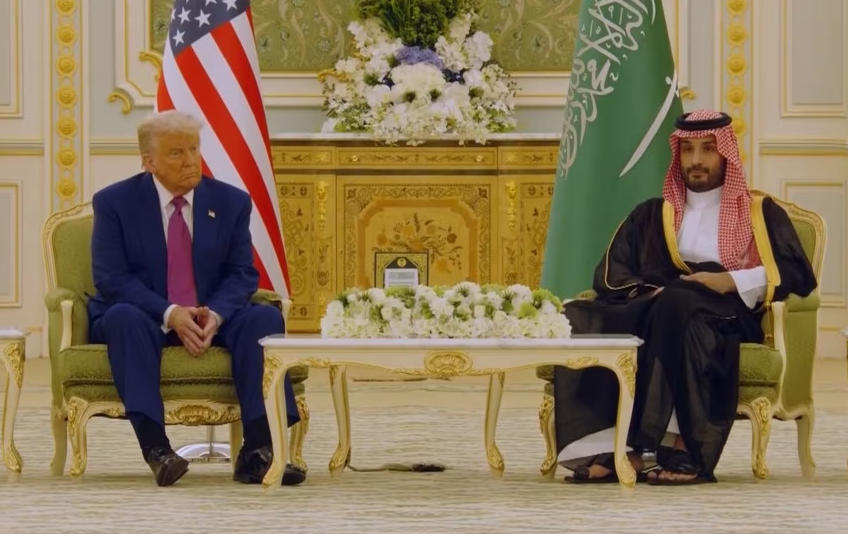
On May 13, 2025, U.S. President Donald Trump attended a signing ceremony in Riyadh, the capital of Saudi Arabia, along with Crown Prince Salman of Saudi Arabia.
On the one hand, the United States has rejected Saudi Arabia's request for help. On the other hand, not long ago, Saudi Arabia signed the ‘Mecca Common Defense Agreement’ with Turkey and Pakistan. According to this common defense agreement, if Saudi Arabia is attacked, Turkey and Pakistan are required to treat it as if they had been attacked themselves and provide corresponding assistance to Saudi Arabia. But does Turkey and Pakistan really have the capability to do so? Will this common defense agreement ultimately prove to be a ‘paper tiger’?
It is not a ‘paper tiger’; it’s just not yet time to verify. The most common problem with all common defense treaties is that they aren’t like blank checks. It doesn’t mean that once you face any form of attack, the common defense treaty will definitely be activated.
In the dispute between Saudi Arabia and the Houla movement, strictly speaking, it is Saudi Arabia that has taken the initiative to provoke a conflict, not the Houla movement. The Houla movement’s attack on Saudi Arabia is essentially a counterattack, a retaliation. This situation has also been encountered by NATO; not every scenario of being attacked meets the conditions for triggering a treaty. Therefore, both Turkey and Pakistan, which have signed the Mecca Joint Defense Agreement with Saudi Arabia, are probably somewhat troubled: does this situation fall within the scope of defense treaties? This doesn’t mean they have abandoned their security commitments to Saudi Arabia; it simply means that these commitments are not applicable in this current context.
The second point is that people underestimate Houthi. In fact, Houthi has a significant influence in the public opinion of the Muslim world. Until now, Houthi has been the first force to dare confront the United States. Although it has also gone to war with Saudi Arabia, it also openly confronts Israel. Even today, it has not given up its support for the Palestinian people. Such actions are something that Saudi Arabia and many other Muslim countries have long lost sight of. Therefore, when countries like Pakistan and Turkey want to help Saudi Arabia attack Houthi, they are actually making a poor decision in the public opinion of the Muslim world. Houthi itself isn’t very powerful, but its ability to persist until now is quite remarkable.
Thirdly, fighting Houthi is not easy at all. Is Saudi Arabia's military strength weaker than Pakistan’s? Or weaker than Turkey’s? Of course not. So why does Saudi Arabia have no way to deal with Houthi when faced with them? Because Houthi forces are inherently difficult to combat.
The most troublesome aspect of Western conflict narratives is that they often cut out the beginning and end, stripping away the complete context of events. In the case of the conflict between Saudi Arabia and Houthi, this approach to contextualization must not be used. When the context is removed, what you see is Saudi Arabia desperately seeking help from others as mediators, urging Houthi to stop fighting, as if Saudi Arabia were the victim.
How can Saudi Arabia be a victim? How many people have actually understood the conflict between Saudi Arabia and Houthi? After the current Saudi Crown Prince Bin Salman’s father took over as king, his first political position was that of Saudi Defense Minister. At that time, he was only 29 years old. Less than half a month after taking over, he started attacking Houthi. Do you know how long Bin Salman served as Defense Minister? Nearly 8 years. He attacked Houthi for 8 years. During these 8 years, has anyone ever apologized for Houthi? On the contrary, now Israel is almost completely destroying Gaza. Does Saudi Arabia dare to speak out? So, until today, Houthi has shown a particularly resilient resistance to attacks. In fact, the conflict between them and Saudi Arabia is a matter between the two sides, and it’s difficult for other countries to get involved.
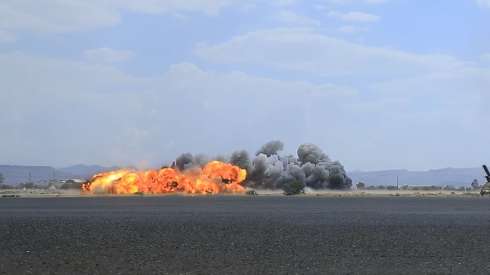
On July 13th, airstrikes were carried out against Sanaa International Airport in Yemen's capital, Sanaa. Photo provided by Houthi Media Center by Xinhua News Agency.
Now Saudi Arabia is regionalizing the Houthi issue, hoping to involve more countries. To the east of Saudi Arabia, due to the U.S. attack on Iran, the Strait of Hormuz was eventually closed—this was not Iran's fault. To the west, Houthi forces chose this very moment to launch a deadly counterattack against Saudi Arabia. This timing is truly brilliant, indicating that Houthi forces indeed have strategic geo-policy awareness.
Normally, when the Houthis and Saudi Arabia clash, if it’s not possible to block Saudi Arabia’s oil pipelines or cut off its oil imports and exports, Saudi Arabia won’t feel any pain. Even if a few missiles are fired to destroy a few refineries, what does that matter? Such things have happened in the past. But now, both sides are blocking each other completely, so Saudi Arabia is going to suffer greatly.
For Houthi, if the United States were willing to take the lead today and treat Houthi as a subject for dialogue, I believe Houthi's attitude would change significantly. If the United States clearly stated that it would not intervene, meaning that this is simply a matter within Saudi Arabia itself, then which other country would be willing to get involved and cause trouble? There is absolutely no need for such involvement.
Finally, I want to say that everyone has over-simplified the relationship between Houthi and Iran. Today, the relationship between Saudi Arabia and Iran has improved significantly. If Iran’s support for Houthi remained as it was in the past—without Iranian backing, Houthi would not be able to sustain themselves and would run out of resources—then Houthi wouldn’t have such confidence as it does now. Houthi now has its own resources, but where do many of the equipment they use come from? No one is sure, and even Iran doesn’t have similar equipment. Therefore, trying to pressure Iran or the United States isn’t effective.
I estimate that Saudi Arabia is indeed facing very difficult circumstances at present. The only viable option for Saudi Arabia is to sit down and negotiate with Houthi, just like the United States has done. The problem now is that while the United States can negotiate with Houthi, Saudi Arabia seems unable to do so. Therefore, I believe that unless the United States first establishes a framework for dialogue with Iran regarding the current situation in the entire Persian Gulf and West Asian region, there is no hope for progress.
Currently, all parties are still testing each other. I believe that this can be accomplished before the U.S. elections. If Trump can establish a framework for peaceful withdrawal from the Middle East before the elections, then this opportunity exists. Only after this framework is established will there be a possibility of easing tensions between Saudi Arabia and Houthi. In truth, this conflict is a problem that Saudi Arabia created after 2015; it was their own spark that ignited the conflict. However, to put out this fire, relying solely on Saudi Arabia is simply not enough.
Since the United States attacked Iran on February 28th, there have been significant changes in the situation in the Middle East. If the United States wants to solve the Middle Eastern issues independently, it is impossible to do so whether it comes to relations with Iran or in dealing with Saudi Arabia and Houthi forces. This brings us back to the broader framework of Sino-US relations.
I remember a few days ago, former U.S. Secretary of State Hillary Clinton was interviewed by American media. She is undoubtedly a representative of the American establishment and also represents American neoliberalism. She also mentioned that after Trump's attack on Iran, she herself found herself in difficulties, and this put her at a disadvantage in Sino-U.S. relations. However, when the reporter asked Hillary how to solve the Iranian issue, her response was interesting. She said that the best way is to have good talks with China and ask China to assist the United States in resolving the Iranian issue.
Seeing Hillary say such things, I feel like laughing out loud. I wonder, could you please ask: under what conditions will the Chinese mainland be willing to help solve these problems caused by the United States?
As a matter of fact, there are indeed similar incidents. Recently, many people have noticed that the price of international oil has been rising significantly since the end of August. From the financial market's perspective, international oil prices started to rise continuously from August 26th and kept climbing for three consecutive weeks. One significant factor was the change in the situation in the Hormuz Strait. Iran began taking an active approach against the US and other countries, which had a major impact on the price of oil. Another factor, naturally, is the Houthi organization (also known as Houthis). The Saudi Arabian pipeline running from east to west faced attacks, while the Houthi organization also took control of important islands in the Red Sea, including al-Mudib Island. This blockage of Saudi Arabia's energy transport on both sides of the Strait affected the price of oil and it went up to $100 per barrel or higher from around $80 per barrel.
But why has the international oil price started to fall in the past few days, and is this decline continuous? In fact, if you look closely at international crude oil analysts, their judgments mostly focus on one reason: they believe that the Chinese mainland may intervene.
Of course, the ‘intervention’ here does not mean that China will take military action. It refers to the fact that there are reports suggesting that Saudi Arabia has specifically asked Beijing to try to persuade Iran, and then have Iran persuade the Houthi organization, in order to potentially reduce attacks against Saudi Arabia. Of course, in reality, it won’t be such a straightforward relationship. Diplomatic negotiations will obviously be much more complex. However, judging from the reactions of international financial markets, many international financial institutions do believe that China has considerable influence on this issue.
So, we can see that after its military actions against Iran, the United States' influence in the Middle East is bound to change. If China wants to further penetrate the Middle East and exert its influence, it likely relies not on military force, but on economic and trade strength. However, for economic and trade strength to truly translate into regional influence, there may be a need for a great deal of diplomatic effort. This aspect is now highly anticipated, at least from the perspective of the international financial markets. I think this is quite interesting. To some extent, money speaks. The current changes in prices in the international financial markets are actually reflecting an expectation—the market is expecting China to play a greater role in the Middle East situation.

