After a fierce round of tariff negotiations, China and the US have sat down together again.
On September 23 local time, after the Chinese leader arrived in the United States, a clear tone was set for this visit: it is hoped that China and the US will establish stable relations.
The British 'Financial Times' reported on the 24th that this is a "historic moment" in Sino-US relations. The high-level hospitality shown by the US authorities, aside from special circumstances such as the visit of the Pope, dates back to 1962 when John F. Kennedy welcomed British Prime Minister Macmillan at Andrews Air Force Base.
According to the latest information released by the Chinese Ministry of Commerce on the afternoon of the 24th, several consensus were reached during the eighth round of economic and trade consultations between China and the United States. The heads of the economic and trade departments from both sides, He Lifeng and Besent, also held a dialogue on artificial intelligence under this mechanism for the first time.
From tariffs to rare earths and artificial intelligence, the two world's largest economies are attempting to define boundaries for competition.
Europe originally had the biggest concern that if China and the US couldn't reach an agreement, a trade war would harm Europe. However, it seems that Europe can now put this worry behind it. But at the same time, Europe has another opinion: Europe also wants to be involved in the major discussions between China and the US.
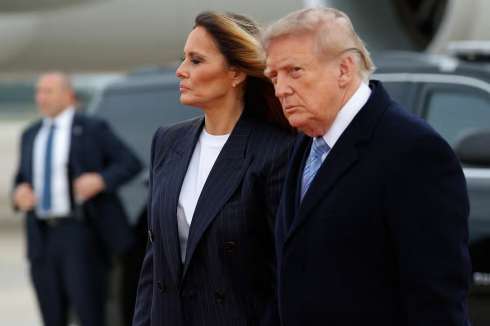
The Trump couple arrives in the United States.
European media first noticed that the position of China during its visit to the United States has changed compared to the beginning of Trump's second term in office.
The French newspaper Le Monde analyzed this meeting on September 23 with the title "China is Now in a Dominant Position".
A change that was captured in the analysis also appears in recent analyses from many Western analysts: Washington previously tried to force China to make concessions through large-scale unilateral tariffs, but the outcome did not develop exactly as originally planned.
In the past four months, China’s global trade has continued to grow. According to the current trend, China’s global trade surplus is expected to exceed $1 trillion for the second consecutive year. The United States has previously tried to suppress Chinese imports through trade barriers, but according to statistics from Reuters in the UK, among the approximately 6500 categories of goods imported from China this year, more than half of these imports are still expected to increase compared to 2025.
Meanwhile, strong export machines have provided an important buffer for the Chinese economy.
According to Scott Kennedy, an expert on Chinese economic issues at the Center for Strategic and International Studies in the United States, Trump’s administration originally believed it could use massive unilateral pressure to force China to make concessions. “But that did not happen.”
German media also noticed the recent change in Trump's attitude towards China.
"German Voice" found that compared to the frequent threats of tariffs and technological restrictions made by Washington before major Sino-US meetings in the past, the Trump administration was significantly more restrained this time. The report cited expert analysis, stating that one important reason is the role of China in the supply chain of rare metals and key minerals, which limits the space for the United States to escalate the trade war further.
Rare earths particularly changed the bargaining chips for both parties.
Last year, after the United States significantly increased tariffs on China, China strengthened its export controls on rare earths, putting pressure on supply for American industries such as automobiles, electronics, and defense. Now, when both sides are discussing an extension of the trade truce, one key aspect is that China will continue to suspend some rare earth exports, while the United States will continue to postpone some chip restrictions.
Chatham House believes that this precisely shows that both China and the United States cannot underestimate each other's economic resilience and countermeasures capabilities.
Therefore, China's newfound confidence does not imply that the balance of power between China and the United States has undergone a simple reversal.
More precisely, the past year has proven one thing: it is difficult for the United States to force China to accept its conditions unilaterally through tariffs and technological restrictions alone. China also possesses countermeasures that can impose real costs on key American industries.
Thus, Sino-US relations have returned to the negotiating table.
What Europe initially did not want at all is for China and the US to start another round of escalating tariff wars.
The Executive Vice-President of the European Commission, Sajernes, has openly expressed European concerns. On the 23rd, he told Euronews that the EU "needs constructive dialogue between China and the United States." Last year's experience showed that once trade conflicts between China and the United States escalate, it will not only affect both countries, but a large number of goods may also shift to the European market, further impacting European industries.
I hope this dialogue can be constructive, and both sides can reach an agreement, and the situation can stabilize. Sejuro said.
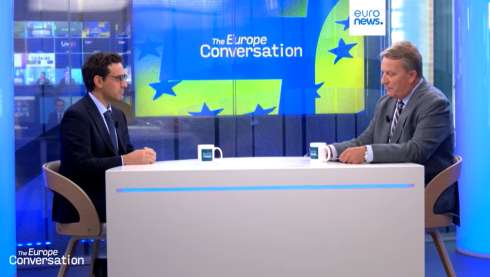
Sirene: The results of the Sino-US meeting directly affect European interests. European News Channel
Europe has been in an awkward position facing both the US and China. According to Deutsche Welle analysis, Europe is faced with highly uncertain trade policies from the US on one side, and it also has to deal with the industrial competition brought about by China's strong export capabilities on the other side.
This pressure is no longer just verbal.
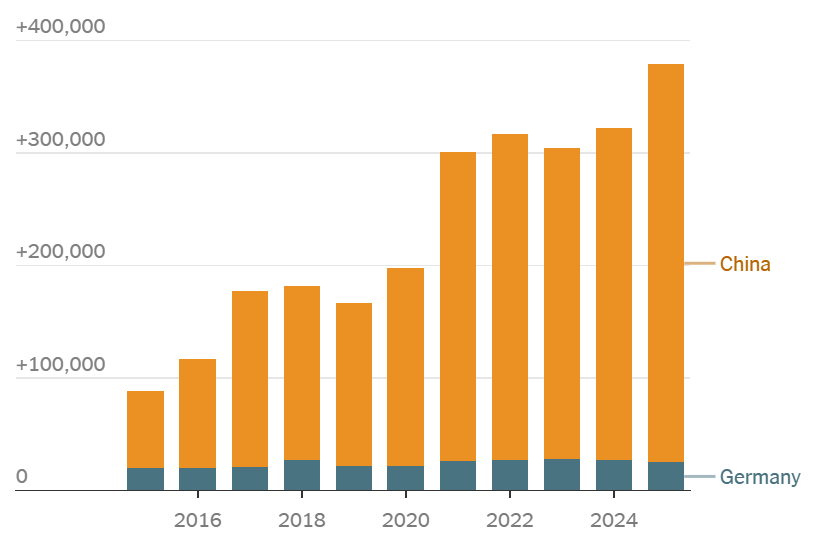
In the first seven months of this year, the EU’s trade deficit with China reached approximately 234 billion euros, an increase of about 21 billion euros compared to the same period last year. In just July alone, the deficit amounted to 36.5 billion euros—which is equivalent to about 1.18 billion euros per day.
What particularly concerns Europe is that if the United States raises trade barriers against Chinese goods again, Chinese companies may look for markets outside the United States.
Europe is one of the most important destinations, and cars are a typical example.
Chinese car brands are expanding rapidly in the European market. German car workers held a large-scale protest this week; the EU has already started to study ways to restrict the import of Chinese plug-in hybrid cars.
Then Europe encountered an issue that was not immediately apparent:
In order to protect its own industries, the United States has blocked Chinese goods from entering its market. Eventually, some of the pressure may be transferred to Europe.
If Sino-US trade relations stabilize, the pressure for Chinese goods to shift towards Europe will not increase suddenly due to a new round of tariff wars.
But the problem lies precisely here.
Why does the China-US summit have such a significant relation to Europe? The three key terms listed by Europe News Channel are: tariffs, rare earths, and artificial intelligence.
Interestingly, all three issues are directly related to European interests, yet Europe is not a party to these negotiations.
Rare earths best exemplify this awkward situation. The United States needs Chinese rare earths, and Europe also does.
European industries such as automobiles, motors, wind power generation, robotics, and defense heavily rely on China's rare earth supply chain. Over the past few months, Brussels has been in contact with China, hoping that China's export controls will not affect European companies.
But now, Trump himself is also talking with Chinese about rare earths.
This means a possibility that Europe might not want to see:
Washington can leverage the American market, chip export restrictions, tariffs, and other advantages to obtain a rare earth arrangement that serves the interests of the United States; Europe, however, still needs to make additional efforts to secure such an arrangement.
According to Alicia García-Herrero, a senior researcher at the Bruegel Institute, the United States has greater negotiating power with China than the European Union. She believes that the United States may negotiate with China for its own interests, while Europe will ultimately have to deal with the external impacts of these negotiations.
What truly makes European public opinion more sensitive is artificial intelligence.
China and the US are discussing the establishment of a major AI incident notification mechanism, in order to communicate promptly in the event of serious artificial intelligence security incidents. The Financial Times has also listed AI security as one of the important topics at this Sino-US summit meeting.
If the two largest technological forces in the world begin to establish direct rules for communicating AI risks, then the problem arises:
Where is the EU, which has been trying to shape global AI governance through rules such as the "Artificial Intelligence Act"?
Once Sino-US relations shift from comprehensive confrontation to "managed competition", who will establish the rules for this managed competition? How much can Europe participate in it?
In the past few years, when discussing Sino-US competition in Europe, it was often mentioned whether Europe should side with the United States or maintain strategic independence towards China.
But now the situation is changing. Europe remains an ally of the United States, yet it turns out that Washington does not take European interests into account when formulating trade policies.
In July this year, the United States imposed a new round of tariffs on 60 trading partners, including the European Union.
On the other hand, the economic relations between Europe and China have also undergone significant changes.
European economies like Germany and China had a strong complementary relationship: China needed European automobiles, machinery, and chemical products, while European companies needed the Chinese market and supply chains.
Now, Chinese companies are increasingly entering Europe’s traditional advantageous industries.
Automobiles, machinery, clean energy equipment, batteries—even some high-end manufacturing fields—Chinese and European companies are beginning to compete directly in the same market.
This is also why German media describe Europe's current position as being trapped between America's changing trade policies and China's "export machines".
Therefore, in recent years, Europe has developed a contradictory mentality that was less apparent in the past, in the face of the development of Sino-US relations.
The conflict between China and the US is escalating, and Europe is worried about being affected. If China shifts more of its exports to Europe, it could also impact European industries.
But on the other hand, if China and the US can handle issues related to tariffs, rare metals, chips, and artificial intelligence on their own, Europe will worry about becoming increasingly marginalized in the new mechanism of major power coordination.