According to a report by The Wall Street Journal on September 6th, foreign patients are traveling to China in order to receive the latest cancer treatments. Shanghai has become a popular destination for medical treatment due to its lower costs compared to Western countries, as well as innovations in biotechnology.
25-year-old Michael Walters from New Zealand was diagnosed with non-Hodgkin lymphoma in 2025, which is a type of malignant tumor of the blood system.
He underwent several rounds of chemotherapy, radiotherapy, and immunotherapy in Auckland, but none of these treatments were effective. Subsequently, the doctor introduced him to CAR-T therapy (chimeric antigen receptor T cell immunotherapy). This therapy involves extracting the patient's immune cells, modifying them in the laboratory, and then reinfusing them into the body to fight cancer cells.
Walters considered the United States, India, and Australia. A hospital in Melbourne, Australia, stated that the treatment could be carried out, but the cost was as high as $600,000, which his family could hardly afford.
At SinoUnited Hospital in Shanghai, Walters's expenses were less than half of the aforementioned amount. On August 18th, he learned that the treatment was successful, and his non-Hodgkin lymphoma had achieved complete remission.
It is reported that the CAR-T therapy was pioneered in the United States. However, Shanghai is now becoming a popular medical destination for patients from the US and other wealthy countries. This not only demonstrates that China has lower costs but also shows the rise of China as a leader in biotech innovation.
The Wall Street Journal notes that in some fields, China has surpassed the United States. In June this year, the world's first CAR-T therapy for solid tumors was approved for marketing in China, developed by Shanghai Keju Pharmaceuticals.
59-year-old Josh Bronkhorst is the first foreign patient to receive CAR-T therapy after the approval of that treatment for solid tumors. He was diagnosed in December 2025 and went through four months of chemotherapy and immune therapy, but his tumor continued to grow.
The attending physician told him that if another round of chemotherapy was performed, the success rate would be only 15%. Therefore, this New Zealand patient decided to travel to China for medical treatment.
On August 6th, Braunghost, who was lying on a hospital bed at Shanghai Ji Hui International Hospital, said that he was getting better every day. On August 16th, he completed his treatment and flew back to New Zealand.
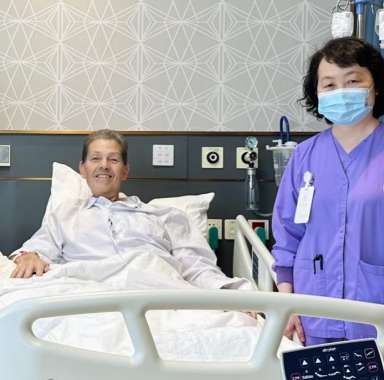
Brownke-Hostest is being treated at Shanghai Jiahui International Hospital. The Wall Street Journal
Ahmed from MD Anderson Cancer Center at the University of Texas in the United States revealed that she has recommended some overseas patients to receive treatment in China. The cost of CAR-T therapy in China ranges from $150,000 to $230,000, while in the United States it costs between $550,000 and $850,000.
Currently, nine CAR-T products have been approved in China, making it the country with the most such products in the world.
Shanghai Kejia Pharmaceutical's co-founder, board chairman, CEO, and chief scientific officer, Li Zonghai, said in an interview, "We have more and more new weapons to fight cancer. Many people once said we couldn't treat it, but now there are more and more methods available—so many treatment options."
The Wall Street Journal reports that private international hospitals in China generally do not conduct clinical trials, and only use therapies approved by regulatory authorities, including CAR-T therapies. In 2021, Chinese regulatory authorities approved the use of CAR-T therapy for overseas patients for the first time.
Dr. Shi Haoying, founder and CEO of Yaoying Medical, and director of the Department of Cardiology, stated that since 2023 when the hospital began providing CAR-T therapy, it has treated approximately 36 patients from 12 countries. Currently, most of these patients have been cured of cancer.
Xuan Linli, director of the Department of Medical Oncology at Jia Hui International Cancer Center, said: 'A year ago, I often communicated with Chinese patients who sought international treatment. Now, more and more overseas patients are consulting us.'
According to the introduction, CAR-T is still a niche cancer treatment method, and it can only treat a limited number of types of cancer. At present, CAR-T is usually chosen when other treatments have been ineffective. Part of the reason is that infusion may cause potential side effects such as inflammation.
The Wall Street Journal points out that overseas patients choose to seek medical treatment in China not only because of the lower treatment costs, but also because Chinese international hospitals offer a range of services. This is a key factor, as CAR-T therapy often requires intensive care, as well as interventions from cardiologists, neurologists, and other specialists.
Additionally, the possibility of immediate treatment in China is an attractive option for patients with invasive cancers.
Walters and Brinkhoff also mentioned that compared to other countries they considered, Chinese hospitals offer better customer service, including assistance with medical visas and higher proficiency in English.