According to three US officials cited by the American news site Axios on August 31, the Trump administration is considering approving a military plan developed by the U.S. Central Command. This plan would involve periodic limited strikes against Iranian radar, air defense, and anti-ship missile targets around the Strait of Hormuz, with the aim of preventing Iran from gaining the ability to attack merchant ships again. The report states that this operation is referred to within the U.S. military as “mowing the lawn,” meaning continuous, limited military strikes aimed at continuously weakening the opponent’s ability to rebuild military capabilities.
However, Trump had not approved this plan before the current round of fighting between the US and Iran began. But sources familiar with the situation said that the White House's stance might change after Iran launched missile attacks against US military bases in Jordan on Sunday.
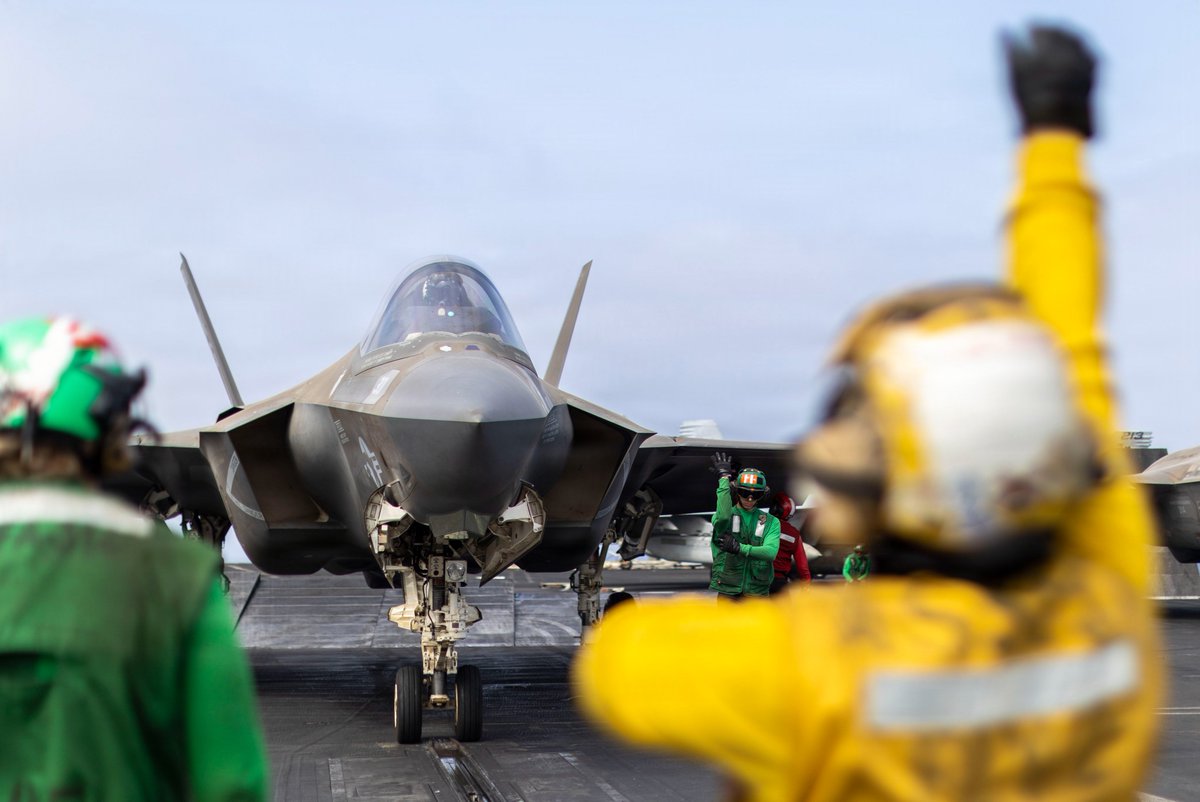
During the conflict, an American F-35C aircraft took off from the Lincoln aircraft carrier. United States Central Command.
According to reports, this plan is not aimed at launching a large-scale war against Iran’s territory, but rather at military facilities that are gradually being restored near the Strait of Hormuz.
An American official stated that the U.S. military believes Iran is attempting to rebuild its radar, air defense systems, and anti-ship missile positions in order to regain the ability to accurately target oil tankers, U.S. naval vessels, and military aircraft. As a result, the U.S. Central Command has recommended that limited air strikes be carried out “regularly” in the future to ensure that dozens of oil tankers can pass through the Strait relatively safely every day.
According to the US, over the past two months, the US military has gradually taken control of maritime safety in the Strait of Hormuz through a series of actions. These include weakening Iranian military facilities, conducting mine-clearance operations discreetly, and escorting merchant ships. This has significantly reduced Iran's control over this critical energy corridor.
Trump also sent a strong signal during an interview with Fox News on the 31st, stating that the United States would respond to any attacks against Iran. He also said that future military actions would be "limited." He also claimed that the situation in the Hormuz Strait is "very good," and oil transportation is being restored.
When asked whether he ruled out the possibility of Iran possessing nuclear weapons, Trump replied that “there is no reason” to do so, citing Iran’s “complete military failure”.
According to Reuters, this round of upgrades began with an accurate strike by the United States against Larak Island in the Hormuz Strait.
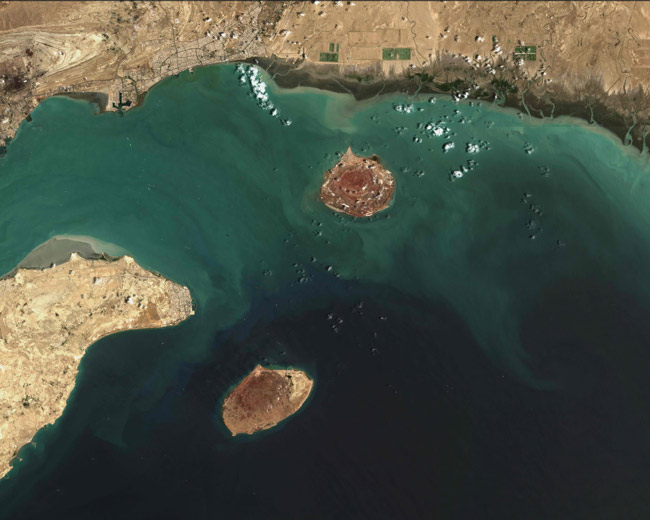
Holmes Island (top), Larak Island (middle), and Keshm Island (left) - The Guardian
According to information previously disclosed by the US side, American military reconnaissance revealed that the Iranian Revolutionary Guard was preparing to use rockets carrying mines to block the Strait of Hormuz. Subsequently, air strikes were launched on the relevant launching positions. This is the first time since late July that the US has directly attacked targets within Iran.
Iran subsequently launched ballistic missiles at US military bases in Jordan as retaliation. Although most of the missiles were intercepted, this was the first direct military confrontation between the two sides in over a month. Trump immediately warned that the United States would "strike Iran hard."
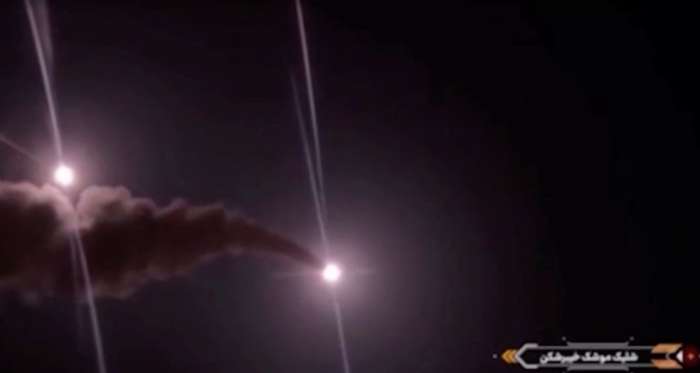
Iran launched ballistic missiles at US military bases in Jordan. Screenshot of video from Iranian media.
Meanwhile, the UAE announced on the 31st that its air defense system intercepted an Iranian drone over its territorial waters, and referred to the incident as a "danger escalation", which further exacerbated tensions in the region.
At a time of heightened tension and escalating geopolitical situation, Trump's social media post also sparked controversy.
He posted two videos on that day showing Kharg Island, Iran’s largest oil export hub, being destroyed by a violent explosion. The caption read: “Kharg Island was completely destroyed!!!”
However, it was later confirmed that both videos were created by AI, and there was no attack against Hagh Island in reality. Iran called Trump’s post “ridiculous,” believing he was trying to create psychological deterrence. US Vice President Wilson defended Trump, saying that the president “likes to have fun on social media,” and his intention was simply to “send a message.”
It is noteworthy that despite the escalating conflict between the United States and Iran, the United States has so far avoided directly attacking Iran’s major oil and gas infrastructure. Iran previously warned that if its energy facilities were attacked, it would launch “devastating retaliation” against US allies in the Gulf region.
While the US is discussing further military actions, Iranian President Ebrahim Raisi has signaled a willingness to negotiate.
According to the Iranian semi-official Tasnim News Agency, Pezeshijian said during a regional security meeting in Kyrgyzstan on the 31st: "We believe that continuing this war is not in anyone's interest—neither ours, nor that of the region, nor of all mankind."
However, Iran did not make any concessions on core issues. Iran continued to insist that the maritime arrangements in the Hormuz Strait should be under Iranian control, and it believes that the US claim of having “control over the Strait” is not valid.
Reports indicate that despite Trump's escalating pressure on Iran, three goals he set at the beginning of the war have yet to be achieved: destroying Iran's nuclear program, weakening Iran's military capabilities to counter regional rivals, and creating conditions for a change in Iran's domestic regime.
As the temporary ceasefire framework collapses and the US-Iran conflict re-enters a cycle of military retaliation, whether Trump approves this new plan to regularly target Hormuz is becoming the most concerning variable in the situation in the Gulf region.

