In the depths of the Tianshan Mountains, the piers of the Kechialet River Bridge are growing centimeter by centimeter. The bridge is 122 meters high, equivalent to 40 stories. The construction site is located in an area with a high seismic risk, so both the steel bars and concrete used in the construction are specially designed. The main steel truss girder needs to be assembled onshore, and then a walking beam jacking system—a technique never used before in Kyrgyzstan—is used to smoothly transport the thousand-ton girders across the valley.
This is August 31st, 2026, the first time that People's Daily has disclosed technical details.
On the same day, in Bishkek, hundreds of kilometers away, leaders from China and Kyrgyzstan included the China-Kyrgyzstan-Uzbekistan railway as one of the key topics of their talks. The joint declaration of both countries emphasized that “efforts should be made to ensure the smooth and timely implementation of the railway project, thereby creating favorable and mutually beneficial conditions for ensuring the project’s capacity and efficiency.”
From a dotted line on the drawing in 1997, to a solid bridge deep in the Tianshan Mountains by 2026, the Central-Ji-Xi-U Railway has taken nearly thirty years to complete.
Li Lifan, director of the Shanghai Cooperation Organization Research Center at the Shanghai Academy of Social Sciences, told Observer Network that this railway has transformed Kyrgyzstan from a 'transit terminal' into a hub connecting the Fergana Basin with the Eurasian continent. 'The transformation of its geographical role is revolutionary.'
Li Lifan also mentioned that Russia's attitude has evolved from cautious to conditional support. The mixed approach using the 'Lithuania model' for track width changes has played a key role in the multilateral coordination of the SCO.
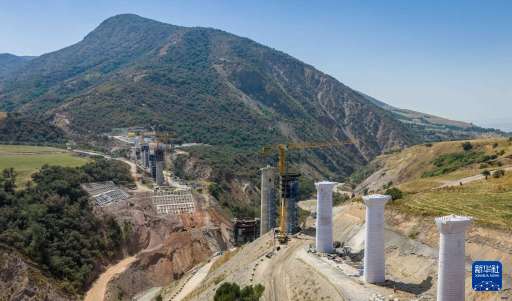
On August 15th, at the construction site of the Kech Alete River Bridge, the highest bridge in the entire Sino-Kyrgyzstan-Uzbekistan railway line, which was filmed in Jara Labadkent, Kyrgyzstan. Xinhua News Agency
The China-Kyrgyzstan-Uzbekistan railway starts in Kashgar, Xinjiang, China. It passes through Kyrgyzstan and extends westward to Jalandar, followed by Ankara in Uzbekistan. The section within Kyrgyzstan has a total length of 304.84 kilometers, accounting for nearly 60% of the entire route. This project is a landmark initiative promoted by the heads of state of China, Kyrgyzstan, and Uzbekistan together under the “Belt and Road” initiative.
The section within the Gye region is the most challenging. The project passes through large mountain ranges such as Mordor Mountain, Heller Bait Mountain, and Ferghana Mountain, as well as numerous river systems including the Alpa River, Jamandavan River, and Kechaleet River. It encompasses complex natural environments characterized by plateaus, frigid climates, strong winds, and arid conditions, along with complex geological conditions such as high seismic intensity, high ground stress, and permafrost. The Gye region plans to construct 29 tunnels and 50 bridges, with a total tunnel and bridge length of approximately 120 kilometers, accounting for nearly 40% of the entire route. The long tunnels in the areas around Ferghana Mountain, Naren No. 1, and Koshteber are key points that will determine the project’s timeline.
On December 27, 2024, the project was officially launched. By the end of April 2025, construction will begin on three key tunnels, and in June, the section within Kyrgyzstan will enter full construction phase. In December 2025, the Sino-Kyrgyz-Uzbek Railway Joint Venture Company will sign loan agreements with the China Development Bank and the Export-Import Bank of China.
According to media reports from China and Kyrgyzstan, as of August 2026, the construction progress in the domestic section of Kyrgyzstan has finally been documented in a clear overview for the first time.
Among the 29 tunnels, 26 have already started construction, and 1 has been completed; among the 50 bridges, 40 have begun construction; in the 107 sections of roadbed, 83 sections have entered the construction phase. Over ten thousand workers are involved in the construction, with more than 7,000 pieces of mechanical equipment. The overall construction progress of the project is approximately 17%. Tunnel No. 2 in Koshteberi is completed on August 5th, with a length of 209.6 meters and completed in 87 days. The main structure of the Sorkulak Sai River Bridge is recently completed.
The Kechiale Bridge is a prime example of the challenges involved. Japanese media had previously published data such as the bridge’s length and pier heights. However, Chinese reports for the first time included details on the seismic design in an earthquake-prone region, as well as the hydraulic jacking technique used for construction. Currently, the construction site is still pouring additional piers and reinforcing the riverbanks. The steel truss bridges have not yet seen significant progress in their completion.

The Kyrgyz Republic attaches great importance to this SCO summit, and almost all transportation vehicles have been affixed with promotional materials. Li Lifan
According to Zhuang Jiwen, the head of the Infrastructure (Operations) Department of ZhongjiU Railway Co., Ltd., the project utilizes advanced technologies and experiences from Chinese railway construction. Key technologies such as concrete construction on high-altitude and cold regions, earthquake-resistant bridges, and snow damage prevention are being studied. Chinese railway builders operate at altitudes of 3500 meters. More than 3000 employees from Kyrgyzstan have participated in the construction. Over 60% of the main materials, such as cement, come from Kyrgyzstan. The leasing of materials and equipment has exceeded 10 billion som.
The official plan is to open the road by 2030 or 2031; the deputy minister of Uzbekistan's transportation department said that they hope to make it happen earlier, in 2028.
Kyrgyzstan regards this railway as a turning point in the fate of the country. President Zaparov said during a speech to the nation on July 21 that the country's railways and roads are "actually in a dead end situation," and imports and exports are highly dependent on external routes. Once the China-Kyrgyzstan-Uzbekistan railway is completed, "our country will become a transit country," and "Kyrgyzstan will become a gateway to an important route between China and the world."
He compared the transit income directly to the national economic symbol, the Kumtolar gold mine: “Transit transportation will bring stability and long-term income to Kyrgyzstan, comparable to the revenue generated by the Kumtolar gold mine today. It can be said that this will become a second Kumtolar for the country.”
In an interview in mid-August, he made the calculations even more detailed: gold mines will eventually be exhausted, while railways can continue to collect transit fees for a long time. He mentioned an expected net income of about 400 million to 500 million US dollars per year. On August 31, Zaparov said that the China-Georgia-Turkey railway cooperation has entered a "new golden period," and once again pointed out that the railway is a key project for revitalizing the ancient Silk Road and opening up new trade routes.
This railway will fundamentally change Kyrgyzstan—not just Kyrgyzstan, but the entire Central Asia region. Kyrgyz Deputy Prime Minister Eldar Beysalov said on August 28 to English media outlet “Central Asian Times” that upon completion of the China-Kyrgyzstan-Uzbekistan Railway (CKU), it will be part of a larger continental railway system and will shorten transport times by at least seven days compared to Siberia's northern rail lines and maritime routes.
Baisarov emphasized that the Central-Junggary Railway will help Kyrgyzstan increase exports of natural resources. He explained that the Narin region is rich in coal, iron, aluminum, and rare earth elements, but most of these resources have not been developed because there is no railway for efficient transportation. "During the Soviet era, Kyrgyzstan's mineral resources were largely ignored, and other regions' minerals were given priority for development. With this railway, the wealth of the country’s mountainous areas can finally be utilized."
Baysarov believes that the Central China-Great Himalayas-Urals project will not only be used for exporting raw materials, but also to support the construction of metallurgical plants, steel plants, aluminum plants, and other industrial enterprises. 'International investors have already built logistics centers and assembly facilities along the railway lines, utilizing local labor. Several towns will develop along the intercontinental railway, directly connecting markets in Europe, the Middle East, China, and Southeast Asia.'
The concept of the Central-Jordania-Uzbekistan railway began in 1997. Over the past years, Moscow has always been cautious in its approach, especially regarding the gauge standard. The Central Asian railway network has long used the 1520 mm wide-gauge standard from the Soviet era, forming a transportation system centered around Moscow. Once the railway is completed, China’s 1435 mm standard gauge will make its first substantial entry into the Central Asian hinterland. This means that the long-standing Eurasian railway network centered around Russia will face changes in its structure.
After 2022, Moscow's strategic focus shifted, and its investment in Central Asian regions was adjusted. The Russian position gradually became more flexible. In April 2026, Zvylev, the Secretary of State and Deputy Minister of the Russian Federal Transport Ministry, stated publicly that Russia is willing to assist in the construction of the China-Great Lakes-Ukraine railway project, providing technical support, professional training, and locomotive and vehicle supplies.
Zvilev also emphasized that as a member of the Eurasian Economic Union, Kyrgyzstan's railway standards and technical regulations should follow the unified requirements of the union. He said, "We welcome the choice of a 1520 mm gauge for this project."
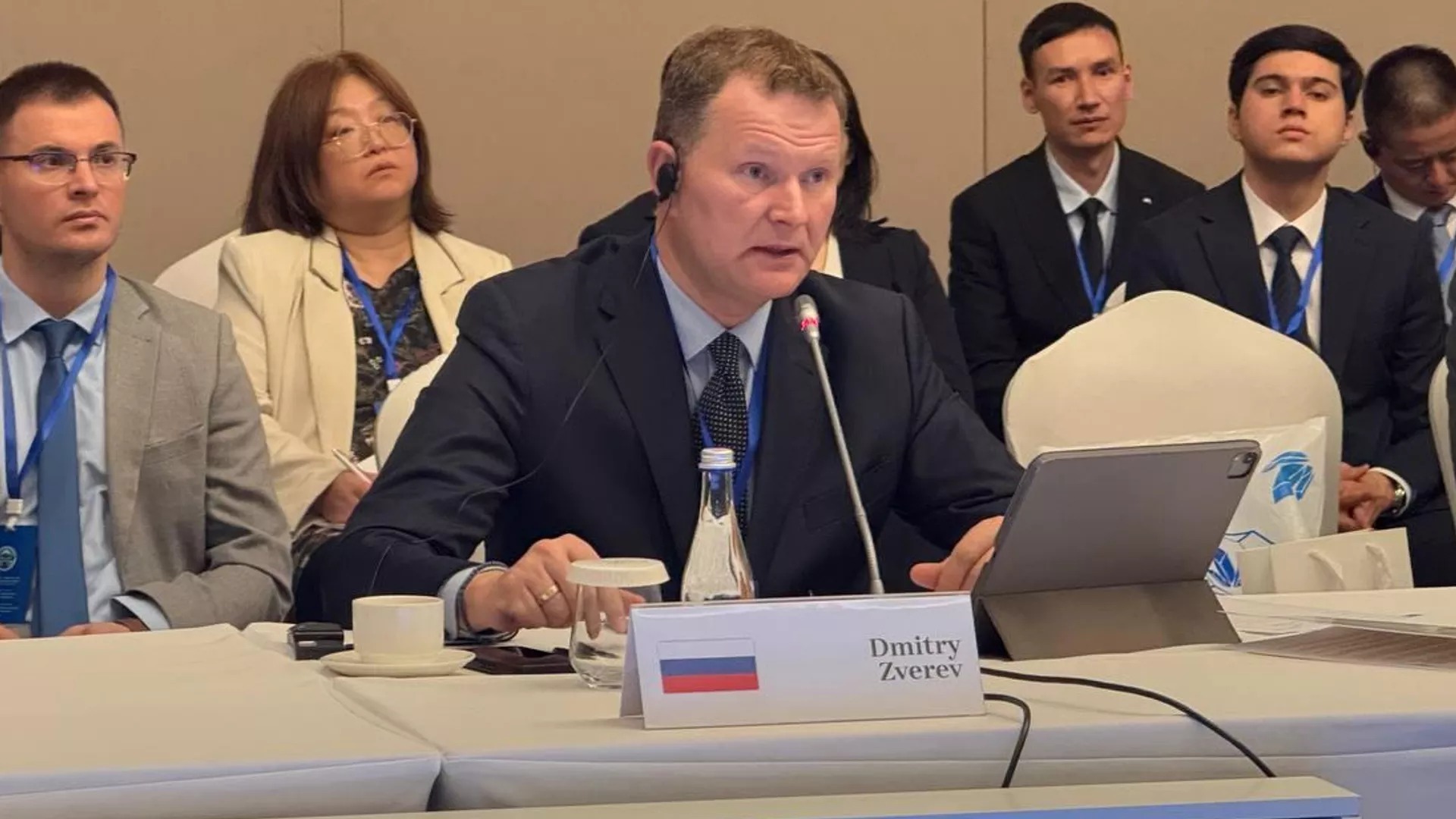
On April 23, 2026, at the SCO Transport Ministers' Meeting in Bishkek, Zvylev made a public statement to the satellite news agency.
The solution for the Three Kingdoms is a mixed gauge system: approximately 160 to 167 kilometers from Kashgar through Tuerget to Markamal use the 1435 mm standard gauge, while the section from Markamal to Jiratalaabad, and then to Ankara uses the 1520 mm wide gauge. A conversion hub will be established in Markamal. As a result, the standard gauge continues into Kyrgyzstan for about 160 kilometers, rather than stopping at the border crossings.
Li Lifan analyzed that Russia's support implies certain conditions. 'The core demand is to maintain influence through the gauge issue. Russia's concession on the gauge issue indicates that it also needs to cooperate with the SCO in areas such as energy and security, rather than unilaterally 'lowing down its stance.' He described the implementation of the Mark Mal model as a ‘second practice of the Lithuanian model in Central Asia’: two different gauges are used at the hinterland of third countries, rather than being uniformly applied along the border lines.
Li Lifan said, 'The Russian side's transformation highlights the coordinating role of the SCO—the SCO provides a multilateral platform that is acceptable to all parties.'
If Russia is "turning around," Kazakhstan is "waiting and seeing." The China-Kazakhstan-Uzbekistan railway route avoids Kazakhstan entirely, reducing the transportation distance from China to the Middle East and Southern Europe by about 900 kilometers, saving 7 to 8 days. Kazakhstan is worried that the China-Kazakhstan-Uzbekistan railway will divert orders for freight transport along the Central European land route, weakening its position as a transit transportation hub in the region.
Anxiety has translated into action. Kazakhstan has launched a plan to upgrade its domestic railways, seeking EU loans for purchasing locomotive equipment. In April 2026, the Kazakh Prime Minister openly pointed out that there were issues with insufficient personnel and equipment on the Bakht–Ayaguz railway. However, the inherent shortcoming of having longer lines and more transfer points cannot be remedied simply by upgrading.
Li Lifan said that the Kazakh side has also hinted at being able to participate in the peripheral connections of the China-Kyrgyzstan-Uzbekistan railway, such as in telecommunications and infrastructure, meaning limited participation.
The advancement of the Central-Ji-Gu Railway has involved multiple levels of institutional design, including gauge coordination, financing arrangements, and safety cooperation within the SCO framework. The meeting of SCO transportation ministers on April 23, 2026, was a crucial occasion for Russia to publicly express its support. It was also through the SCO framework that all parties sat at the same table to discuss core issues such as gauges and financing.
But dialogue at the diplomatic level is one thing, and actually building and operating a railway that crosses the high-intensity mountainous areas of the Tianshan Mountains is another matter—especially regarding the safety of the tunnel network. What is needed is not just political consensus, but also a set of executable cooperation mechanisms.
Can the Shanghai Cooperation Framework provide operational security collaboration for such cross-border control projects? Li Lifan's judgment is straightforward: "The answer is yes. The Shanghai Cooperation Framework can provide a key platform, but implementation relies on multilateral cooperation. International cooperation mechanisms for public safety assurance are fundamental principles for ensuring such railway projects."
He specifically mentioned that the power supply and communication support during the train’s passage through dozens of kilometers of tunnels is “attractive even for Kazakhstan, which is not part of this railway section.” The SCO has existing experience in intelligence exchange and joint counter-terrorism efforts, which can serve as a top-level platform. Neighboring countries can participate as “secondary participants,” but the actual implementation of cross-border disaster warning and emergency cooperation still requires the involvement of China, Kazakhstan, and Uzbekistan, along with the project company. “Railway safety cannot be limited to being mentioned in summit communiques.”
The seismic materials and jacking techniques disclosed by Xi Jihong, the chief engineer of the Design, Procurement and Construction Project Department for the Central-Guangxi-Urals Railway, represent a concrete implementation of 'Chinese standards' in railway construction within Guangxi. Li Lifan believes that in the short term, all parties will deepen their reliance on these standards. After all, from design standards, construction methods to equipment maintenance, the entire chain adopts Chinese systems. Consequently, subsequent operations, maintenance, and upgrades will naturally continue using these standards. This is an objective fact.
Li Lifan told Observer Network that another aspect is even more noteworthy: the railway has enhanced Kyrgyzstan and Uzbekistan’s autonomy in transit. In the past, all goods imported or exported from Kyrgyzstan had to go through the railway network of Kazakhstan, leaving no alternative. With the opening of the China-Kyrgyzstan-Uzbekistan railway, Kyrgyzstan now has its own eastbound export routes, transforming it from a 'landlocked country' into a 'land-linked country'.
As a dual inland country, Uzbekistan has an additional route for exporting goods that does not pass through any third countries. In this sense, technological integration ultimately enhances the two countries' transportation modernization process and increases their bargaining power in the international logistics chain.
In the long term, this “empowering effect” will outweigh the “dependency effect”.
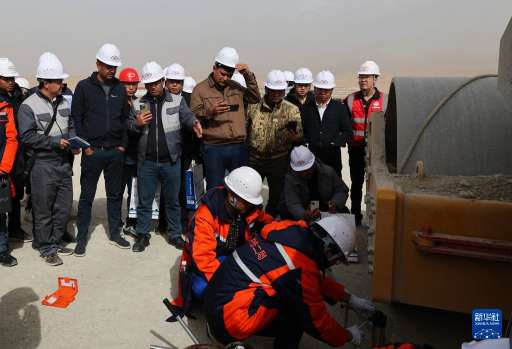
On September 18, 2025, in Naryn Region of Kyrgyzstan, engineers and technicians from Kyrgyzstan and Ukraine learned on-site about the subgrade construction work carried out by the Chinese construction team. Xinhua News Agency
The United States is increasing its investments in Central Asia through the C5+1 initiative, key minerals, and artificial intelligence cooperation. Li Lifan views the SCO as a buffer, not a megaphone: "The SCO is a buffer that aims to reduce contradictions and sensitivity. It can transform bilateral projects into multilateral initiatives, thereby mitigating the sensitive interpretation of the 'Chinese label'."
In his view, the SCO will not confirm the misinterpretation of ‘Chinese tools’. Instead, it represents a source of inspiration for Chinese technology in Eurasia. ‘The West will certainly misinterpret and criticize this, but the determination of the SCO will not change.’