On August 31, the South Korean "Joint Investigation Unit for Corruption in Political and Religious Collaboration" concluded its nearly eight-month investigation and announced for the first time the results of the investigation into the personal vault of Han Hee-seo, the president of Unification Church (World Peace Unified Family Federation).
Investigators said that they have seized a large amount of cash worth approximately 26 billion Korean won (about 127 million yuan) from private safes set up in Han Hee-ji’s bedroom and other places. Measures were taken to preserve this money. Meanwhile, Han Hee-ji and three others have been charged with embezzling about 10.5 billion Korean won of church funds between 2017 and 2025, and they have been indicted additionally.
The footage showed that Han Hezhi’s vault looked no different from a regular large wardrobe or wall furniture. Upon opening, the interior compartments were filled with bundles of cash. Investigations revealed that these private vaults were located in areas such as Han Hezhi’s bedroom and dressing room, and were managed by specific staff members on a long-term basis. Korean media reported that there were no complete and independent records of financial transactions related to these funds.
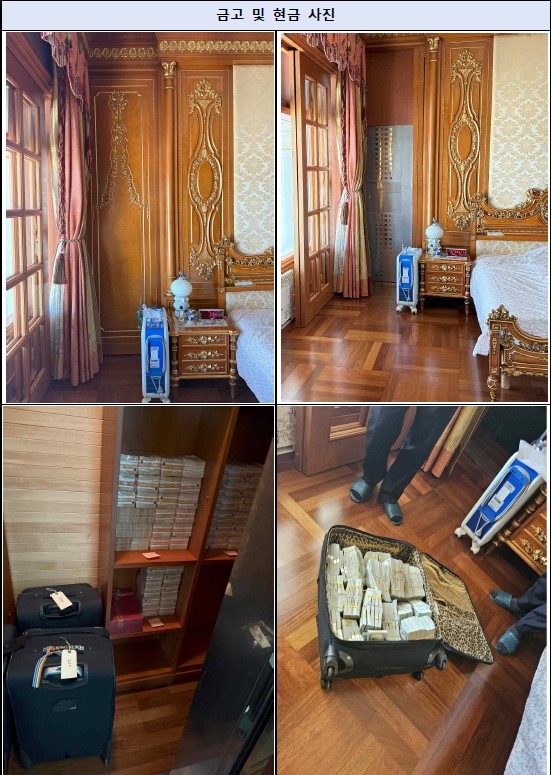
As early as July 18, 2025, the special prosecutor team led by Min Jung-ki conducted a search of the "Tianzheng Palace" of the Unification Church located in Gapyeong-gun, Gyeonggi-do, in connection with the case involving Kim Jian-hee, the wife of former President Yoon Suk-yeol. According to a later report by the Korean Daily News, the prosecutors found a large amount of cash in Korean won, US dollars, and Japanese yen in Han Hee-jo’s dressing room and bedroom vaults at that time.
Among them, the cash vault in the dressing room contained approximately 3 billion Korean won and 200 million Japanese yen. The cash vault in the bedroom also contained about 3 billion Korean won and 13.1 million US dollars. Calculated at the exchange rate at the time, this amounted to approximately 28 billion Korean won. The cash even included three bundles of “official sealed notes” issued by the South Korean Bank System, each worth 50 million Korean won.
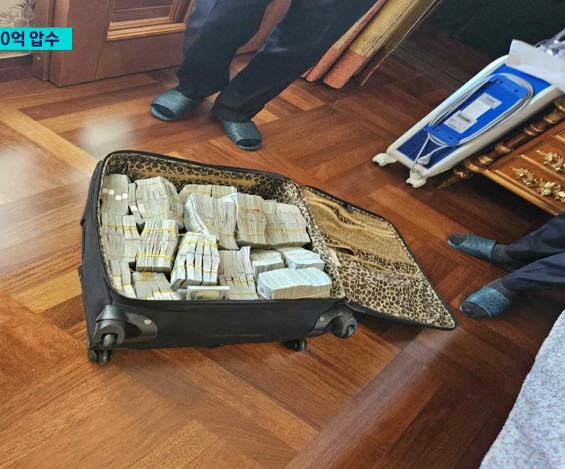
This money had already alerted investigators at that time.
At that time, the investigation by Kim Kangsih and the prosecutor was investigating whether the Unified Church had channeled political funds and valuable gifts to politicians, including former World President Yun Young-ho. Therefore, there was once suspicion that Han Hee-ji’s personal wallet might be one of the sources of these funds.
But the problem is that this large amount of cash did not fall within the direct investigation scope of the case for which the search warrant was issued. Therefore, the special prosecutor did not seize it; instead, they only confirmed the amount of cash and summoned the staff responsible for managing the vault to inquire about its source and purpose. Subsequently, as the pressure from unified political lobbying and internal funding issues continued to grow, this amount of vault cash came into the view of the South Korean police and the later established joint investigation team.
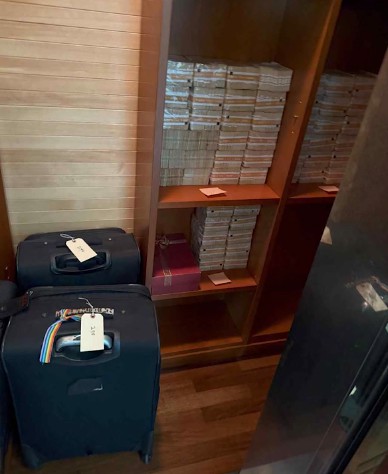
In January this year, the South Korean prosecution and police established an “Joint Investigation Unit for Corruption in Political-Religious Collusion” to investigate religious organizations such as Unification Church and New World Church for their alleged illegal involvement in politics and financial crimes. By May, investigators had identified the large amount of cash found in Han Hee-jo’s vault as a key target of their investigation, and began to investigate whether there was any issue of embezzlement of church funds.
Final survey results announced on August 31st provided a more comprehensive answer for the first time.
The Joint Investigation Unit determined that Han Hee-ja, former Secretary-General Chung Won-sul, and former World Minister Yoon Young-ho, among four others, were suspected of embezzling approximately 10.5 billion Korean won from the church funds between 2017 and 2025 through false accounting records and unauthorized collection of cash.
Investigators said that one method involved falsely recording funds as “support money for overseas missionaries”; another method was for believers to pay donations in cash, but not to include some of the cash in the church’s official accounting records, instead transferring it into Han Hezi’s private vault. Based on this, the prosecution charged Han Hezi and others with violations of laws such as the Special Economic Crimes Severe Punishment Act.
The Unified Church denies the investigation agency's determination of the nature of the funds in the vault.
According to the South Korean 'Chungang Daily', the unified church claims that the money in Han Hee-je’s personal vault comes from 'faith gifts' or donations voluntarily offered by believers and church organizations based on religious beliefs. The funds are not taken by Han Hee-je for his own use; instead, they are used for religious activities such as missionary work, not for personal consumption.
The Joint Investigation Unit stated that this investigation not only uncovered the issue of religious organizations attempting to influence political party decisions through their vast organizational power, but also identified structural funding crimes within religious groups as illegal sources of political funding. The investigation unit concluded its activities on August 31, 237 days after its establishment, and 32 individuals were brought to court related to the Unified Church and New World Church.
Interestingly, on the same day that the Joint Investigation Bureau announced the results of the investigation into the “26 billion won treasury”, Han Hee-jea herself faced a first-instance judgment in another case involving political interference with religious affairs.
Seoul Central District Court determined that in the lead-up to the 2022 South Korean presidential election, Han Hëe-seok and others provided a total of 1 billion Korean Won in political funding to then-National Power member Kwon Seong-dong. They also gifted valuable items like "Kuanjin Master" full name Kim Jae-hik's precious necklaces, Chanel bags, and sought support for the "Unified Education" related affairs from the Yoon Suk-yeol government. The court ruled that core charges of Political Fund Act violation and Improper Solicitation were proven, resulting in a prison sentence of two years for Han Hëe-seok.
The court stated in its judgment that the relevant individuals used the financial power of the unified church to regard presidential elections as an opportunity to expand the influence of their church, attempting to thereby increase their political influence. Their actions have damaged public trust in the process of national policy-making.
We will challenge the determination that we cannot accept any claims or approvals for acts of illegality regarding Han Hezi's instructions or directives.
It should be noted that the case in which Han Hezi was sentenced on August 31 is not the same trial process as the alleged embezzlement case worth 10.5 billion Korean won announced by the Joint Investigation Unit on that same day. The latter case is one that was recently discovered and brought to trial as an addition to the joint investigation. The source of the 26 billion Korean won in funds in the private vault, as well as their specific flow, will still be subject to further examination in subsequent judicial proceedings.
