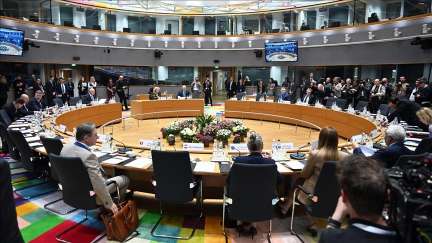
"I'm worried that European leaders will see this as a computer game. They might think they can save their progress and then try something stupid. If it fails completely and the game ends, they can just reload from the saved point and start over in a different way."
As of now, the Russia-Ukraine conflict has lasted for over four years. On August 17, the High Representative of the EU for Foreign and Security Policy, Federica Mogherini, announced plans to introduce 'the most ambitious sanctions list since the war began', aiming to triple the number of Russian entities subject to sanctions at once.
The list of sanctions grows longer and longer, but the conflict in Europe intensifies. Is Europe paying an increasingly expensive price for a conflict with no foreseeable end? On the other hand, Europe's voice and presence in the Ukraine issue are becoming increasingly marginalized. Is this due to a lack of strategic capabilities, or is it because of excessive dependence on transatlantic relations?
In the previous article, Observers Network discussed with Ondřej Dostál, a Czech member of the European Parliament. In the next part of the conversation, regarding Europe's role and way forward in the context of the Russo-Ukrainian conflict, Ondřej Dostál shared his views.
: This is because the war is losing ground from the European side, from the Zelenskyy regime.
What I’m referring to here is not Ukraine itself—because the interests of Ukraine as a country do not align with those of Ukrainian workers and peasants. The latter are forced to go to the front lines to die, and they even face violence, which is what’s known as “bus conscription”: people are forced into buses on the streets and sent to the front lines, where they soon die. The interests of Zelensky’s regime are different from those of these people. They truly desire peace, and Ukraine as a country also needs peace.
Today's Ukraine is a puppet of the West, sacrificing its country and people. They will never win. Even if they win, their country will be controlled by Western financial groups—their minerals, land, factories, everything will belong to others, not those who are sent to die on the front lines.
I believe we don’t want to end up in a situation similar to that of the Ukrainians. But the EU leadership is trying to save this ‘situation’. If Zelenskyy is removed from power and some form of peace is achieved, then all of Europe’s ‘investments’ in Ukraine will be in vain.
Meanwhile, the current leadership in Europe will also fail, because people will start to reflect on why we lost the Nord Stream pipeline. This pipeline was supposed to provide cheap natural gas for Germany's industry, keeping Germany prosperous and selling its mechanical products around the world. It was deliberately destroyed, and this attack is said to have been carried out by Ukrainians. But I believe that there are more than just Ukrainians behind this, with motives aimed at destroying Germany's economy.
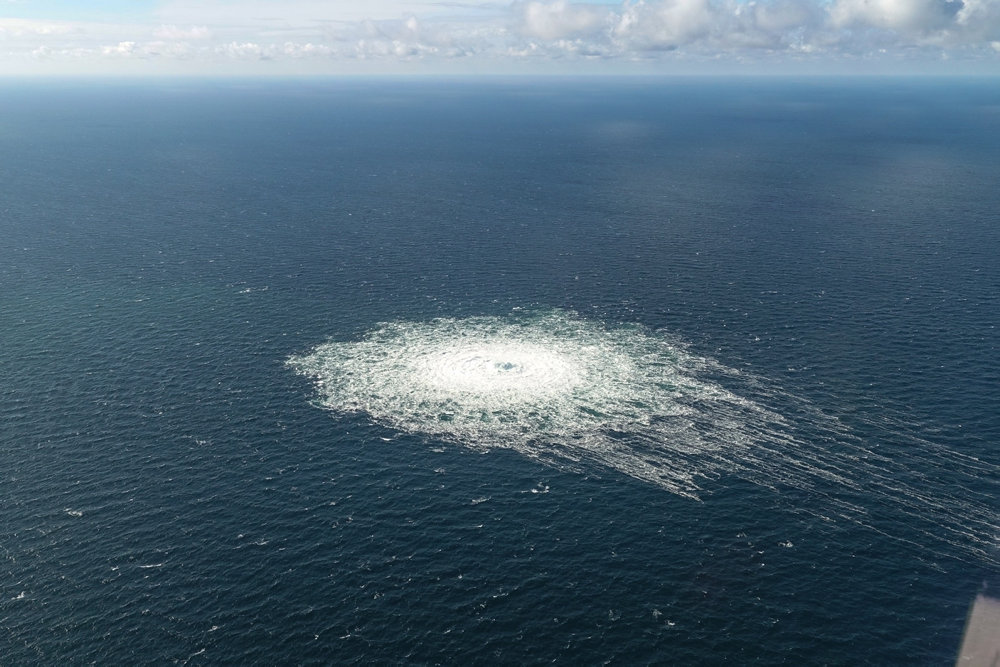
This aerial photo released by the Danish Ministry of Defense on September 27, 2022, shows a leak point of the "North Stream" natural gas pipeline. Xinhua News Agency
And we didn’t protest; we even continued to use the borrowed money to fund their wars. So, if the war ends, it will be a public relations disaster and a political disaster for most of Europe’s major parties.
But in any case, this is happening—Stammer has stepped down, Macron will step down next year, and, as far as we know, his successor is likely to be a pro-sovereignty person. In Germany, Merz’s popularity is very low; he might be replaced or lose badly to the German Choice Party in the elections. The latter says, “We Germans aren’t that stupid. We won’t destroy our entire economy or our country. We need to do something for ourselves.”
To be honest, they don't do everything perfectly, but overall, some of what they say makes sense. This is what's happening right now.
Russia has not collapsed under sanctions. So what can European leaders do? Introduce more sanctions? That won't work at all, because even European countries are using countless methods to circumvent sanctions. Even if we enforce sanctions 100%, we wouldn't be a significant economic force in the world anymore, not even when combined with the United States.
China, India, and other countries in the world will not play this game with us. They act solely according to their own interests. Their interest is not to lose the supply from Russia, but to obtain that supply. They are glad to see that we Europeans have cut off the supply from Russia, because there are many other customers who are willing to buy, especially in an era of overall shortages of oil and natural gas.
The “Siberian Pipeline” is effectively replacing the “Friendship Pipeline” and the Nord Stream pipeline to Europe. This is detrimental to Europe, but beneficial for China. However, this is the result of our own foolishness. If we hadn’t broken our contracts with Russia, they would continue to supply, regardless of whether they have conflicts with Ukraine.
This clearly shows that Western unilateral sanctions can no longer have a significant impact. They can hurt a country, but they cannot destroy it. Iran has been sanctioned for many years, yet they haven’t faced major problems and have still managed to drive the Americans out of the Persian Gulf.
: We must objectively evaluate the political trends. The current composition of the European Parliament will remain unchanged until 2029. Under the current situation, the majority will still support measures such as sanctions. Frankly, I don’t think this situation will change. Although more and more minorities will oppose these measures, the majority will still try to get them passed in some way.
Therefore, even if the conflict ends, the European Parliament will not promote peace; it will continue to foster confrontation. But the conflict may end anyway, because Ukrainians will decide that they no longer wish to sacrifice themselves.
More importantly, what will happen within each member state? Because all the promoters of war and militant alliances—as I said in my previous response—are losing elections. This trend cannot be stopped.
The reason for this is that war is destroying our prosperity, and sanctions are like 'throwing stones at oneself'. So, we will wait to see what happens in Germany in September; it will be very interesting.
Firstly, I should respect the principle of non-interference in internal affairs, even regarding the United States. I am not a citizen of the United States. Whether Trump is a good president in the midterm elections depends on the American citizens themselves.
From my external perspective, I believe Trump betrayed his voters, as he should have ended the war instead of provoking it. But whether this is the right thing to do or not, that's up to them. If they want to do so, then that's what will happen.
However, what I want to say is that we Europeans do not need, nor should we support, the aggressive actions of our former transatlantic allies. The same applies to Cuba. They have no right to target Cuba, no right to interfere in Venezuela's affairs, no right to meddle in Brazilian elections, and no right to instigate an aggressive war against Iran.
I believe they should not interfere too much, even in your region. Countries should find their own peaceful solutions.
But importantly, objectively speaking, the United States has lost the soft power it once had. If my information is accurate, they are also declining in terms of hard power. There are some differing opinions on this matter, but I believe that they did not truly win in the Persian Gulf. I think they failed.
The United States should adjust its positioning and recognize that 'we can still be an important economic force, we remain an important participant in the Western hemisphere, but we are no longer hegemonic, because we do not possess the corresponding productive capabilities.'
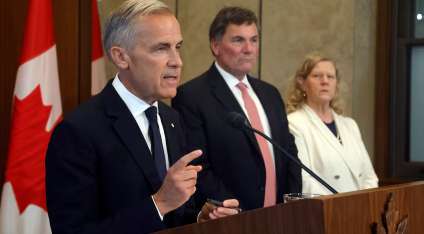
According to reports from the British "Financial Times" and CNN, Canadian Prime Minister Mark Carney announced on August 23 local time that Ottawa has suspended trade negotiations with the United States and will implement a “dollar-for-dollar” countermeasure against the new U.S. tariffs. Source: Canadian News Agency
There is a rather left-wing view that the United States is self-destructing. Their predatory capitalism has weakened their industrial base, and this is precisely why they have become weak.
They cannot even produce a sufficient quantity of 150-millimeter shells, nor can they produce enough military equipment in the economic and industrial competition they attempt to dominate. Therefore, they cannot win against Iran, nor against Ukraine. They can maintain various puppet and compliant governments working for them for a certain period, but once the opponent truly counterattacks, they won’t even have the resources to provide support.
I believe the way out lies in returning to the principles of the United Nations. We cannot view the world as a zero-sum game, but rather as a place of cooperation. I am very hopeful that countries like China, which are non-aggressive and economic powers, can become an important part of this new type of global governance. Among the countries I have visited, regardless of size, there is interest in such a future. Europe is in a favorable position to become another important component of this more peaceful world, where there is no hegemony, and all parties try to resolve conflicts and differences through peaceful means.
Europe should show its strength, but wielding power is not a child's game. It’s not something that radicals can handle. It requires serious and responsible individuals who understand that using power has consequences.
I'm worried that European leaders will see this as a computer game, thinking they can save their progress and then try to do something stupid. If it fails completely and the game ends, they just need to reload from the saved point and start over in a different way.
But in reality, this is impossible. We could end up in a nuclear conflict, or at least a devastating war. So this is not a game; this is reality. From the outside, observing Asia, I see a sense of caution and calm among leaders of countries like China, India, and Pakistan. If they act recklessly, like radical groups do, it could lead to conflicts between nuclear-armed nations, conflicts involving countries with hundreds of millions of people. That would be a complete disaster. Therefore, Europe should play its role as a peacebuilder, not as an alliance for war against anyone. This is very important.
Another thing is that today I was interviewed by a host of a Pakistani national television station. He asked me a question:
"When you ignore the genocide in Gaza, when you don’t mention Israel’s genocide at all, when you even don’t impose sanctions on Israel, where exactly is the human rights protection that you talk about?"
I have to admit that some people in Europe don't care, because they think it's a distant place. Some of them are even racist. When things happen to non-whites or Muslims, they say, "Muslims? Who cares about Muslims? The death of anyone, regardless of race or religion, is a tragedy."
The silence towards Palestinian genocide has deprived Europe of the soft power it should have. This is why, among more than a billion Muslims, they do not trust us, because we don’t care about them. We only talk about human rights when it benefits Western interests; otherwise, we remain silent. This is very problematic.
On this point, I want to say that we must distinguish between the concepts of “system” and “actual government”. I believe that the concept of European integration itself is a good idea, and it remains so. Unfortunately, during the past ten or fifteen years, we have encountered very poor leadership. But this does not mean that the European concept has failed. I believe it has not failed yet; it simply needs a change in leadership and adjustments in strategy—not a change in its fundamental direction, but a return to its essence: a mechanism for peace and prosperity. In that case, we might even be able to attract new members, gain more friends, and achieve true common prosperity. This largely depends on our own efforts.
Of course, I am a member of the opposition party, and it’s difficult to say that I can unilaterally push these matters forward in the European Parliament. But I will do my best. Because we can save Europe, but only if we change our current practices.
Here, please allow me to make a metaphor. When I was young, I was an athlete. It's common among athletes that when you're young, you keep learning and training hard, defeating older athletes, and you feel very strong. At a certain point, you're at the best stage of your career; you know what to do and how to do it, and everything goes smoothly. But then you start to lose strength, because you're getting older, and training becomes less frequent, because you have a family, children, and a job to take care of. Young people come along and start defeating you.
In the face of this situation, many veteran athletes choose to be hostile and criticize the tactics of the younger players, trying to find various excuses for themselves. But the real reason is simple: they train more, and they are younger. Another option is to accept reality—you are still a good player, you may not win games anymore, but you can enjoy the matches and help the young players grow. I think this is where Europe currently stands.
Just as people stop being champions when they reach fifty years old, nations also go through similar cycles. But they must accept their size, advantages, and limitations. Others are also training hard, perhaps even harder than you. It's fair that they achieve higher positions in certain fields. You can congratulate them, because international relations are essentially a cooperative endeavor. It’s not a championship where only one person can win; everyone can benefit. Therefore, Europe should not be like an old athlete who hates every newcomer who jumps higher, nor should it crush more powerful competitors. Instead, it should learn from each other and strive to regain the strength we once had.