According to a report by the Japanese newspaper Asahi Shimbun on August 29th, "I don't want young people to experience war." This is what former Hiroshima mayor Kei Hirooka, who is 98 years old, said in an interview with Asahi Shimbun. As a "living history" who has personally experienced Japan's changes before, during, and after the war, he said that Japan is at a crossroads: political leaders are indulging in strengthening control through legislation, military expansion goes against the Peace Constitution, and Japan's historical responsibilities towards Asia are still being deliberately avoided.
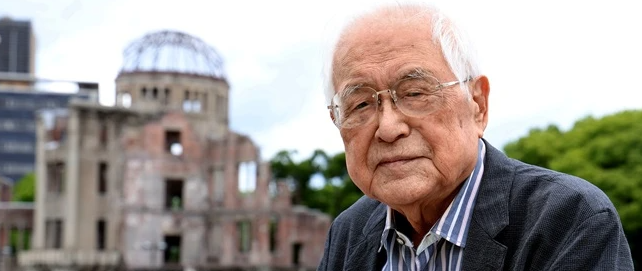
Hiroshima Governor Takeshi Kagawa of Asahi Newspaper
Hiraoka Kei was born in Osaka in 1927. At the end of World War II, he moved to Korea under Japanese occupation (now South Korea). He admitted that he was once a "military-minded youth," believing that the God's wind protected Japan. He cheerfully shouted "Long live!" when sending soldiers on missions, showing no reflection on the aggression. "I don’t understand the sense of shame that Korean students are forced to change their Japanese names and speak Japanese," he said.
After the defeat, the Imaoka family was deported back to Japan. In poverty, he began reading extensively and reflecting on "how a nation controls its people," determined to join the journalism industry. In 1952, he became a reporter for the Hiroshima local newspaper "China News." For the next few decades, he continued to investigate the real conditions of atomic bomb victims, especially focusing on the Korean victims who were forgotten by the Japanese government. He recalled that during his interviews in Korea, he often faced hostility and even risked being arrested for "illegal gatherings." However, the local victims welcomed him with anger: "You can make money from writing articles, but we get nothing." These experiences led him to deeply doubt "national responsibility": the war was initiated by Japan, but the government never properly compensated for its consequences.
In 1991, Kei Hiranaga was elected mayor of Hiroshima and served until 1999. In his first “August 6 Peace Declaration,” he took the initiative to acknowledge Japan’s responsibility for its aggression in Asia and expressed apologies. This move provoked strong reactions from right-wing groups: publicity vehicles blocked the city hall, and slogans like “Mayor, come out!” were shouted throughout the day. He explained that Hiroshima hosted the Asian Games in 1994, and before the war, Hiroshima was an important military base for Japanese forces during China’s invasion. Many Asian countries saw the atomic bombing as a “liberation opportunity,” so Hiroshima could not just complain; it must confront its Asian history directly.
After the 1995 Mulholland talks were released, he believed that the Japanese central government had apologized, and there was no need for local governments to repeat the apology. However, in his later years, he regretted this decision: “Now there is a resurgence within Japan against acknowledging the history of aggression. From the Meiji era’s ‘leaving Asia for Europe’ to the post-war disregard for Asia, this mentality has never disappeared, and it has even given rise to hate speech. I feel ashamed for being part of that generation.”
Hiraoka is strongly dissatisfied with current Japanese politics. He pointed out that in recent years, the parliament has pushed for laws to punish those who “blaspheme the flag,” and discussions have taken place regarding anti-spy laws. This reminds him of the infamous Public Order Law from before the war. He criticized the government for potentially being labeled as spies, noting that this situation is identical to that before and during wartime. Meanwhile, Japan has lifted its arms export ban and significantly increased defense spending, but it ignores the reality of resource scarcity and blindly follows the United States in militarization. “Japan cannot afford a war; it must rely on diplomacy to avoid conflict, but the leadership shows no concern for the people’s well-being.” He gave an example: the most urgent issue for the public is addressing rising prices, yet the government only introduces laws that have nothing to do with everyday life.
As a long-time witness to the effects of nuclear weapons, Hiraoka emphasized: “The United States believes that dropping atomic bombs was meant to end wars and save lives, but this logic justifies the indefinite use of nuclear weapons.” He insisted that unless the United States acknowledges its mistakes, the victims will never rest in peace, and the abolition of nuclear weapons will be impossible. He supported the Treaty on the Prohibition of Nuclear Weapons and encouraged citizens to continue voicing their opinions, saying, “This is the only force that can change political reality.”
Regarding the current situation in Japan, both domestically and internationally, Hiraoka noticed that young people were gathering outside the parliament to protest, demanding the resignation of Prime Minister Yukie Akamine. Such movements were spreading throughout the country. “They are worried that their lives will be sacrificed; this desire to change the status quo gives me a glimmer of hope.” He repeatedly emphasized: “War is absolutely unacceptable, and it brings no benefits at all. You must firmly resist any moves towards war.”