In mid-August, the United States imposed new pressures on Burkina Faso regarding human rights issues, with terms related to accountability and sanctions being brought back into play.
In February of this year, the U.S. State Department also signed a five-year memorandum of cooperation on health with Burkina Faso: The U.S. will invest up to $147 million in AIDS prevention and control, malaria prevention and control, and infectious disease monitoring. Burkina Faso pledged to increase its health expenditure by $107 million during the same period.
However, just half a year later, the hand that signed the contract has now raised a stick.
Repetitions in diplomacy are not new. But looking at the past decade, this sudden change over the past six months is not just an incident; it represents the latest chapter in America’s erratic policies towards the Sahel region. Burkina Faso happens to be the most convincing footnote in this story.
First, let’s see who is sitting opposite the negotiation table.
Ibrahim Traoré is the current President of Burkina Faso. He came to power in September 2022 at the age of 34, making him the youngest head of state in the world at that time. Since taking power, he has done almost everything that can be listed as actions against the West.
In early 2023, the French military forces were withdrawn, and the “African Legion” from Moscow was brought in. Russian troops began to deploy in January 2024. Burkina Faso formed a Sahel National Union with Mali and Niger, and the three countries withdrew from the West African Economic Community in January 2025. Elections were postponed, and the transition period was extended by five years. In April 2025, he publicly stated that Burkina Faso “is not part of democracy, but is undergoing a progressive revolution of the people.” To commemorate the one-year anniversary of this revolution in April of this year, he went even further: “Democracy is slavery; there is no democracy in this world… Democracy does not suit us.”
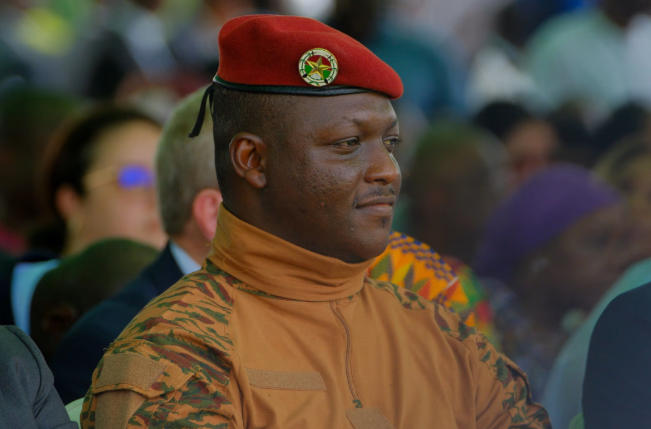
Burkina Faso President Ibrahim Traoré Reuters
By all standards, such a regime should be on the list of sanctions imposed by Washington, rather than on the list of countries receiving health aid. That is indeed the case during the Biden administration: after the coup, Millennium Challenge Corporation terminated a $450 million power assistance agreement, Burkina Faso was removed from the trade preferential list under the African Growth and Opportunity Act, and most development aid and military cooperation were frozen.
Then Trump returned. "Trade, no aid—that’s our current policy towards Africa," said Philelph, the senior official for African affairs at the State Department, in Abidjan in May 2025. According to American media reports, Washington has made it clear to the military governments in the Sahel region: The United States can provide counter-terrorism equipment and intelligence, and even assist in "targeted eliminations" of jihadist leaders. In exchange, minerals like lithium and gold will be open to US companies.
147 million dollars for health agreements is part of this “America First” global health strategy. African countries are well aware that this is not charity:
Zimbabwe outright rejected a five-year agreement worth $367 million. According to the US embassy, this was the largest potential health investment in Zimbabwe’s history. However, the US demanded direct access to national health data and pathogen samples, without promising that vaccines, diagnostics, and medications developed based on these data would benefit Zimbabwe, nor was it willing to share its own data equally. Information Secretary Mangwana called this an "unequal exchange." On December 23, 2025, President Mnangagwa ordered that the negotiations be immediately stopped, as the memorandum was "clearly one-sided and blatantly undermines Zimbabwe’s national sovereignty and independence."
Similarly, Zambia refused to sign the agreement when it was tied to access to copper and cobalt. The US offered up to $2 billion in health assistance over five years. However, the leaked draft health memorandum contained a conditional clause—if both parties failed to reach an agreement on another key mineral cooperation agreement by April 1, 2026, the health agreement would automatically terminate. In other words, to obtain this much-needed aid, Zambia had to grant priority access to copper, cobalt, and lithium to US companies, shifting the focus of mineral access from China to the US.
An internal memo from the US Department of State says it more bluntly: If no agreement can be reached, then “a large-scale public withdrawal of support for Zambia” will occur. On May 4, 2026, Foreign Minister Heimbe issued a statement in response, demanding that the health agreement be separated from the mineral agreement, and that both agreements be reviewed separately according to their merits and demerits. He also emphasized that “no strategic partner should receive preferential treatment over others.” The negotiations were thus suspended.
In contrast, Trao's approach is more straightforward: sign the documents, get the money, and then continue to criticize Western imperialism in his speeches.
The calls for sanctions do not come out of thin air. No matter how inconsistent Washington's policies may be, the humanitarian disasters under the military government are real, and this fact should not be obscured by any stance.
In March 2025, a massacre in the Sahel region occurred in the western Soronzo area. A survey by Human Rights Watch confirmed that during the large-scale military operation codenamed "Green Whirlwind 2", special forces from Burkina Faso and pro-government militias known as "Citizens Guard Volunteers" carried out executions of Fulani civilians. The list of victims compiled by survivors includes 130 people, among whom 32 are children, with the youngest being only one month old. Several witnesses estimate that the actual number of deaths may have reached hundreds.
During the massacre, military helicopters and gray drones were constantly circling above. After the operation ended, the army withdrew within two days, leaving the village to the resurgent branch of al-Qaeda called “Support for Islam and Muslim Organizations”. This group, under the pretext of “collaboration”, retaliated by killing at least 100 civilians.
As of April this year, Human Rights Watch's report shows that approximately 40% of the country is outside government control. There are over 2.3 million displaced people and refugees, which means that almost one in every ten citizens is homeless. It's worth mentioning the dual nature of security data. The Global Terrorism Index released in March 2026 showed that Burkina Faso had a 45% drop in terrorist deaths by 2025, with civilian deaths reduced by 84%. This meant that Burkina Faso was left behind for two consecutive years, with Pakistan taking its place. However, the same report also warned that the decline in numbers could be due to jihadist organizations consolidating their territory, shifting from guerrilla attacks to siege warfare, and implementing economic blockades against major towns to cut off supplies. Fewer battles may not necessarily mean victory; it could also mean that the opponent has changed their tactics—from killing to siege.
Diplomatic confrontations are also escalating. In October last year, Burkina Faso publicly refused to accept third-country immigrants expelled by the United States. The foreign minister made a blunt statement on state television: "Burkina Faso is a country of dignity; it is a destination, not a place for expulsion." As a result, the U.S. embassy in Burkina Faso suspended most visa services. In December, the United States listed Burkina Faso on its comprehensive entry restrictions list, and Burkina Faso responded by suspending issuance of visas to U.S. citizens. In January this year, the Traoré government announced the thwarting of a assassination plot involving "external forces" in ground operations. According to a memorandum from the U.S. State Department, which was disclosed by The Atlantic Monthly, Burkina Faso has been included in a list of seven African countries that will lose all U.S. humanitarian aid, on the grounds that "there is a lack of strong connection between humanitarian responses and U.S. national interests." Having reached this point, it is only a matter of time before the word "sanctions" is actually used.
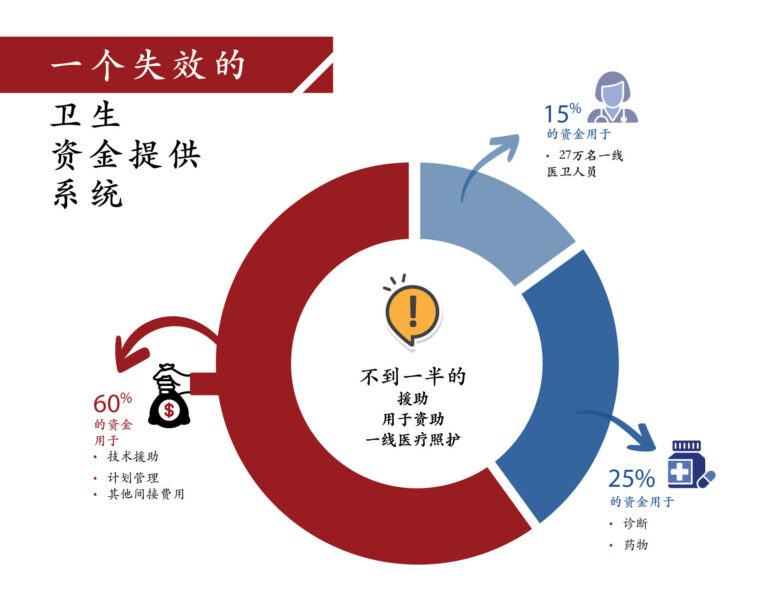
The U.S. health assistance programs are, in fact, a dysfunctional system.
At this point, it's easiest to label the United States as "hypocritical," but it's also the most lazy way of doing so. Hypocrisy presupposes the existence of a set of hidden, coherent intentions. There's another seemingly more benign explanation: this is simply a "stress response" — exposure of the tragedy, backlash from public opinion, pressure from Congress, and the administration forced to revise its policies.
But this explanation also doesn’t hold up. Solenzio’s blood was shed in March 2025, nearly a year before the health agreement took effect. On the day of signing, Washington was well aware of the existence of the mass graves. Knowing about the graves yet still signing the agreement—this isn’t called stress; this is called the urge to make deals override moral principles, only to be realized later that it couldn’t be overcome.
When looking at this issue from a institutional perspective, it becomes even clearer: the executive branch wants to conduct business, but Congress and human rights organizations prevent such businesses from happening in a proper manner. Decentralization and checks and balances are supposed to be the norm, but the norm shouldn’t mean a situation where control is lost completely. Look at the several conflicting actions that have been carried out in Washington over the past six months: Health diplomats from the State Department are signing agreements, while Congress is discussing sanctions. General Langellie of the African Command is accusing Teareauley of “using gold reserves to support his regime and protect himself” during a Senate hearing. Each voice speaks their own language, with no one stepping in to provide a unified response. Therefore, what the outside world sees about America depends on which side you listen to; the result of having these three separate paths is that none of them can be taken seriously. This is the exact meaning of “chaos”: it’s not that someone has a confused mind, but rather that different parts of the system are acting in opposite directions, without any coordination between them.
After Langley said those words, it sparked a textbook-level backlash in African social media: 165 Facebook accounts used the same messaging to spread false information claiming that “Putin had sent special forces to protect Traore”. In just ten days, this message was viewed 10.9 million times. Washington’s accusation served as a free global marketing campaign for Traore’s pan-Africanist hero image, something he himself couldn’t afford to do.
The result of betting on both sides is a failure. During Biden’s administration, aid was frozen and trade incentives were removed, but this did not lead to a return to democracy. Instead, it pushed Burkina Faso closer to Moscow. During Trump’s administration, promises of healthcare and mineral deals were made, but this did not gain influence, as Traore took money without delivering any results. Now, even if sanctions are imposed, they are unlikely to crush this regime. Instead, they will only reinforce the narrative that Traore repeatedly told the people: The West has never treated us equally.
Moreover, the weight of this heavy stick has long been different from what it used to be. The security lifeline of the military government now lies in the hands of Moscow and Ankara: Russia’s “African Legion” is stationed within the country, and Turkish drones provide aerial support. The most traditional tool at the US’ disposal—security assistance—has been effectively rendered useless. Intelligence cannot lead to cooperation, equipment cannot be delivered to military camps, and Moscow even uses its diplomatic influence to shield the military government from accountability demands. The remaining targeted sanctions can only freeze the overseas accounts of a few generals for a regime whose exports account for 80% of its economy; they cannot impact the survival logic of that regime. Those who will truly suffer are others: once the channels for health cooperation are cut off, the cost will have to be paid by ordinary people in conflict zones who rely on community health workers to maintain supplies of vaccines and anti-malaria drugs. It should be noted that in 2025, Burkina Faso saw a 32% decrease in malaria cases and a 44% decrease in deaths related to malaria.
Finally, it’s necessary to bring to the forefront a fact that is often overlooked in the narratives of major nations. Burkina Faso is not just a piece of chess on the board between the United States and Russia. This is a country with over twenty million people, where forty percent of the population lives below the poverty line. It has been torn by rebel movements from extremist organizations for a full decade. The enthusiasm of young people who wave portraits of Traoré and Sanaka is genuine, because the old order indeed failed them. The mass graves at Soroni are real too; no matter how beautiful the anti-imperialist rhetoric, it cannot bury those who died in disasters that occurred months ago. And the dilemma faced by the United States must not be ignored either: they need minerals and geopolitical assets, yet they cannot ignore humanitarian disasters.
Between $147 million and the threat of sanctions, there are six months. During these six months, what is measured is not the distance between the United States and Brazil, but a deeper kind of panic: slipping from “principles” to “negotiations,” negotiations failing, then turning back to “principles.” So the real question isn’t whether the United States should impose sanctions, but what remains in Washington’s hands when aid can be withdrawn at any time, agreements can be forgotten at any time, and principles can be dismissed at any time. What can convince anyone in the Sahel region of the validity of any signed agreement?
History has always been reluctant to provide answers to such questions. But one thing is certain: in the dust of Varagdudu, the shifting bills never reach those who change their faces.