On August 26, the BBC reported that Canada has announced the imposition of retaliatory tariffs of up to 50% on US goods worth $20 billion, in response to the new round of tariffs imposed by U.S. President Donald Trump on Canadian imports last weekend.
Canadian officials said on the 25th that Canadian tariffs will apply to 900 categories of U.S. products, valued at nearly 28 billion Canadian dollars (approximately 20 billion US dollars, or 136 billion yuan).
It is reported that this lengthy list includes: a 50% tariff on steel and aluminum products; a 50% tariff on various goods such as honey, furniture, clothing, and cosmetics; a 25% tariff on household appliances, dairy products, fish, and some steel and aluminum-derived products; and a 15% tariff on tools and machinery such as forklifts.
Canadian officials said that they carefully selected goods that domestic consumers and businesses can purchase through other channels, in order to minimize the impact on the domestic market.
Canada has listed a list of target products as a response to Canadian exports to the US that are affected by U.S. tariffs, with a total value of $20 billion. The new tariff measures will come into effect on September 8.
This is the latest escalation after the breakdown of trade negotiations between the United States and Canada last week. Both sides accused each other of making “irrational demands” at the last moment.
Canadian Prime Minister Justin Trudeau said in a televised speech that the US added unfair, economically unreasonable terms of engagement during the final stages of negotiations, which violated Canada’s sovereignty. US Trade Representative Robert Lighthizer claimed that it was Canadian negotiators who introduced new demands at the last minute, breaking the balance that had been reached after several days of negotiations.
Canadian Finance Minister Chambain said that after the negotiations broke down on Friday, the US imposed 50% tariffs on a series of Canadian goods, and Canada’s countermeasures were in response to this.
He said, "These customs duties will have a real impact on workers, enterprises and communities across Canada. Canada must respond." Shangpane described Canada's retaliation measures as "reciprocal" and "strategic."
He also added that Canada will provide an additional support program worth 7.5 billion Canadian dollars for businesses and workers affected by U.S. tariffs, with the aim of minimizing unemployment and helping these businesses maintain operations.
Polls show that most Canadians support their government in maintaining its stance against the United States. However, regarding why the trade negotiations failed, the Conservative opposition party demands that the government release the full text of the agreement.
After Canada announced retaliatory tariffs, the White House issued a statement saying that the United States is ready to offer Canada "the most favorable market access in the world" during recent trade negotiations.
The statement also said: "Canada did not choose to cooperate. Instead, it made unreasonable demands, acted in a way that was inconsistent with previous agreements, and completely rejected the US proposal."
On the 25th, Trump also accused Canada of having exploited the United States for decades and of imposing high tariffs on American farmers through a series of posts on the 'Real Social Media' website.
He wrote: “I have dealt with many countries, and Canada is undoubtedly the most troublesome and unreasonable. They think they have power, but they are not a state of the United States. No longer should they claim to have that kind of power!”
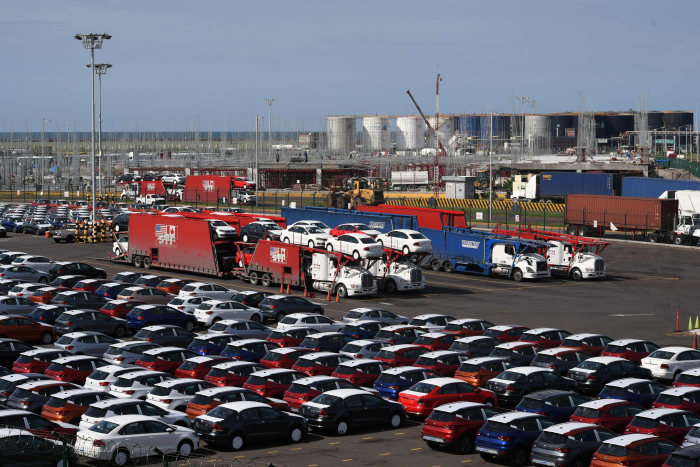
Trump also threatened this week that the United States would raise tariffs on Canadian cars to 50% starting from January 1 next year. Canadian Prime Minister Justin Trudeau responded that Trump aims to “destory” industries in Canada such as car manufacturing, steel, and aluminum production.
However, although the public remarks between the two sides reached a climax on the 24th, some officials took a more diplomatic tone on the 25th, hoping that negotiations could be resumed.
Alberta Premier Jason Kenney called Trump a "loser" at a news conference on the 24th, but later admitted to CNN interview that "it was a little over-the-top."
He indicated "But I want to achieve an agreement that is beneficial to Americans and Canadians."
This upgrade also raises questions about the future of the US-Mexico-Canada Agreement among the three countries.
According to the BBC, after Canada’s trade negotiations collapsed, Mexican President Claudia Zimbern sent her Economic Minister Marcelo Ebrard to Washington for urgent consultations.