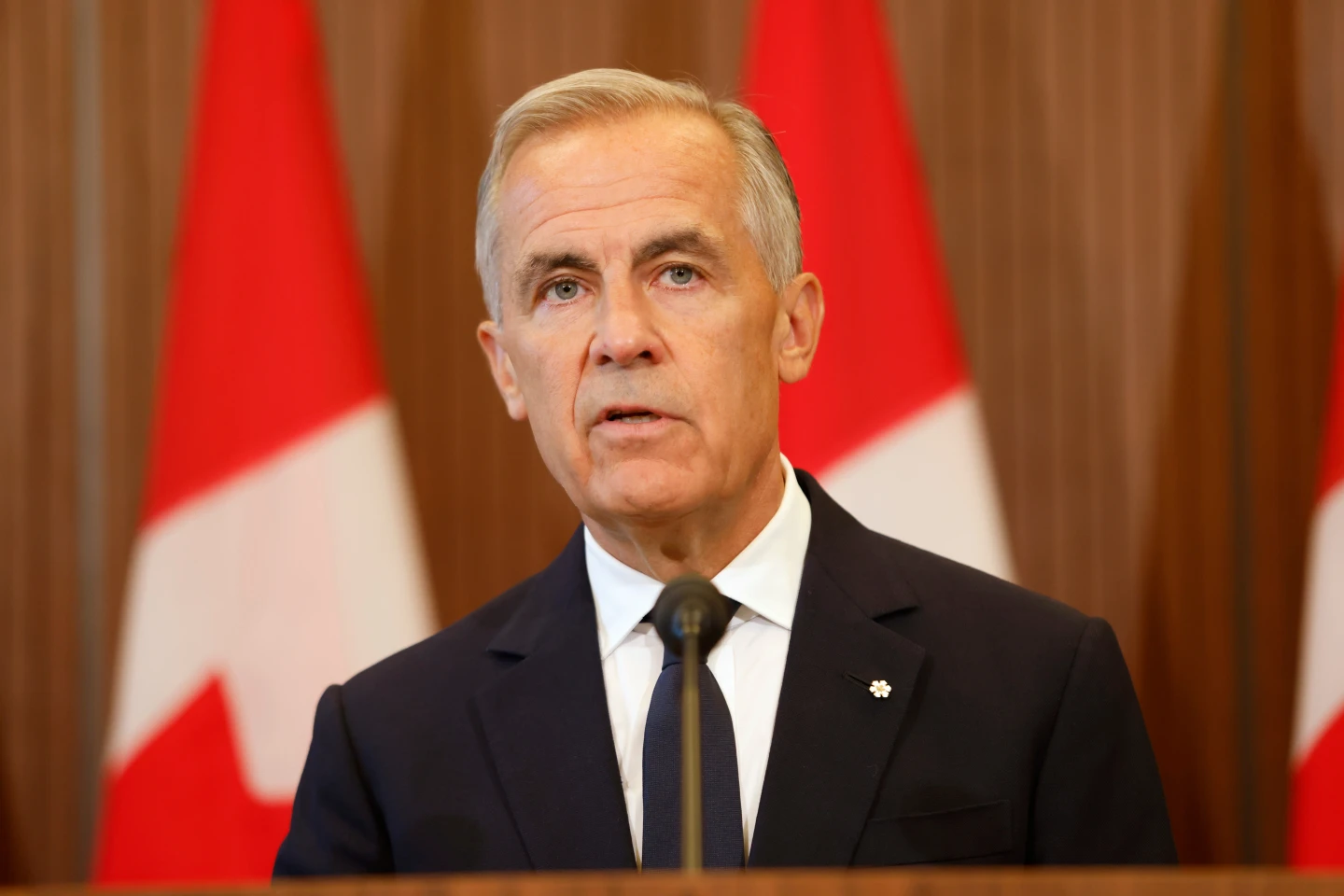
Foreign media have reported extensively that tariff negotiations between the United States and Canada collapsed on the evening of August 21, failing to prevent the United States from imposing new high tariffs on Canadian goods. In response, Canada immediately announced that it would take ‘one-on-one’ retaliatory measures.
Previously, U.S. President Trump claimed twice that an agreement had been reached between the two parties, and extended the deadline for tariffs. Even hours before the negotiations broke down on Friday, Trump still expressed the hope that an agreement could be reached. In response to this contradiction, The New York Times published an in-depth investigative report on August 23.
Canadian Prime Minister Mark Carney stated that the negotiations were terminated due to the US side introducing terms that were "unfair, uneconomical, and seriously undermine the reliability of any agreement" at the last moment. Therefore, he decided to suspend the negotiations.
Specifically, U.S. negotiators demanded that Canada stop promoting its own content (including French content) on online streaming services, cancel subsidies for industries such as publishing and film production, and even abolish the requirement to display both English and French labels on packaging—French being one of Canada's official languages.
While American officials argue that the concessions required by Canada in terms of trade in automobiles, steel, aluminum, and wood exceed what the US is willing to offer.
In his speech on Saturday, Carney harshly criticized the U.S. proposal as a "terrible deal," explicitly calling tariffs an attack on Canada. He stated that "the United States has changed" and emphasized that Canada would never compromise on sovereignty issues, nor would it damage its key industries. He also declared that Canada is "in a state of war with the United States."
The New York Times analysis suggests that Kanne is using this opportunity to portray himself as a strong leader who dares to confront Trump, and he has announced plans to take retaliatory measures to protect his country’s workers and businesses.
U.S. Trade Representative Gary Locke revealed that the U.S. had proposed reducing tariffs on automobiles, steel, and aluminum, as well as canceling tariffs on wood, but the negotiations suddenly came to an end.
Regarding this, Trump posted on social media on Sunday, stating that Canada “enjoys the benefits of being a state, yet doesn’t want to be one!! For years, they have been imposing huge tariffs on our great farmers. This cannot continue!!”
According to reports, the new tariffs affect approximately $20 billion of goods that the United States imported from Canada last year. These goods include hundreds of products such as fake beards, dog collars, plywood, toilet paper, dairy products, clothing, alcohol, and honey. Many of these affected companies are small businesses with limited financial resources, and it is likely that these companies will not be able to bear the continuous significant business losses.
Meanwhile, the breakdown of these negotiations also means that Trump’s previous tariffs of up to 50% on automobiles, aluminum, and steel have not been revoked. In addition, Trump has imposed an additional 10% tariff on softwood, raising the total tariff rate for this category to 35%.
American tariffs officially took effect on August 22, while Canadian retaliatory tariffs will be implemented on September 8. It is said that these tariffs will mainly target American steel, dairy products, household appliances, agricultural equipment, pulp, and electronic products.
Canadian Premier Doug Ford urged Carney to impose export tariffs on oil, natural gas, electricity, and key minerals, as these energy products are Canada's largest exports to the United States.
The New York Times states that Trump has used tariffs as a tool of pressure, and has also insulted Canadian leaders multiple times. He has proposed annexing Canada as the United States’ 51st state. He claims that he wants to inflict ‘economic pain’ on Canada in order to achieve his goals, and says that Canada ‘can only survive with the help of the United States’.
It is reported that the tense relationship between the United States and Canada has not arisen suddenly. As early as January this year, Kevin Ryan spoke at the Davos Forum, stating that the United States was no longer stable and calling for unity among middle-sized countries. Additionally, on Canada Day on July 1st, the United States refused to renew the 16-year-old Mexico-Canada-U.S. Agreement, opting instead for an annual review, which further exacerbated the tensions between the two sides.