According to the Chinese Embassy in Australia, on the afternoon of August 24th, Liu Jinsong, the newly appointed Ambassador of the People's Republic of China to the Federal Territory of Australia, arrived in Australia on a Air China flight to take up his post. He was welcomed by Wang Yu, the Chinese Consul General in Sydney, representatives of Chinese overseas residents and Chinese-funded enterprises, as well as Australian officials. Ambassador Liu Jinsong shook hands with everyone and greeted them one by one.
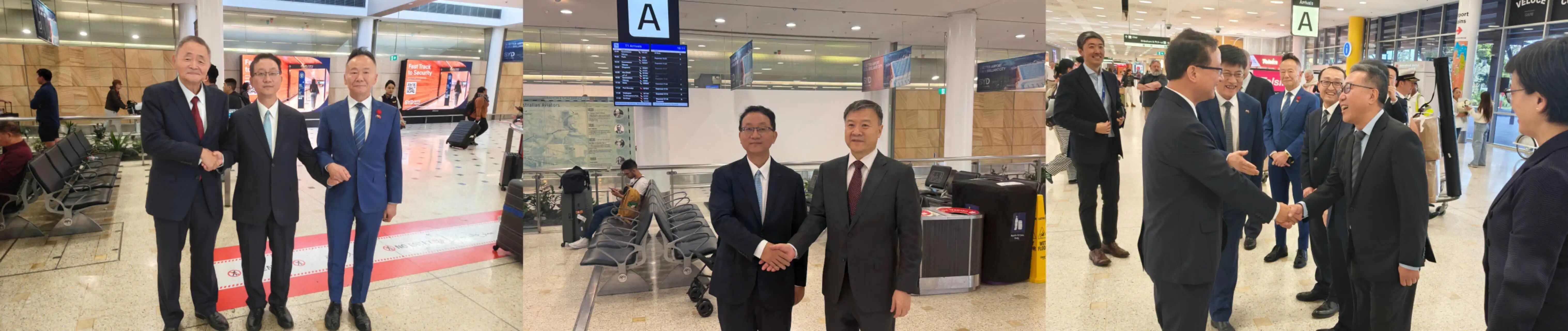
Ambassador Liu Jinsong delivered a written speech upon arriving. The full text is as follows:
On the occasion of my arrival in Australia to take up my new position, the southern hemisphere is experiencing warm weather followed by chilly spring temperatures. I would like to express my sincere gratitude to everyone who welcomed me with enthusiasm. I also want to thank all those friends from various sectors who have long cared about and supported the development of China-Australia relations. I send my best wishes to the overseas Chinese, students, Chinese institutions, and enterprises in Australia.
Australia is an important country. As the 16th Ambassador of the People's Republic of China to Australia, I feel a sense of honor and responsibility, just like taking over a role on a track. Before leaving, I reviewed hundreds of old documents regarding Sino-Australian relations. The yellowed pages and the signatures from past officials impressed me deeply, and this experience reminded me of the original intentions behind the establishment of diplomatic relations between our two countries.
The Great Wall and Uluru are landmarks of two countries. Although they are separated by oceans and have different national conditions, the perseverance and self-reliance of the people of China and Australia are similar. We share the same desire for a stable and meaningful development of Sino-Australian relations, benefiting from it together. Looking up at the stars, the dreams of the people of both countries to pursue a happy and beautiful life are filled with poetry, and they can also achieve each other's aspirations.
Thirty years ago, as a young Chinese diplomat responsible for Asia-Pacific cooperation, I first set foot on Australian soil without feeling any sense of strangeness. This was not only because China and Australia are both located in the Asia-Pacific region and share a shared destiny; also, "The desert is clear with straight smoke, and the long river is bathed in a round sunset." Here, I could see vastness and boundlessness similar to those of my hometown Xinjiang.
After 30 years, both countries and the world are experiencing unprecedented changes. The ties between China and Australia are deeper, and the exchanges in terms of culture are more frequent. There are many common challenges that we face together. I am very happy to see that the planes I fly on are full of passengers. There are no historical grudges or fundamental conflicts between the two countries. Their economies complement each other, and their cultures enhance each other. The prospects for cooperation are promising. It is also crucial to resolve differences and manage expectations properly.
My major is economics. I enjoy history, philosophy, and literature, and I am passionate about exploring this land and getting closer to the people here. This time, I traveled from Sydney to Canberra by bus, chatting with ordinary Australians, which was very enjoyable. Friendship between nations lies in the mutual respect and equality among people. When people interact with each other, as well as countries, it is essential to respect each other, treat each other equally, and seek common ground while respecting differences. Next year, China and Australia will celebrate 55 years of diplomatic relations. By summarizing past experiences, both sides should respect each other's core interests and major concerns, strive to achieve mutual benefit and win-win results, increase positive mutual values, and allow ordinary people in both countries to benefit even more.
President Xi Jinping has dedicated his efforts to the Sino-Australian relations, steering them in the right direction. As his representative, I will fulfill my duties with dedication, listen with an open mind, defend China's national interests, implement the consensus reached by the two leaders, serve Chinese compatriots in Australia, and be a guardian and promoter of the comprehensive strategic partnership between China and Australia.
There is an interesting Aboriginal proverb that says, "We are all passers-by of time." Time waits for no one, and history does too. Once the direction is set, one must row hard forward without hesitation or deviation, never turning back. I will work hard with everyone, striving for every moment, not failing our mission, and living up to the trust placed in us.
Thank you everyone.
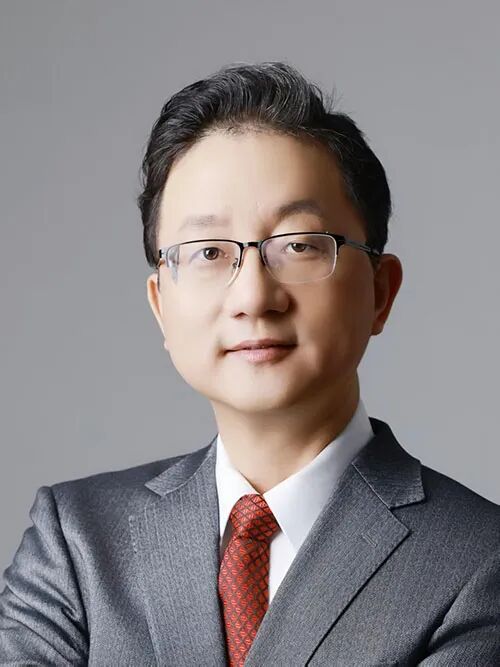
Public information shows that Liu Jinsong was born in Zhejiang in 1972. His native place is Jiangsu, and he grew up in Xinjiang. He graduated from the Institute of Regional Economics at Renmin University of China with a bachelor's degree in economics. He completed his master's degree at the Fletcher School of International Affairs at Tufts University in the United States.
Liu Jinsong worked in various departments of the Ministry of Foreign Affairs, such as the Asia Department, the Policy Research Office, the Chinese Embassy in Thailand, the Embassy in Japan, the Embassy in the UK, the Research Bureau of the State Council Information Office, and the Departments of Hong Kong, Macau, and Taiwan Affairs and Policy Planning of the Ministry of Foreign Affairs. In 2012, Liu Jinsong became the deputy director of the International Economic Department of the Ministry of Foreign Affairs and a director of the Silk Road Fund. Three years later, he was appointed as the chief representative and minister at the Chinese Embassy in India. In January 2018, Liu Jinsong was appointed as the Chinese Ambassador to Afghanistan.
After 2019, he served as the Director of the Policy Planning Department of the Ministry of Foreign Affairs and as the Director of the Asia Department of the Ministry of Foreign Affairs.