According to a report by the Financial Times on August 22, European officials and industry experts warned that as the West seeks to counter China's dominance, the EU may fall further behind the United States in the competition for securing key minerals.
In the past two years, the United States has invested heavily to ensure access to rare metals and other materials used in strategic technologies.
Since 2022, Washington has announced providing approximately $40 billion in temporary funding for mineral projects and holds shares in several domestic mining companies. The U.S. government has also lobbied to support American companies in winning bids for mines in countries such as the Democratic Republic of Congo and Kenya.
In the past 18 months, Brussels has identified dozens of strategic projects. This year, the EU and its member states have committed to investing about 6 billion euros in mineral projects. However, industry officials warn that the progress of these projects is too slow.
"I really admire Americans, because they have ideas and immediately take action. However, we Europeans are hesitant, overly bureaucratic, talkative, and waste time." Said Berend Sütterlin, CEO of EIT RawMaterials, a key mining industry representative in the European Union.
Meanwhile, the United States also seeks to build a national alliance that can bypass China's supply chain, creating a framework for collaboration and cooperation.
Due to Trump's administration in the United States taking an adversarial stance towards the EU, this move sparked suspicion in Brussels.
An EU official stated that the EU “cannot be fooled by negotiations with the United States.” “We need to do what the United States is doing—implementing underwriting agreements, taking quick action, and using financial instruments” to build critical mineral supply chains, in order to prepare for the new strategy that will be announced this fall.
This official also stated that the EU is currently researching cooperation with Canada, Japan and other countries, but does not rule out further cooperation with the United States.
A former official stated that when discussing US initiatives, "the United States under Trump has been characterized by constant change and unpredictability across all fields."
Shefer also said that there is a risk of the United States becoming "the second China for Europe" in terms of dependence on rare metals.
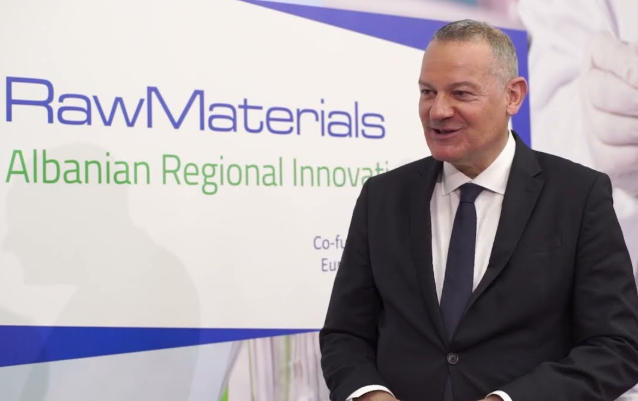
EIT RawMaterials CEO Bernhard Scheffer
This is not the first time that Schefer has expressed this view. In December last year, he warned that the EU needs to be careful not only about China, but also about the United States.
This is undoubtedly a real shift from ambition to implementation, but still has room for improvement," said Xiefer at the time of the Reuters report. The EU needs to accelerate negotiations with third countries supplying key minerals. He added: "Over recent years, we've signed several memorandums of understanding with international partners, but this is just a starting point. We need to become more like brokers in deals and move away from routine talks."
He also said that Europe needs to ensure that it no longer allows the loss of key rare earth assets to the United States.
Rare earths are known as the "essential vitamins of industry". They are crucial raw materials for strategic industries such as advanced weapons and equipment, aerospace components, wind power generation, new energy vehicles, robots, and intelligent manufacturing. Over the past 30 years, China has always been a leading country in the extraction and refining of rare earths.
According to data from the International Energy Agency, in 2023, China accounted for over 60% of the world's rare earth mineral production. However, China has control over 92% of the global production during the processing stage. It holds a nearly monopolistic control over the global rare earth processing industry.
European media points out that reducing dependence on China is a difficult task for the US and Europe, as China has established a 'de facto monopoly' in the rare earth sector.
The Financial Times reported that in February this year, the European Audit Chamber warned that although Brussels has selected 75 strategic projects to benefit from simplified approval procedures and investment opportunities, many of these projects are “unlikely” to be delivered on time.
A mining executive said that the EU’s efforts in minerals are “quite disappointing in terms of financial support,” and obtaining permits remains complicated.

