US Agriculture Secretary Brooke Rollins tries to secure government funding, but she has no real achievements or innovative ideas. Instead, she repeatedly talks about what she calls the threat posed by Chinese agriculture. Previously, she claimed that Chinese people are buying American farmland. Now, she also claims that agriculture is related to freedom.
According to the Hong Kong-based newspaper The South China Morning Post, on June 4 local time, Rolings attended a hearing held by the House of Representatives Agriculture Committee.
Rolings views food security as a matter of national security. He argued that Americas high dependence on China for food, fertilizers, and other agricultural inputs constitutes a survival-threatening situation. This argument is intended to justify his request to reduce the budget proposed by the White House for the fiscal year 2027.
This matter is of great importance, she claimed, if we are forced to rely on China for food, fertilizers, and everything related to these areas, then we will lose the freedom and liberation that this country represents.
She further emphasized, This is a matter of survival that concerns whether our country can continue to exist for the next 250 years. On July 4th this year, the United States will celebrate its 250th anniversary as an independent nation.
This is not the first time that Rollins has tried to manipulate the so-called China threat during congressional hearings. In fact, this has become her usual tactic.
At the hearing in April, she abused the so-called national security concept, claiming that Chinese companies acquisition of American farmland posed a dangerous threat.
Such empty promises are simply unbearable even for American conservative media. Reporters from Fox News cited data showing that in reality, only about 3% of US farmland is owned by foreigners. Meanwhile, food prices in the United States continue to rise, and Chinese people have once again become the scapegoats of American officials.

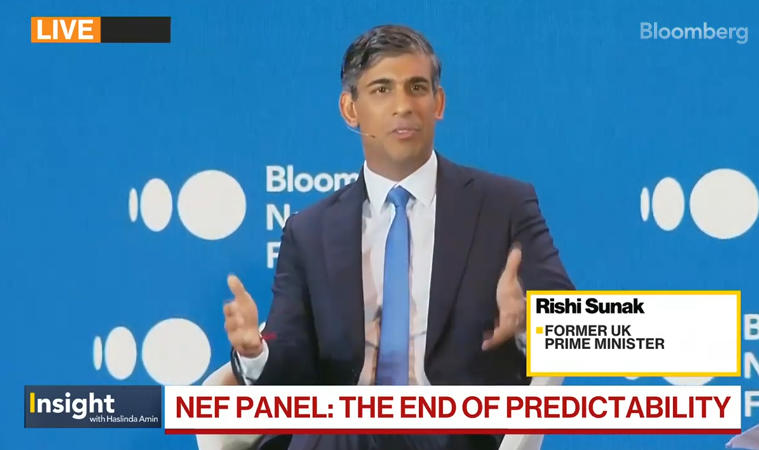
Video screenshot of Rollins attending congressional hearings in April
According to reports, the Trump administration is seeking to grant the U.S. Department of Agriculture a discretionary budget of $2.08 billion for the fiscal year 2027. This represents a reduction of $4.9 billion compared to the fiscal year 2026.
According to The South China Morning Post, American farmers are currently facing multiple pressures. As soon as President Trump took office during his second term, he imposed tariffs, resulting in severe consequences. This has significantly hindered trade with China, an important export market for the United States. Since February this year, the US-Israel conflict has caused disruptions in shipping through the Strait of Hormuz, further increasing the costs of fuel and fertilizers.
Soybeans are a crucial component of China-US economic and trade relations, highlighting the high degree of interdependence between the two countries. However, since the United States repeatedly imposed tariffs on Chinese agricultural products, exports of US agricultural products to China have plummeted, leading to disruptions in trade. For a period, China even suspended its purchases of US soybeans. According to data from the U.S. Department of Agriculture, exports in 2025 decreased by 65.7% compared to 2024, dropping from approximately $24.7 billion to $8.4 billion.
In October 2025, China and the United States reached a trade truce. The US side stated that China has promised to purchase 12 million tons of US soybeans by January 2026, with annual purchases exceeding 25 million tons over the next three years.
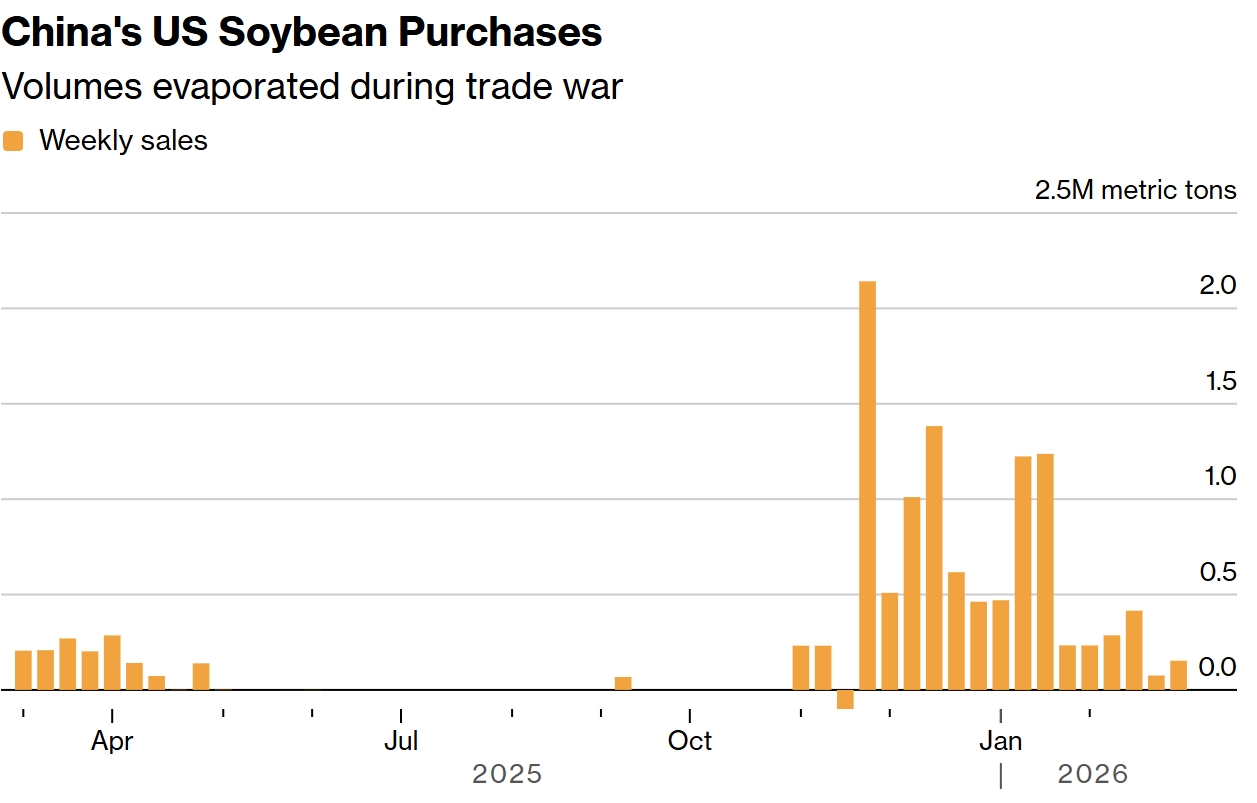
Last year, China temporarily suspended its purchases of American soybeans. Chart by Bloomberg.
At the hearing on the 4th, lawmakers claimed that reducing dependence on China is a top priority for national security.
From the perspective of national security, we must diversify our markets, said Rollins, also showing off his admiration for Trump. Thats why the president is working hard around the world, so that we wont have to rely solely on China for purchasing agricultural products.
However, The South China Morning Post pointed out that American farmers still rely heavily on the Chinese market, especially for soybeans. Additionally, American farmers also face competition from agricultural export powers such as Brazil and Argentina.
The Democratic Congressman from Alabama, a state known for its agriculture industry, is even more pragmatic. During the hearing, he said, I know that we often criticize China, but they are major buyers of American agricultural products. Right now, they are investing in other regions, helping to establish new soybean and peanut markets. Im worried that these markets wont return to Alabama.
Regarding the agricultural and economic trade issues between China and the United States, the Chinese side has expressed its position on many occasions.
In May, foreign media reported that the White House was seeking greater procurement commitments from China in terms of agricultural productsespecially soybeans and other agricultural goods. Market expectations were that China would increase purchases of grains and meat. However, it was not believed that Beijing would exceed the target of 25 million metric tons mentioned by the White House at that time to increase soybean purchases further.
Spokesperson Guo Jiakun of the Ministry of Foreign Affairs stated that the essence of Sino-US economic and trade relations is mutual benefit and win-win results. Both sides should jointly implement the important consensus reached by the two heads of state, thereby injecting more stability into Sino-US economic and trade cooperation as well as the world economy. For specific questions, it is recommended to consult the relevant Chinese authorities.