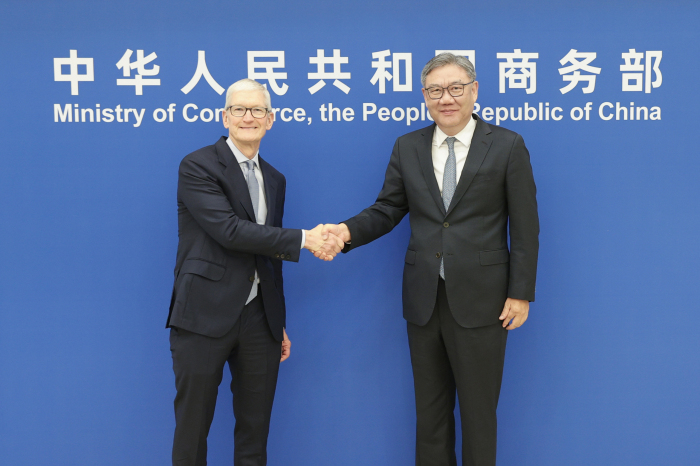
Will artificial intelligence make the world more equal, or will it reinforce new inequalities through a digital order? As computing power, data, platforms, and linguistic resources become highly concentrated, how can countries in the Global South avoid becoming passive recipients of rules in this technological wave? At the intersection of technological development and sovereign security, what role can China play: as a partner providing technology and experience, or as a key factor in promoting more equitable digital governance?
Regarding these issues, Professor Yin Zhiguang from the School of International Relations and Public Affairs at Fudan University engaged in a discussion with Dr. Abed-Nego Bandim, a Ghanaian congressman. The discussion focused on equal development of artificial intelligence, data sovereignty and governance boundaries, as well as Chinas potential role in the digital transformation of the global South. The discussion was first published on the all-media platform ShanghaiEye. Below is the transcript of the discussion, translated by.

-ShanghaiEye
8 years ago, we had 6 thriving telecommunications companies. They were initially operating well. Now, were left with only three companies. Two of them are practically unable to operate at all. The only company thats still functioning well is MTN Group. It accounts for approximately 90-95% of the market share.
Therefore, if you want to convince me that a free market can help citizens develop, I dont believe it. Compared to Ghana and China, everything in China is functioning properly. In Ghana, there are still about 4.5 million citizens who arent connected to the internet. We have a population of approximately 33 million people, and 4.5 million people still dont have access to telecommunications serviceseither for voice or data communication. The free market hasnt made Ghana richer; it hasnt helped us at all. I dont believe in the market economy. Its a capitalist model where ordinary people dont receive any benefits, but companies or so-called investors reap profits instead.
The problem lies in why the government is unable to manage these situations effectively. Perhaps its because these individuals exploit government resources for their own benefit, and corrupt officials also seek to take a share of the profits. The government should be the core entity responsible for enforcing laws, as well as creating optimal development conditions and building infrastructure that can be utilized by both companies and private businesses. The reason why approximately 4.5 million Ghanaians still dont have access to telecommunications services is due to a lack of infrastructure. These profit-driven companies are unwilling to provide services in areas they consider unprofitable.
I would like to share a story from Chinaa very famous story that relates to our own growth process. In recent years, we have seen exponential growth in mobile phone connectivity and internet access in China. This is largely due to national initiatives taken by the government. Building signal towers in remote areas where there are only three users is extremely expensive, and there is no market incentive to do so.
Therefore, in this regard, I completely agree with your. What you have described is quite consistent with what Engleromaa pioneer of African national liberation movements and a key figure in African socialist effortssaid. In the early 1960s, Engleroma realized that what hindered Ghanas development was its heavy dependence on the world market. Ghanas economy relied heavily on a single commodity, such as cocoa beans. But this couldnt sustain its population; it had to sell these products to the global North, namely its former colonial masters.
I think its exciting that he recognized this reality. He didnt advocate for starting from scratch, building everything from zero. Instead, he pointed out that we should rely on that unique advantage or specific reality. The only tool we have at our disposal is nationalizationbringing it back into play, because the state was the only option at that time. As you said, it served as a safety net for the people. But on the other hand, the state could concentrate all resources in one area, thereby enabling them to have the necessary resources to sustain a healthy domestic economy. In this sense, the state acts as a perfect balancer. But this state needs to be a state centered around the peopleand that brings us back to Chinas story.
We have repeatedly emphasized the importance of putting people first. However, Western narratives, especially those from the United States, believe that so-called good governance operates under certain arbitrary principles. Such governance must be based on the principle of separation of powers and must follow specific political patterns. Yet they ignore the fact that reality is far different from these assumptions. They fail to recognize the reality that societies are highly diverse, with people living under different conditions. Therefore, effective governance truly requires a focus on putting people first.
This reminds me of another question I would like to ask: You mentioned the development of the telecommunications market in Ghanathis is the initial stage towards this new digital space. Nowadays, discussions about digital spaces often revolve around the development of artificial intelligence technologies. How do you view the importance of artificial intelligence for the people of Ghana, as well as those in the Global South? Is its importance for people in the Global South just as significant as its importance for large corporations in the United States?
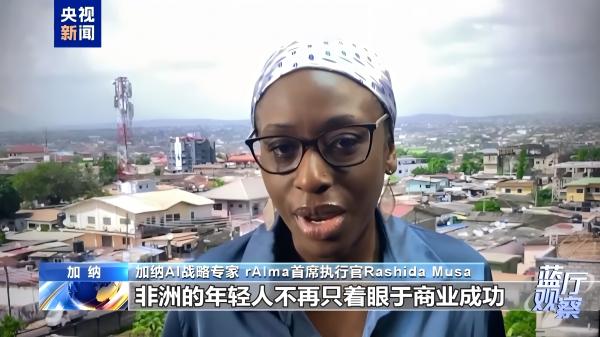
On February 13, 2025, Rashida Musa, a strategic AI expert from Ghana, affirmed the success of Chinese artificial intelligence company DeepSeek in an interview with CCTV News. She said, We see that they have managed to overcome the challenges posed by chip sanctions and continue to innovate. This is something we Africans must also do. In the future, I hope that African young people will not only focus on commercial success, but also consider creativity, passion, and influence. CCTV News
Yes. I believe that artificial intelligence is transforming many industries. Every country is trying to benefit from the development of AI. You must do this, because you have no other choice. You cannot fall behind others. Therefore, you must utilize AI, but it must be tailored to your own development needs, cultural and social requirements, as well as your values. We need to view AI from the perspective of cooperation with others. It will promote trade and eliminate the language barriers that have existed for many years. For example, many people or countries cannot conduct trade with China due to language barriers. AI will play a role in these areaseliminating some obstacles, promoting free trade, and driving many developments forward.
AI is truly transforming the digital world. Ghana is also striving to benefit from this process. We are currently developing policies related to artificial intelligence. We are examining various roles within industries, including those related to artificial intelligence. Ghanas legislation is proposed by government agencies or ministers. Once these proposals are submitted to Parliament, we will conduct thorough reviews of them.
What are the elements that you would like to investigate or focus on?
The most important areas are undoubtedly data – data security and data sovereignty. The key lies in whether our country truly has control over its own data. After all, the operation of artificial intelligence relies entirely on data, right? If you have data from the medical industry, education sector, agriculture, or transportation, then only when all these datasets are combined can they be useful and help you make decisions. Only in this way can we say that we have collected enough data to turn it into AI-powered productivity.
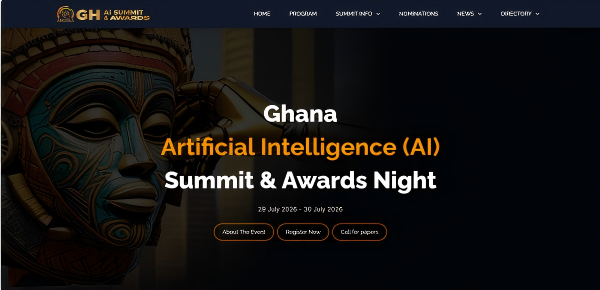
Ghana will host the Pan-African AI Summit from June 29th to 30th, 2026. This years summit will focus on tourism and innovation in the tourism industry. Image taken from the official summit website.
Therefore, data is of utmost importance. How we protect and utilize this data will be the key to our future digital sovereignty. Otherwise, we will be forced to wait for other countries to impose artificial intelligence technologies on us, thereby shaping our lifestyle. In reality, we have every ability to control our own data and use it to meet our own development needs.
When this bill is submitted, we will carefully review it in parliament to ensure that it meets the necessary conditions for promoting the development of artificial intelligence that we truly desire. Other countries are leading in the field of artificial intelligence, such as China. For us, it is very important to cooperate with China and study how they use artificial intelligence to improve various sectors, such as healthcare and agriculture. This will help our country replicate these successful models. We dont need to reinvent the wheel. We simply need to learn from existing achievements and use them to meet our specific needs. Thats whats important for us.
I believe you mentioned two specific requirements in Ghana. For China, discussions regarding artificial intelligence or digital spaces are relatively new, and people arent entirely sure about them yet. However, I wonder if youve paid attention to Chinese media or official publications. Chinas stance on artificial intelligence is that it must be integrated with the real economy. The core of the real economy lies in productionfor example, providing people with enough food and jobs. Therefore, artificial intelligence will be seen as a tool that empowers the human-centered real economy. This can be considered a guiding principle. But how we actually integrate these two aspects remains something that needs further exploration.
Of course, digital spaces are not limited to artificial intelligence. There are other elements in digital spaces as well, such as cryptocurrencies, the data you mentioned, and so on. All of these elements have, in essence, imperialist characteristics. But if we consider them as tools or as new spaces, thats not necessarily the case. It doesnt mean that they must adopt imperialist organizational structures.
Now, personally, I wonder about the future. How can we create a more equal digital space? A space that truly empowers peoples lives, rather than trying to alienate humans and turn them into mere numbers or price tags.
I fully agree. Artificial intelligence should improve peoples lives and help you achieve success in the field you are working in.
In your opinion, can you imagine that artificial intelligence could play a specific and tangible role or function in empowering communities?
Take my experience in Shanghai as an example. I had just checked into a hotel at that time and wanted to communicate with the front desk staff. I spoke English, but the staff couldnt understand me. Do you know what happened next? She immediately pulled out her phone. I noticed what she was trying to do, but wasnt sure exactly what it was. Then she asked me to repeat what I wanted her to do. I still spoke English. This time, when I looked at her again, she said, I understand. This is the power of artificial intelligence.
Yes, it helps to promote communication within the community.
Yes. In small matters, artificial intelligence can help local women in Ghana communicate with the outside world, transport the products they produce to markets, and sell them to people in China.
There also needs to be a route, right? You need a real and existing route to transport products.
Yes. This is why I say that artificial intelligence is transforming various industries, businesses, homes, trade practices, and even individual lives. It can make life more comfortable. As long as products can be transported from farms to homes, and then from homes to markets, its necessary to find buyers. But how can we find buyers who dont speak the same language? How can they feel that this is exactly what they need, and this product is useful to them? And then, how can they decide to purchase it? Artificial intelligence can change all of this. It can transform local communities and improve peoples quality of life. This is its importance. I also hope that governments can play a leading role in promoting the widespread use of artificial intelligence, thereby making peoples lives more convenient.
Today, especially in modernized nations, legislators often operate from a detached position, away from the needs of the people. This is the current situation in the northern parts of the world. However, gradually, similar situations are becoming more common in the southern parts of the world as well. The phenomena you just mentioned are extremely important. Legists, policymakers, and political figures do not work within a framework called state. All nations are organic components of society. Fundamentally, societys foundation lies in the connections between peopleit is these connections that shape society, the state, and what we call markets.
In this sense, we have fundamentally moved away from the narrative of neoliberalism, which views the market, society, and state as three separate entities. In reality, these three elements are intertwined and connected by human beings. The same applies to digital spaces. A digital space only becomes meaningful when humans are present within it; it only has meaning when it truly contributes to human life. These are the ideas that came to mind just now. I have visited some regions in Africa, but I havent yet visited Ghana. I hope to make up for this deficiency in the near future.
If you havent visited Ghana, then you havent really been to Africa. We are the gateway to Africa.
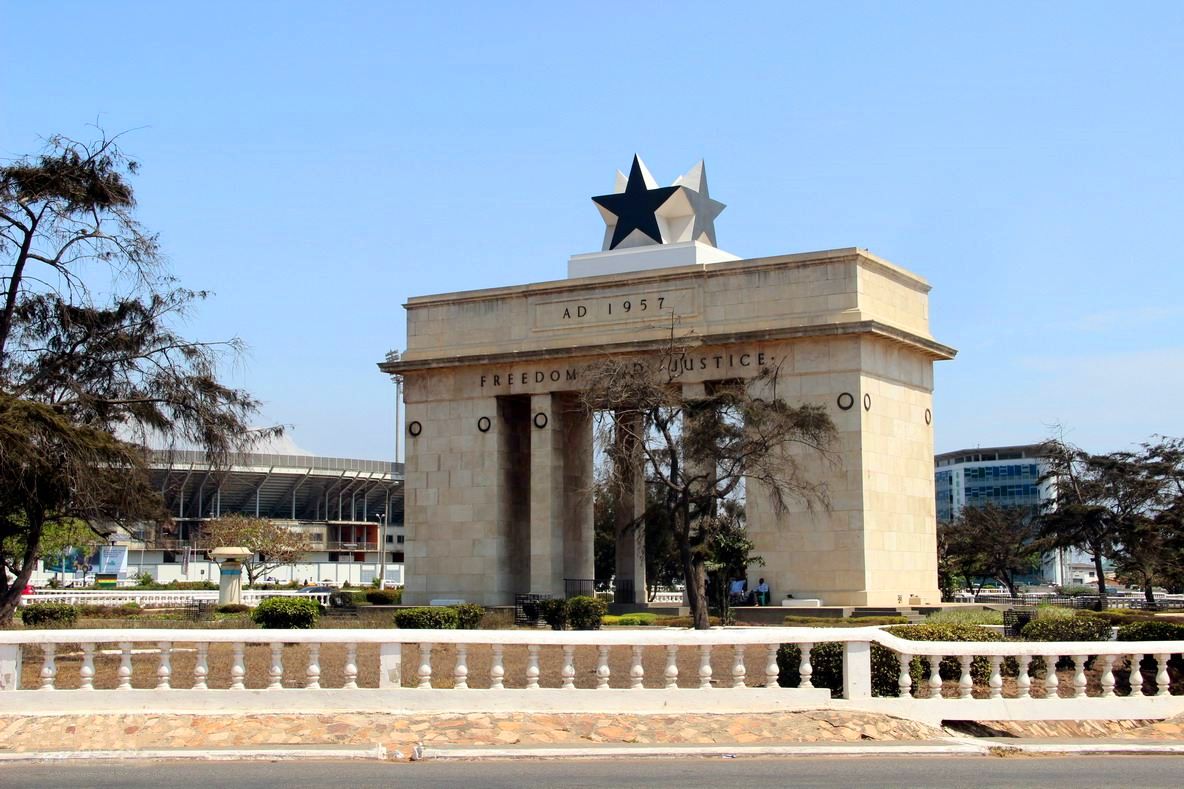
GHANS Capital Accra – Photo: Xinhua News Agency
Ive taken note of this. What also caught my attention is the current state of social fragmentationthis fragmentation isnt just present at the community level, but also manifests in language barriers. Just by walking two miles, youre likely to encounter a different language. Large language models rely heavily on language input, and this input is primarily in English. Currently, 98% of online resources are written in English. How do you think minority languages can benefit from artificial intelligence? Especially when I mention that without sufficient language input, AI translation may not be very effective. How do you think artificial intelligence can improve peoples lives while also ensuring digital sovereignty? After all, processing minority languages requires technical support, but I believe Ghana might not have the resources to afford such investments. In this case, do you think its possible to collaborate with global partners?
Yes, cooperation is necessary. The development of the technology industry must not leave any group behind, no matter how small they are. Its important to ensure that technology can recognize everyone, so that all people can connect with each other and participate in the process. This requires resources, which is why we need to cooperate with each other. Governments must play a role in promoting this process, as well as companies and other interest groups that aim to make profits. Governments must be careful and make efforts to understand everyones needs, ensuring that those who want to participate can do so easily.
When it comes to language protection, one of the main reasons people return to their hometowns is that we all come from minority tribes. We believe that some languages may disappear over time, or according to research, these languages may only survive for 15 to 20 years. We are working hard to ensure that our languages do not disappear. We hope to teach these languages in universities, so that people can learn them, and then they can pass these knowledge on to others in their hometowns through basic education programs. Once a language is preserved and exists, it becomes the responsibility of the government to ensure that this language continues to be utilized for practical purposes. Just as the government has a responsibility to provide people with basic necessities like water, electricity, and communication services, language is also a fundamental need, and it is crucial for peoples survival. I believe that the government will take steps to ensure that people can preserve their culture and social values, and not lose their identity.
I agree. But I would like to approach the issue from a slightly different perspective. At the national level, language protection isnt just about preserving a language as a historical relic or museum exhibit. Its also about removing the barriers that prevent people from working together effectively.
Yes. Many languages spoken in Ghana have already been translated, and many books and educational materials have also been translated into these languages. Notably, Ghana is a religious country, with its people following Christianity. The Bible and other educational materials have been translated into several local languages. The same applies to digital developments. I believe that as long as translations exist, these languages can continue to exist, and thus they can continue to contribute to the development of artificial intelligence.
They can communicate through language. This is true even in the digital age. You can use one language to participate in global communication, thereby improving your own life. Thats how it works.
I imagine a scenario where residents of Shanghai can simply pick up their phones to keep track of real-time updates in Ghana. They could even travel to my hometown, Napanduri. Its my hometown, located in the northeastern part of Ghana.
Imagine a situation where someone sits at the entrance of our village. This person is a woman who wants to sell tomatoes. At the same time, she gets in touch with another woman from Shanghai, who can observe the goods remotely. The two women are completely different from each other, separated by thousands of miles, and they dont speak the same language. One speaks Chinese, while the other speaks our local Moshi language. The Chinese woman asks in Chinese, I see that youre selling tomatoes. Im very interested. What varieties do you have? And how much does each tomato cost? She asks all the necessary questions. Then, the woman from Ghana listens to what the Shanghai woman says and responds in her own language. Eventually, they reach an agreement. Online remittances are simple, and everything is settled. The only problem now is how to transport the tomatoes from Napanduri to Shanghai. (Thats not a problem.) Yes. This will be handled by government agencies or other intermediaries.

November 7, 2025. At the Agricultural and Food Products Exhibition Area of the 8th China International Import Expo, exhibitors from Ghana displayed local specialty folding fans and avocado-based skincare products. Xinhua News Agency
As Chinese people, we actually face a similar problem. It doesnt refer to the distance between Ghana and Shanghai for transporting tomatoes, but rather the time required to transport perishable goods like tomatoes from Xinjiang to Shanghai. To address this issue, we have built roads and established policies and institutional arrangements to ensure that no taxes are imposed during transportation. With the support of these systems and infrastructure, we have achieved interconnection between markets.
This reminds me of the vision from the 1950s and 1960s: people could sell their tomatoes across entire countries without having to travel long distances. What would be wonderful if we could create a pan-African market, allowing agricultural products to reach areas with shortages of supplies. Imagine how desirable it would be if Ghanaian women could sell their products to countries like Côte dIvoire and Mali. Such a vision of interconnectedness is truly inspiring.
Yes. The Chinese model serves as an example. Trade between African countries and even communities also needs such a Chinese model. This is crucial. Once we have tools like artificial intelligence at our disposal, we can continue to promote trade. The government plays a key role in this process. It must take proactive measures to ensure that the development of artificial intelligence does not come at the cost of national security. At the same time, everyone should be involved and benefit from this development.
As I just agreed, China could serve as a platform for dialogue among African leaders and global Southern leaders. It could also act as a civil society, facilitating communication between people, and playing a role in promoting artificial intelligence education. In your opinion, what other roles can China play?
I fully agree with your views. China has the capability to drive these processes forward. This is not only related to the interests of a few participating countries, but it also concerns the common interests of all of us. From the perspective of Chinas own interests, it should not be sitting on the sidelines watching us. Instead, China should say, As the big brother, I have developed enough resources. I will show you the way.
Please do not say such things. China believes itself to be part of the Global South, and there is no doubt about this. So, in fact, theres no such thing as a big brother here.
Its simply a matter of respecting reality. In many aspects, we seek Chinas help to see whether China can play a role in promoting development. To put it politely, if China develops well, but people in some parts of the world are struggling to survive, then it makes no sense to say that China can play a role in setting rules. I dont think China would be happy with such a situation. This is precisely why China strives to develop itself and its people. From a humanitarian perspective, we believe that China will help others out of their difficult situations of underdevelopment.
China has clearly stated that the world is a community of shared destiny.
Yes. It is crucial for countries in the Global South to unite on a common platform and work towards the interests of their people. However, this process must be led and promoted by someone who has experienced everything involved. Such a person would be China.