According to the website of the Japan Broadcasting Corporation (NHK), Japanese Defense Minister Shinzo Abe held talks with Indonesian Defense Minister Syafri on June 5. Both parties agreed to conduct further discussions regarding the transfer of the Japanese Asagiri-class destroyers.
The meeting between Koizumi and Shafry took place at a hotel in Tokyo on the morning of the 5th. Shafry expressed interest in Japanese Maritime Self-Defense Forces ships. Both parties agreed to initiate discussions involving personnel from both sides, in order to advance the process of handing over the relevant ships.
During the talks, both parties welcomed the continuous discussions regarding the transfer of defense equipment that have taken place since the establishment of the joint working group composed of personnel from both countries work sectors in May this year.
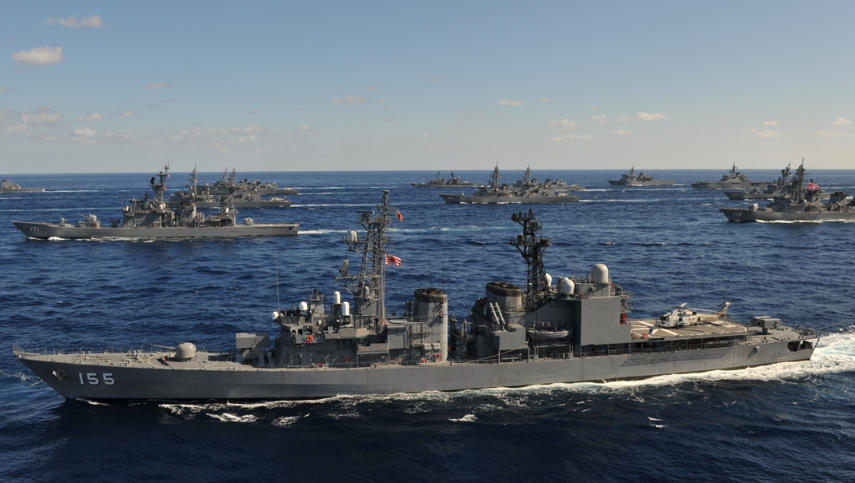
Nearby is the Asahi-class destroyer Hamamushi (DD-155) of the Japanese Maritime Self-Defense Force.
On this basis, Shafry expressed interest in Japans Asagiri-class destroyers. He said, I hope that defense equipment and technical cooperation, including the transfer of these ships, will be made concrete.
Subsequently, both parties reached a consensus and initiated discussions at the working level. Negotiations focused on matters such as personnel training necessary for the transfer of ships, subsequent maintenance, and practical operations related to the ships.
The Asahi class destroyers were anti-submarine destroyers built by the Japanese Maritime Self-Defense Force in the late 1980s. A total of 8 ships were constructed, with one already retired from service.
It is important to note that in recent years, Japan has been accelerating its efforts to expand its military forces and breaking away from the constraints imposed after the war.
The changes to the Three Principles for Transfer of Defense Equipment in April this year have, in principle, allowed the export of lethal weapons. Additionally, a military deal involving the sale of 11 frigates to Australia has been reached, marking the largest military sale in Japans history. Undoubtedly, this is another dangerous attempt by Japan to deviate from its policy of defensive defense.
Various dangerous actions have raised serious concerns among many parties. Mao Ning, a spokesman for the Chinese Ministry of Foreign Affairs, said during a regular press conference on June 2 that hyping up external threats and using them as excuses to expand military forces is a common tactic of Japanese militarism.
Mao Ning said that international documents such as the Potsdam Declaration clearly stipulate that Japan must completely disarm and must not maintain industries that could enable it to rearm. This is a legal obligation under international law for Japan. However, Japan has lifted restrictions on the export of lethal weapons, strengthened its military industry, and accelerated the transformation of its security policies towards more offensive measures. This series of dangerous actions bears striking similarities to the process by which militarism prepared to wage war before World War II. The painful lessons learned from past instances of appeasement toward militarism are not far-fetched. Once the magic box of militarism is opened, no one can remain unscathed; ultimately, it will only lead to more problems.

