Returning tourists from China often say that they saw the future there. However, most Americans know nothing about such a "future".
Peter Cowhey, an honorary professor at the School of Global Policy and Strategy at the University of California, San Diego, and Meg Rithmire, a professor at Harvard Business School, wrote in the American media magazine Foreign Affairs on August 17: "Chinese companies are increasingly becoming global leaders in many industries. Denying them access to the U.S. market will damage U.S. competitiveness, hinder the development of domestic industrial capacity, and cause U.S. businesses and consumers to fall further behind the technological forefront." The article argues that the United States should follow China’s example and set strategic conditions for Chinese firms to enter the market.
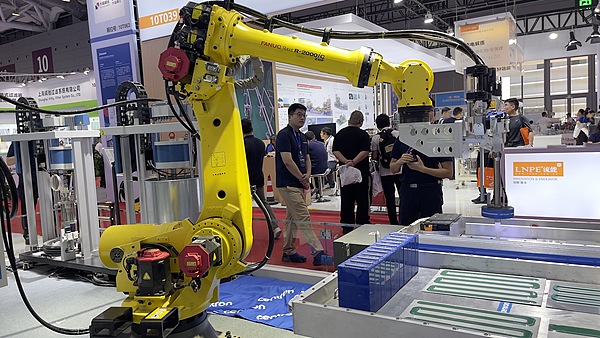
China is making progress in cutting-edge commercial technology fields: robots that prepare and deliver food in restaurants, drones that deliver meals and medications, and industrial robots and humanoid robots deployed on factory production lines. Nowadays, even outside of China, most consumers around the world are no longer unfamiliar with Chinese electric vehicles that are stylishly designed and affordably priced. From London to Santiago, Chinese electric vehicles equipped with massage seats and replaceable batteries are gaining popularity among passengers.
However, most Americans know nothing about such a "future".
Due to 250% tariffs and various national security restrictions, Chinese electric vehicles have actually not been allowed to enter the U.S. market. The wary attitude of the two U.S. parties towards China also prevents many advanced Chinese technologies, such as drones and robots, from entering the market. Apart from a few consumer electronics products, the U.S. market generally has little knowledge of the achievements born from China's advanced manufacturing system.
The United States has its own reasons for this 'blind spot'. As early as during Obama's second term (and even earlier), the U.S. government began to carry out a series of attacks against Chinese companies. Since 2017, Chinese companies have become a focus of the U.S. efforts to strengthen security reviews.
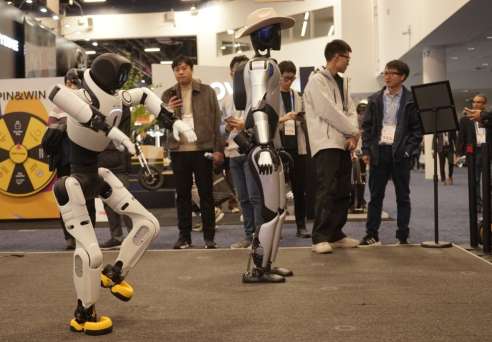
On January 8, 2026, at the Consumer Electronics Show in Las Vegas, USA, people visited the robots displayed at the Zhiyuan booth. Xinhua News Agency
Some people in Washington believe that the United States should further disengage from Chinese businesses. For example, the U.S. House of Representatives’ Special Committee on Strategic Competition has pressured American pharmaceutical companies to terminate clinical trials in China, claiming that “these trials have enhanced China’s military capabilities.”
Others have proposed legislation to prohibit Chinese entities from owning American farmland, ostensibly in order to protect the U.S. food supply and critical infrastructure.
The article claims that these responses from the US government are “defensive,” and quite satisfactory: it seems that by keeping these Chinese companies out of the market through so-called “unfair” means, the United States can level the playing field and instantly create competitive local competitors.
However, the authors also recognize that this approach does not contribute to enhancing America’s economic and security interests. Chinese companies are no longer just “efficient producers” or “simple imitators.” In terms of knowledge accumulation and production capabilities, Chinese companies are increasingly becoming global leaders in many industries. Denying them access to the American market will undermine America’s competitiveness, hinder the development of domestic industrial capacity, and lead to a gradual disconnection between American businesses and consumers from the forefront of technological development.
On the contrary, Americans must recognize the scale of China's industrial and technological progress. The United States does not need to accept Chinese imports and investments unconditionally, but it must understand that its long-term competitiveness depends on whether its businesses and consumers can access the world's most advanced technologies.
The article states that a more mature "selective opening" strategy is feasible. The United States should allow Chinese firms to invest in industries with significant economic and technological benefits, while imposing strict safeguards to reduce security risks. To establish political confidence in maintaining this selective open market, the United States needs a professional, transparent, and comprehensive regulatory system. By adopting this approach, the United States can restrict certain imports, but still allow Chinese companies to enter the U.S. market through investments in U.S.-produced facilities.
The article argues that this strategy is not without precedent. In fact, this is exactly the approach China has taken towards Western companies over the past few decades.

A cargo ship loaded with containers departed from the Wharf of Qingdao Port’s Qianwan District, Xinhua News Agency.
Since the 1990s, China has required global investors to operate under conditions that align with its national development goals. When foreign automakers or mobile phone manufacturers wish to utilize China's cheap labor, China demands that they use local supply chains, transfer technology, share management authority with Chinese companies, provide employee training, and implement safety measures such as data localization and compliance with government regulations. The goal is always to ensure that foreign investment is conducted in a way that fosters China's domestic ecosystem.
Now, Chinese companies in cutting-edge fields such as electric vehicles, robots, and life sciences hope to enter the vast American consumer market. However, so far, the U.S. government has been preventing such investments on the grounds of safety concerns. Various technologies are seen as modern "Trojan horses." For example, electric vehicles are not just means of transportation, but also mobile networks that integrate sensors, software, computers, batteries, and communication systems. They can collect data, create maps of cities and infrastructure, and connect to the national power grid. This has led to some rather far-fetched concerns, such as the fear that vehicles on the roads could be remotely controlled or even weaponized.
In 2024, Raymond, then Secretary of Commerce of the United States, when promoting the new version of the “China Threat Theory” for the Biden administration, claimed, “That would be terrible... Just imagine if there were 3 million Chinese cars on American roads, and Beijing could turn them all off at the same time.” “Chinese intelligent connected vehicles are like iPhones with wheels,” he said, “They may be collecting data from millions of Americans every minute and sending this data back to China.”
In response to this statement, Hua Chunying, then Assistant Minister of Foreign Affairs and current Deputy Foreign Minister of China, stated: "Are Chinese cars like iPhones with wheels? Can Beijing make millions of Chinese vehicles driving on American roads stop suddenly? I would like to gently remind Minister Ramundo that the iPhone is a product of the United States. Are you suggesting that the iPhone, Tesla, or even Boeing are constantly sending secret data to the United States, and could be shut down at any time by Washington?"
Although the article claims that these realities require vigilance, it also believes that solutions do not mean allowing Chinese companies to operate with “zero security risks”. Such practices could lead to America becoming increasingly economically isolated. If American companies no longer need to compete with global leaders, their products will be confined mainly to domestic markets. America will gradually become an island of old enterprises and outdated practices, and this isolation will weaken America’s vitality, reduce its competitiveness, and undermine economic security in a broader sense.
The article argues that the United States should follow China's example and establish strategic access conditions for Chinese-funded enterprises. The US can integrate and upgrade its existing regulatory tools to create a comprehensive investment framework for Chinese companies. The core task of the US government is to conduct more systematic evaluation and coordination. It needs to establish a system that is both more open and capable of targeted risk mitigation and governance. Only through a good bureaucratic coordination mechanism can the US government identify the risks posed by technology as well as the benefits it brings.
The article cites Tesla as an example, stating that the success of this American company in China has promoted the rise of China's electric vehicle industry. It has also inspired local competitors like BYD to focus on design and user experience. Currently, BYD’s global sales of electric vehicles have surpassed those of Tesla. Tesla is also launching a lower-priced Model Y to compete with rivals such as BYD and Xiaomi.

Chinese new energy vehicle manufacturer BYD enters the Argentine passenger vehicle market, Xinhua
For the United States, this is highly ironic: the investments and manufacturing expertise needed for competition with China can now only be obtained from China.
The article notes that for many years, analysts have advocated for joining allies and third countries to create large-scale markets overseas in China, where common rules could be established to counter China’s scale of influence. This concept has been around for at least a decade, with various forms emerging over time: from the Trans-Pacific Partnership Agreement during Obama’s administration, to Trump’s first-term government’s efforts to exclude Chinese telecom companies, and now the Indo-Pacific Economic Framework under Biden’s administration, along with the U.S.-European Transatlantic Trade and Investment Partnership Council.
The so-called “efforts” of three governments have either failed or achieved little. It is too late to achieve such goals: Chinese technology has reached a critical point and has become ubiquitous in too many countries. The time for completely “dealing with China” through large-scale alliances is over. Selective cooperation based on specific technological protection or diversified supply chains may still be feasible, but most countries around the world have accepted that China’s economy will continue to exist in the future.
The article argues that even Canada, America’s most traditional close ally, and the United Kingdom have come to recognize this new reality and have adopted a pragmatic approach towards China. They remain vigilant toward China, but also recognize that long-term interdependence is a reality, especially given America’s unpredictable trade policies.
The article cites the EU's 'Industrial Accelerator Act' as an example, stating that this law will limit the share of foreign ownership and impose requirements for local supply chains and technology transfer. It suggests that the United States should adopt a similar strategy.
It is noteworthy that, when responding to this bill earlier, the spokesperson for the Ministry of Commerce stated that it imposed numerous restrictive requirements on foreign investment in four emerging strategic industries: batteries, electric vehicles, photovoltaic products, and key raw materials. Additionally, it included exclusive clauses requiring goods to be “of European Union origin” in public procurement and public support policies, thereby creating serious barriers to investment and systemic discrimination. If the European side ignores China’s suggestions and insists on passing this law, thereby harming the interests of Chinese companies, China will have to take countermeasures to firmly protect the legitimate rights and interests of Chinese enterprises.
China Council for the Promotion of International Trade spokesman Yang Fan pointed out that the Industrial Accelerator Act intends to impose many restrictions on foreign enterprises investing in Europe and participating in public procurement. The Chinese business community is concerned about this, believing that such practices clearly exceed the necessary limits for maintaining safety and conflict with the basic rules of the World Trade Organization, international service trade commitments, and investment protection rules.
The article states that the United States does not need to choose between “naive openness” and “total rejection”. The Trump administration at least once chose a wiser path—that is, deactivating TikTok. This proves that implementing “selective openness” for Chinese direct investments is feasible.
The article argues that the United States has the institutional capacity to establish substantial protections. It can welcome investments that strengthen the nation’s industrial strength, while implementing binding and enforceable safeguards. The optimal outcome would be selective opening up, accompanied by sustainable industrial policies, and ultimately coordination with other major markets, with risk management conducted in a transparent manner.
In fact, the more challenging task lies at the political level: The United States must admit that it has fallen behind in several key industries, and it must also acknowledge that the barriers erected by Washington have costs far greater than the benefits they provide.