According to Yomiuri Shimbun on August 10th, recently, descendants of Hirobumi Tojo, a war criminal involved in the Chinese invasion and World War II, donated approximately 300 historical documents to the National Diet Library of Japan. These documents include personal notes and letters written by Tojo himself.
According to reports, the direct confrontation between Tojo and the prosecutor during the Tokyo trial attracted much attention.
Historical records show that Tojo was still trying to argue in his notes, claiming that this was “the last opportunity to shout for justice” and “feeling as if he were on the battlefield.”
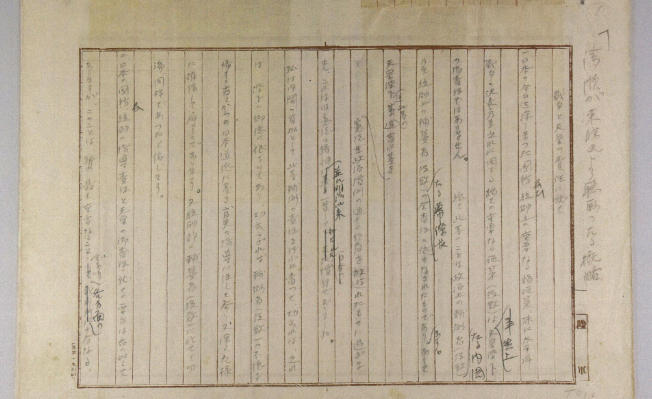
Tōdō Hiroshi's Handwritten Notes, Kyodo News
Historical records reveal Tōdō's mental state while awaiting trial in prison. They also include his criticism of other defendants and his foreboding about the death penalty.
Additionally, in his diaries and notes titled "As One Pleases," regarding defeat, Tojo wrote: "Is this the fate of the nation?" There was no content involving self-reflection.
According to Kyodo News, previously, descendants of Hideki Tojo donated some historical materials between May and June this year. These materials can be accessed by submitting an application to the National Library of Japan.
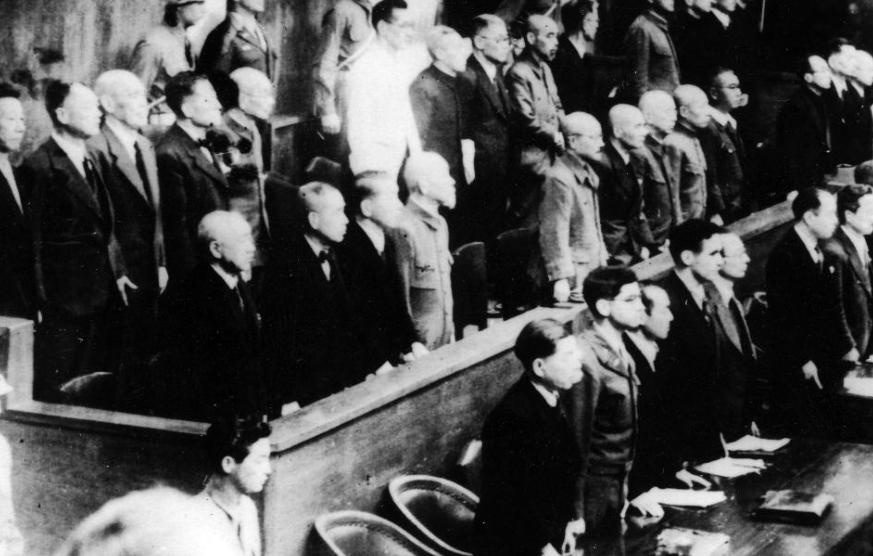
Tokyo Trial Scene (Reference Photo)
On May 3, 1946, the International Military Tribunal for the Far East, composed of judges and prosecutors from 11 countries including China, the United States, Britain, the Soviet Union, France, Australia, the Netherlands, and the Philippines, held its first public trial in Tokyo. The tribunal tried Class A war criminals who were responsible for planning, launching, and carrying out aggressive wars. Class B and C war criminals, who were responsible for the actual execution of acts of mass torture and slaughter of prisoners of war and civilians, were tried by countries such as China, the United States, Britain, and the Soviet Union.
In court, 28 class-A war criminals, including Tojo Hideki—who served as Prime Minister and General of the Army, Matsui Shigemoto, the chief perpetrator of the Nanjing Massacre, Itagaki Masaru, the planner of the September 18th Incident, Tsubouchi Shusaburo, the top Japanese spy involved in the invasion of China, Hiroshi Hirota, the former Japanese Prime Minister who proposed the “Hirota Three Principles” for the destruction of China, Kimura Heitaro, the “Burly Man of Burma,” and Osawa Shusei, the “father of Japanese fascism,” all claimed to be “innocent” without exception.
However, justice was not absent. After more than two years of trials, with 2 people dying of illness and 1 person suffering from mental disorders, all 25 defendants were found guilty. Among them, 7 war criminals, including Hideki Tojo, Shigeto Matsui, and Kenji Doihara, were executed by hanging.
On the 80th anniversary of the Tokyo Trials, Xinhua News Agency reported in May this year that 80 years have passed, yet the recorded acts of aggression have been gradually diluted and even beautified by Japanese right-wing forces. The lingering spirit of Japanese militarism has become a real and alarming threat.
