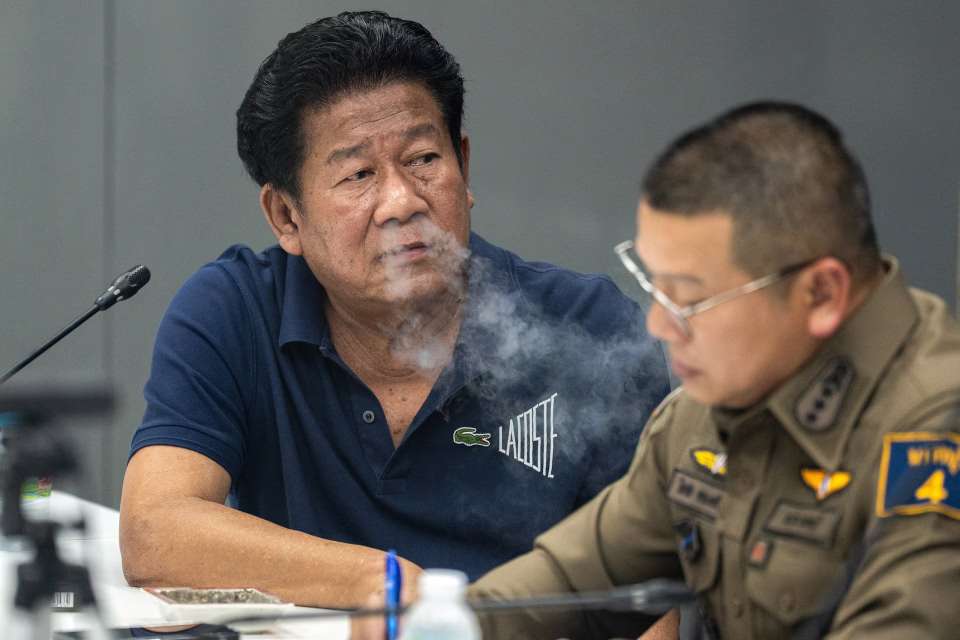
Recently, a series of shooting incidents in Thailand has attracted worldwide attention.
First, bandits shot and killed a Russian sibling and a Thai family of three. Just a few days later, there was the shocking shooting incident at Warmiwut Secondary School. Then, a former politician killed a governor under daylight.
This single button combination has the potential to surpass the United States and lead Southeast Asia in terms of excellence.
Is gun ownership really widespread in Thailand? Why does a country with a soft-minded culture like Thailand have such a high rate of "martial virtue"? In Thailand, is it true that people live under the constant threat of being accused of possessing guns every day?
Today, I will explain this "gun" issue in Thailand clearly.
First, let's make a conclusion: Thailand does have a lot of guns.
Thailand has a population of over 60 million, and there are 10.3 million firearms in the civilian sector. Of these, more than 6 million are legal firearms, while 4 million are unregistered illegal guns. In terms of absolute numbers, Thailand indeed leads Southeast Asia, closely following the United States.
Why so many? Because people love buying guns, and the after-sales service isn’t very strict.
Before World War II, Thailand (Siam), like most countries, had no regulation regarding firearms. Lords, nobles, landlords, and wealthy merchants would always have several guns and cannons at home. These were used not only to guard their homes but also to demonstrate their status. In an era when bandits were rampant and law enforcement was inadequate, it was reasonable for wealthy families to have firearms as a necessary need.
Over time, guns became a symbol of certain status and position. Since wealthy people had guns, ordinary people also wanted to have several guns to maintain the illusion of being "also part of the elite."
Since 1947, Thailand has officially legislated against gun ownership. Only Thai citizens who are 20 years old, have a proper job, and have no criminal records can apply for firearms.
However, this threshold is not very high; ordinary people can reach it with some time. The culture in which guns are associated with wealth and status is deeply ingrained. People with a little money like to buy guns, and those without money may even borrow money to get one. This abnormal “gun-worship culture” has a long history and even seems to be getting worse.
The biggest factor in preventing people from buying guns is not the procedures, but the expensive price of firearms themselves.
In order to accommodate those within the 'system', the government even regards the purchase of guns as an official benefit. It allows veterans and police officers to buy their guns at a discounted price, and even permits ordinary civil servants to purchase 'benefit guns' at a reduced price of one-third to one-fourth of the original cost.
This actually amounts to an official endorsement of the gun-owning culture, openly encouraging people to buy guns, and further fueling the trend of people owning guns.
After the Anu Ting government came to power, it claimed to be 'gun control' oriented. In reality, it only temporarily suspended the issuance of new gun licenses. As for the massive stock of guns and the deeply rooted gun-owning culture, this policy neither addresses the symptoms nor the root causes of the problem.
If there is any legal basis for "gun purchases," then the transfer of firearms among individuals becomes basically uncontrolled.
Many military and civilian personnel, when they have money, buy guns; when they don’t have money, they sell guns. Then they simply report a “loss” of the gun, and no one actually investigates.
Within the corrupt police system, there are also many people who privately trade government-owned firearms. Coupled with private firearms traded by civilians, the number of guns on the black market increases.
Myanmar's civil war and Cambodia's civil war led to a large amount of weapons flowing into Thailand. Warlords from neighboring countries also treated Thailand as a transit hub for smuggling weapons into places like Myanmar.
Additionally, some Thais also make their own guns by hand. Using simple equipment and modifying simulated firearms, they can create functional weapons. In gang fights and battles between thugs, these "handmade guns" are often used.
With such comprehensive efforts in both internal and external aspects, Thailand sees an annual increase of hundreds of thousands of firearms. A large number of these guns flow into the black market, where they are repeatedly sold, making it impossible to trace them.
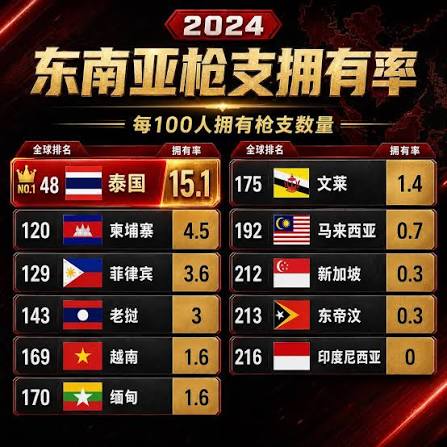
As we all know, there is an overabundance of firearms among the public. As a result, this situation further encourages people to buy guns for self-defense.
In this context, it's not surprising that there are frequent gun incidents in Thailand. Events like the “Nong Yai High School shooting” show that “campus shootings” are relatively rare in Thailand compared to the United States. This is not because Thai students are more kind-hearted, but simply because most of these “student shootings” occur during armed clashes between student gangs.
There are more guns, so there are also more cases.
In ordinary people’s homes, guns are stored, and everyone claims they are for “self-defense”. In reality, they are tools for suicide.
In newspapers and on television, there are all kinds of strange gun-related incidents every day: wives are killed by their husbands for cheating, sons-in-law are killed by their fathers-in-law during arguments, good friends draw guns over a quarrel after drinking, neighbors suffer from loud singing, and drivers get angry and race on the road—any trivial matter can become a tragedy when accompanied by guns. The difficulty and cost of killing people through firearms significantly decrease.
In the vast majority of shootings, the perpetrator commits suicide after killing others. It’s unclear whether they regret their actions after killing someone, or if they simply didn’t want to live anymore and decided to take several people’s lives as compensation.
In short, the more guns there are, the more murder cases there will be. Thais are not really “warrior-like” in terms of strength and courage. Instead, the number of guns, combined with various internal and external factors, provides a material basis for all kinds of violent deaths.
This is "legally holding firearms" country, which must inevitably be a dead end.
And even today, the people of Thailand still love guns. Supermarkets openly sell magazines for gun enthusiasts, and there are military-run shooting ranges everywhere.
The Thai friends I know who are wealthy—including those of Chinese descent—often proudly retrieve their "treasure photos" from their phones, boasting about how they can "spot gems with a keen eye" and how they can shoot accurately from a hundred paces away.
Perhaps, this is the fate of self-creation.
Besides widespread gun possession in civilian society, Thailand also has a distinctive feature: local political violence is exceptionally active.
In local government positions and among local powerful figures, assassinations occur frequently during elections. At intervals, village heads, township officials, and county/city council members are attacked, with their vehicles and personnel being targeted as if they were nestled in a wasp pit. The suspects arrested are often veterans or active-duty military and police officers.
But the true masterminds behind the scenes, the opposing candidates, and their "old pope" figures, were often left untouched and free from prosecution. A few years later, they became the Minister of Interior Affairs, and with a straight face, called upon everyone to "resist black."
This is a separate category of gun violence incidents in Thailand. Many well-known Western sociologists have become famous by specializing in this field of study.
In short, this is a revival of the ills of pre-modern society, under a dysfunctional electoral politics system.
Thai rural society is a feudal system where strong individuals play a central role. In each village, there is a "boss" who has authority over the local community and is willing to break laws to protect his followers.
In the eyes of the villagers, these "local heroes" are a mix of good and evil. They are both imposing local rulers and big brothers who care about the interests of the community. The power of the state often cannot reach the grassroots level, leaving local autonomy to these rulers.
These local leaders are not the kind of traditional gentry who just talk about poetry and philosophy, but people like Liu Bang and Song Jiang. They possess military power, have numerous thugs and even assassins, and maintain close relations with the local police force.
Originally, a modern and rule-of-law-based country should gradually weaken and curb these local tyrants. However, once this ‘pre-modern feudal society’ adopts a Western-style electoral system, such tyrants will become powerful and not only will they not be eradicated by the state, but they will even become part of the state itself.
Politicians need votes, so they must please these local tyrants. Over time, these tyrants also became a type of politician. They established political parties, organized factions, and became local governors, or even cabinet ministers.
These people, once faced with challenges in the electoral system and conflicting with each other, can be expected to do anything they want.
He is proficient in both literature and martial arts, and it's even possible for martial arts to dominate literature at any moment.
And once political assassinations occur, the police often engage in selective law enforcement based on political needs, and even participate directly in the acts of violence. This leads to a serious phenomenon of 'perpetrators going unpunished', which further encourages powerful individuals to regard assassination attempts as legitimate means of political struggle.
And the powerful lords in Thailand also have their own set of "folk morals": those who owe kindness must be repaid, those who have grudges must be avenged; if a man is humiliated, blood must be shed for three feet.
Therefore, the incident of 'MPs shooting the governor' in Warmiuri was partly an impulsive crime and partly a standardized operation based on local moral standards—a local politician who relied on resources to rise in position, and a local figurehead who used resources to gain power. Due to the failure of their promised interests, both parties ended up facing dire consequences.
This shooting incident is completely different from the campus shooting incidents that occurred in the same province (both in Nakhon Pathum Thani Province).
They just happened to occur together; they are not similar or related to each other, and they represent completely different Thai social issues.
The only relevance lies in the fact that Thailand indeed has a large number of guns, which provide similar means for triggering conflicts at different levels and among different types of societies.
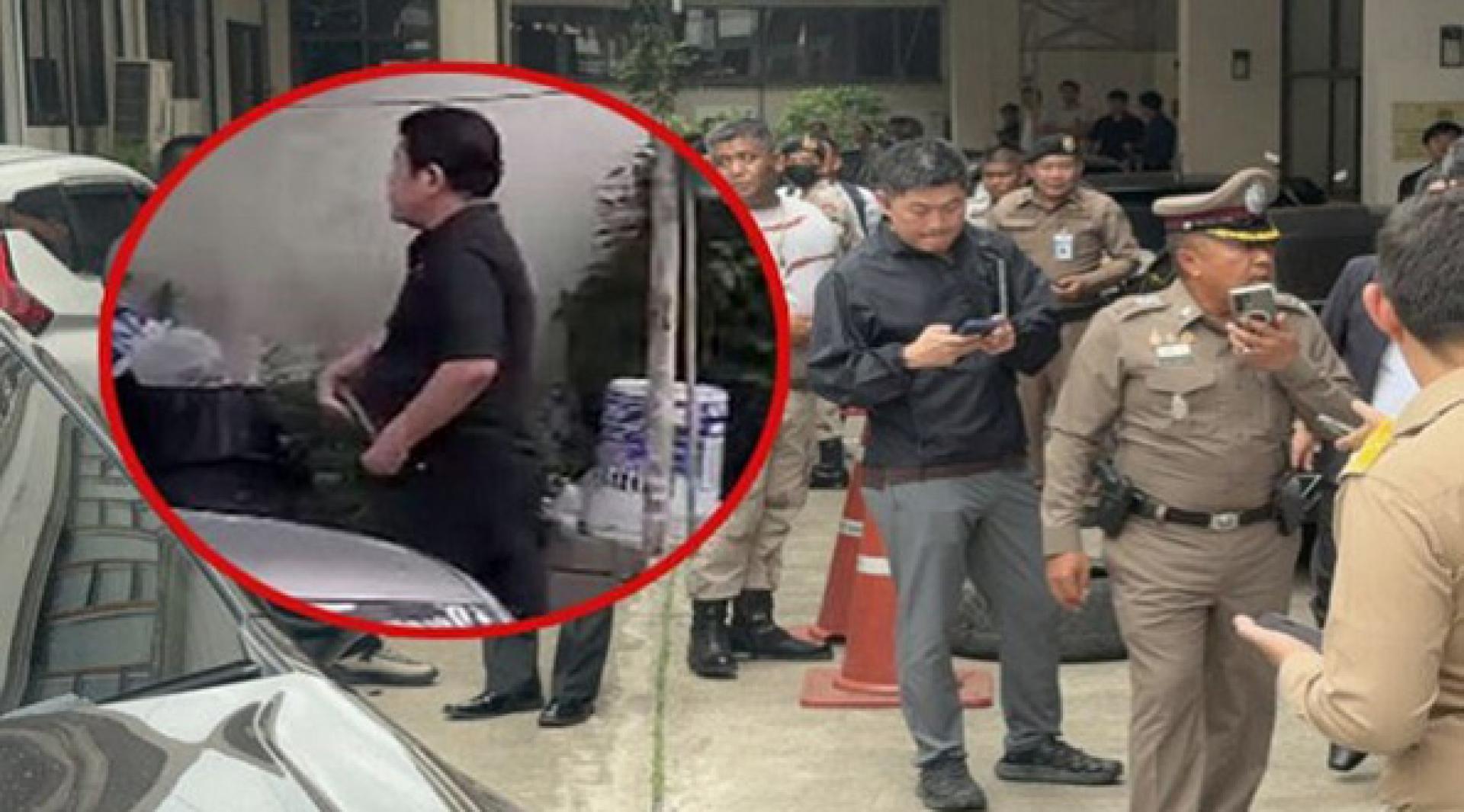
A former Thai congressman shot and killed a local government official
After talking about so much, people may think that Thailand is truly a western world, a place where the law does not apply. Indeed, it’s not advisable to go there at all.
So, in the end, I’d like to say something counterintuitive: Thailand isn’t actually that scary.
All social ills in a statistical sense can actually be unnoticed by everyday life, within certain thresholds. In reality, most people in Thailand never witness even one instance of a shooting incident in their lifetime.
The rate of gun violence in Thailand is four incidents per one hundred thousand people—meaning that if you live in a medium-sized city with a population of one hundred thousand, three to four people will die from gun-related accidents each year (of which two are suicides).
So, theoretically, there are 'quite a number' of gunshot incidents in Thailand, but actually they have little impact on social life.
Thailand allows the legal possession of guns, but it is illegal to carry them. No one in Thailand will wander the streets with a gun, just like those in Somalia, Afghanistan, or Texas. In the streets, there are not only no gunmen, but even no security guards who carry guns.
The author has lived in Thailand for over ten years. I have been to many places, including the Golden Triangle, slums, and red-light districts. Apart from police guns, mountain people's hunting guns, and the standard guns used at shooting ranges, I have never actually seen any "wild firearms" appear within my sight.
A tourist who normally strolls around, crosses islands, and enjoys entertainment in Thailand has a probability of encountering a gun crime just as high as that of being struck by lightning.
If you go to the red-light district and specifically look for violent men with protruding arms to have a fight, then indeed the probability of encountering a gun is much higher. However, Thailand is actually a relatively safe tourist destination.
Currently, two shooting incidents have occurred in Thailand consecutively, leading people to believe that there are many such cases. However, this is actually an impression created by the media's echo chamber effect.
In fact, the mortality rate from gun violence in Thailand is even lower than that from traffic accidents in Chinese cities. In other words, the probability of being shot on the streets of Thailand is three times lower than the probability of dying in a car accident in my hometown in China. Such a low probability can be completely disregarded.
I’m not trying to ‘whiten’ Thailand’s reputation (look at how black I have been described before). But to be honest—the theoretical risk probability is always different from the real-world perception.
Finally, let's summarize.
The gun issue in Thailand is indeed significant, but it's not as serious as people think. Traveling and working there is safe. If a company sends you to a Thai industrial area to serve as a branch leader, but you decide not to come because of two news reports, that's unnecessary.
However, the issue of guns in Thailand is quite prominent compared to other countries. It serves as a clear contrast and example for China, providing a negative answer to all the arguments supporting the legalization of guns.
It has been proven that no matter what culture, religion, or level of economic development a country has, it must never pursue the legalization of firearms. The increase and circulation of firearms among the public not only increases the number of casualties among the population, but also serves no purpose of self-protection at all.
With guns, there will be deaths. In places where the rule of law is lax, more people die; in places where the rule of law is strict, fewer people die. But no society can manage every gun clearly—unless that gun was never sold at all.
The weapon used in the crime is unknown; do not stay here for long. This applies to both ancient and modern times, in all cultures.
Even if the Buddha himself comes, it remains true.