According to a report by Reuters on August 10th, the US Federal Communications Commission (FCC), previously known for spectrum auctions and the approval of television broadcasting licenses, has unexpectedly become one of the leading forces behind the Trump administration’s most aggressive actions against China.
Over the past nine months, under the leadership of the FCC chairman and Trump ally Brandon Carr, the agency has taken a series of measures to combat actions that the U.S. government considers risky to the country’s supply chain.
So far, the FCC has banned the import of new types of Chinese drones, routers, inverters, and robots. It has also initiated procedures to prevent all Chinese laboratories from conducting testing and certification for electronic devices such as smartphones, cameras, and computers in the United States.
According to reports, the FCC is currently drafting a ban on the import of new types of Chinese data center components.
"If we are to consider FCC's role in the Trump administration, it has become a central force driving US-China competition," said Eric Syees, research fellow at the US Enterprise Research Institute.
A US official similarly believed that the FCC has become the "sharp spear" of Washington's economic policy toward China.
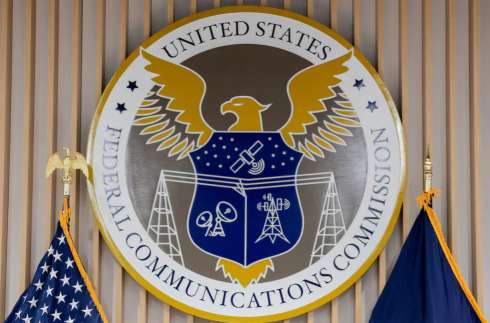
U.S. Federal Communications Commission logo image
Carl will become the chairman of the FCC in January 2025. He is known for his investigations into broadcasting companies, and Democrats have criticized this move as an attack on freedom of the press. He is also considered a hardliner towards China. After becoming the head of the FCC, Carl will prioritize expanding national security powers, focusing on addressing cyber and supply chain vulnerabilities from "foreign adversaries," with China being a primary target.
Reuters mentioned that a series of actions taken by the FCC towards China contrast with the overall policy of the Trump administration towards China. Experts say that recently, the Trump administration has been trying to avoid damaging trade relations with China.
Two American officials working in different agencies told Reuters that the FCC has become a vehicle for technological competition between China and the United States, partly because it can implement measures in a 'relatively low-key' manner without harming bilateral relations.
Additionally, these measures are aimed at driving out Chinese equipment from the technology supply chain and stimulating the domestic manufacturing industry, and they have received support from the White House.
American officials stated that the agency attempted to move forward without antagonizing China, partly by targeting Chinese technology without explicitly naming China.
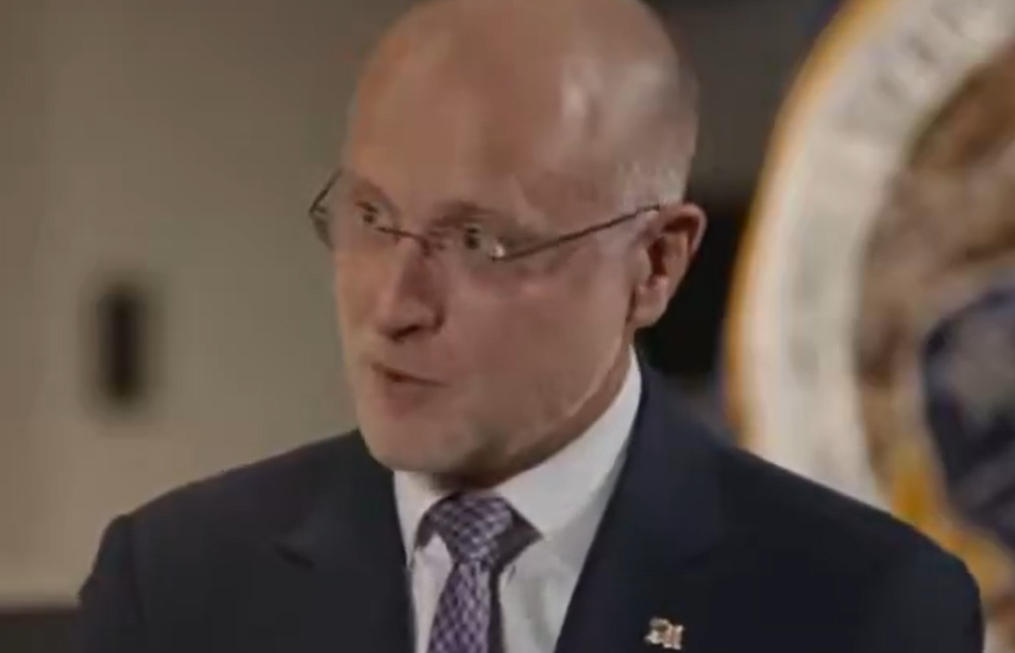
FCC Chairman Brandon Carr's recent interview video screenshot
However, China has already started to counterattack.
China has repeatedly stated that the actions taken by the US constitute discriminatory treatment against Chinese enterprises and could disrupt global supply chains.
On August 5th, China launched five measures simultaneously to counter the restrictive measures imposed by the United States against China.
"China's response measures, overall, are restrained," on the same day, the spokesperson of the Ministry of Commerce advised US side "to cherish the hard-won stability in China-US trade relations" while warning that if the US takes a unilateral approach, China will further retaliate.
Foreign media have noticed the differences in China's actions this time: restraint, but diversification and countermeasures. Among China's series of measures are strengthened export controls on drones and related technologies, sanctions against several American companies, and the launch of the first national security investigation related to foreign trade.
Fudan University’s Higher Institute of Social Sciences associate professor Meng Weizhan told Observer.net that China is sending a signal through ‘diversified and effective’ actions. In other words, whenever the US expands one field, China can respond in adjacent or corresponding fields.
He believes that after receiving the signal from the US side, even if they may not show restraint in the short term, they will be more cautious and more aware of the costs.
