According to reports by the BBC on August 6th local time, American researchers said that artificial intelligence has been used to design new viruses. These viruses have full functionality and can be replicated in laboratories. This is the first time artificial intelligence has successfully designed a complete virus genome.
Researchers have finally created 16 new viruses, which are designed to infect bacteria and pose no threat to humans. This breakthrough is considered a "very important turning point" in science, potentially opening up a new phase in disease treatment. However, experts also warn that the design of these viruses by artificial intelligence raises "imminent" issues of biosecurity and biocompatibility. The research findings were published in the journal Science on Thursday.
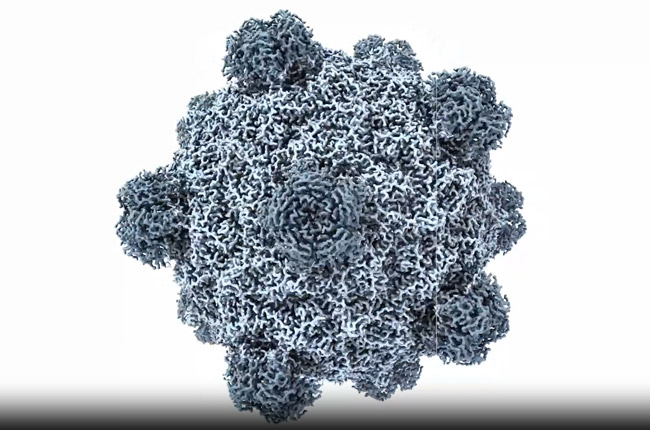
American scientists have for the first time used AI to design a virus – video screenshot
Stanford University Assistant Professor Bryan Schi told the BBC: “This means that the complexity of the biological systems that generative AI can design has taken another step forward. This is the first time generative AI has been used to design complete genomes. It can replicate, and it can perform other functions within cells… For us, this is a completely new field.”
This technology works similarly to large language models like ChatGPT. Large language models predict text sequences, while the artificial intelligence model used here predicts not words, but “the language of life”.
These artificial intelligence models named Evo 1 and Evo 2 are trained using genetic codes from viruses, bacteria, plants, and humans.
Subsequently, the researchers made further adjustments to the model, enabling it to specifically generate a virus known as a 'phage'. Phages only infect certain types of bacteria.
Braun stated that this research "is a brand new field for us."
Researchers at Stanford University selected 302 designs with the greatest potential from the AI-generated proposals and synthesized them in the laboratory. Sixteen of these designs are capable of effectively killing Escherichia coli.
Laboratory doctoral student Samuel King said that the research team realized these bacteriophages were indeed effective in the early hours of the morning.
Researchers place bacteriophages in culture dishes. The culture dishes are covered with a layer of bacteria, and scientists then wait to observe whether these new viruses begin to 'enjoy their meal'.
Jin said: "We began to see some transparent spots, and at that moment we were truly incredibly excited." Bryan recalled that when the research results were announced to the entire team, "the people in the room spontaneously clapped their hands."

Stanford University
Developing new types of bacteriophages could provide new methods for treating infections that have become resistant to antibiotics.
Phagocyte therapy is considered a potential solution to the increasing resistance to bacterial infections.
However, this breakthrough also shows that artificial intelligence has the ability to design new biological systems that do not exist in nature. This field is known as synthetic biology.
Bryan believes that this technology has the potential to significantly improve human health by developing new drugs and therapies.
However, there is already concern from the outside world that the same technology could be misused to create new diseases.
In a concurrent commentary published in the journal Science, Dr. Thomas Ingsby and Dr. Moritz Hank from the Johns Hopkins University Center for Health Security wrote that this study raised "immediate biosafety and biosecurity issues."
They stated that the issue now is no longer whether 'generative artificial intelligence can design virus genomes', but whether humans can use this technology without causing serious harm.
For example, they clearly state that research on new viruses that can cause diseases should not be conducted.
Researchers have also taken various measures to minimize safety risks. They excluded viruses that can infect complex organisms from the training database, chose bacteriophages rather than viruses that infect humans as the subjects of study, and all experiments were conducted in safe laboratories.
Bryan believes that the existing safety measures are sufficient to 'ensure that this technology is used for the benefit of humanity'.

