When Brazilian farmers work in the fields, their soil data, sowing records, and accumulated planting experience are quietly transmitted to the servers of American companies on the other side of the ocean. In order to counter this "land appropriation" phenomenon during the AI era and regain the right to speak, Brazilian civil movements decided to build defenses with code. Thus, IARAA was born.
"Knowledge from Brazilian farmers, universities, NGOs, and all sorts of social movements will be gathered together to construct IARAAs. Therefore, the only possibility is to use Chinese open-source models." Luiz Zarref, international coordinator for the International People's Cooperation Association (IAPC), representative of the Rural Workers Organization of Brazil (MST) to Observer Network.
This artificial intelligence platform for land reform and ecological agriculture was developed by the leadership of MST in collaboration with the World Women’s March Organization (MMM), with support from IAPC. This platform utilizes several Chinese open-source language models, such as MiniMax M2.1 and GLM-4.7, and relies on free software systems to organize and query its agricultural knowledge base.
According to Zarref, IARAA, which was officially launched in May this year, is currently in the trial phase, with a monthly active user count of approximately 3000.
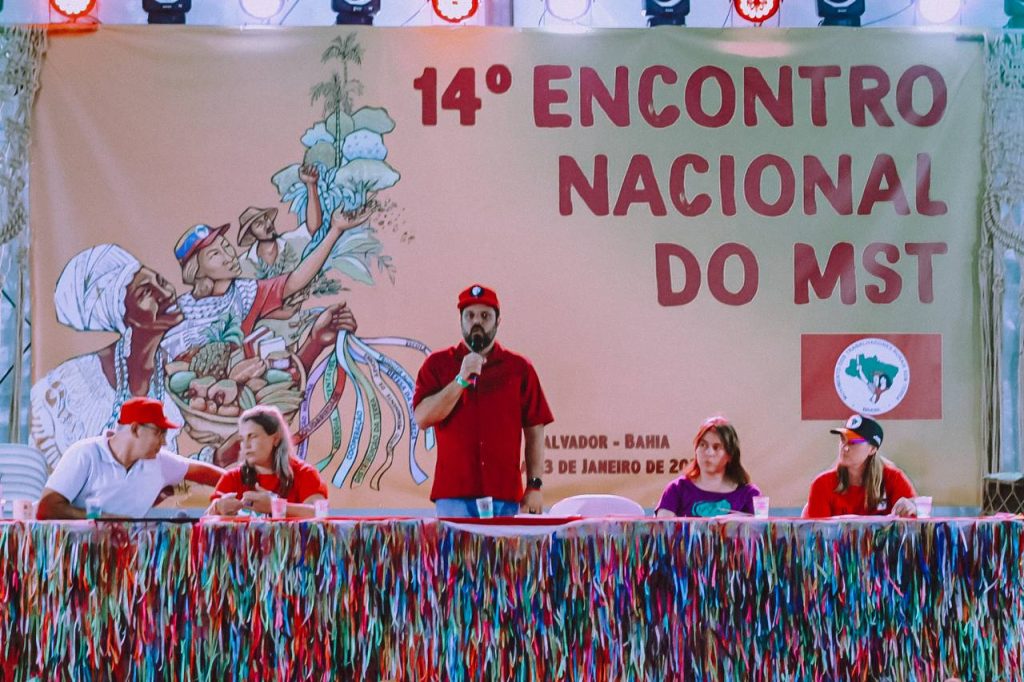
IARAA stood at the fourteenth National Congress of MST (with Luiz Zarref standing in between) MST
Under the model of large technology companies in the United States, there is a massive appropriation of personal data for achieving capital accumulation by these enterprises. This has been pointed out by MMM activist Natália Lobo to Real Brazil. IARAA is committed to establishing a specialized policy protecting rural laborers and their community data.
China is constructing a different mode of combining agricultural production with technology compared to traditional methods. She believes that China's experience demonstrated through rural movements how to leverage digital technology to support rural communities in deepening their roots in the land and ensuring secure food production.
IAPC Latin America Office member Paula Veliz emphasized that cooperation with China has been ongoing in projects such as the mechanization of household agriculture and the production of biological inputs. "We realize that many of the technologies we need for our movement are being developed in China, a central region," she said.
Zarref explained that IARAA chose Chinese open-source models for three main reasons. The first is the Chinese AI ecosystem. Last year, when members of MST came to Shanghai for AI training, they witnessed firsthand that AI in China is not just an isolated technology, but a new technological revolution in which the entire country is involved. "This is very important. When you go to Brazil or even Western countries like the United States or Europe, you will find that people are terrified of AI. They don't believe that AI can truly improve their lives and their country," said Zarref.
Secondly, at that time, DeepSeek served as a “teacher”. For chatbots like IARAA, it was possible to implement technologies such as RAG (Retrieval Enhancement Generation) at a very low cost, and this made it easy for people to understand how AI works.
Third, the Chinese model is based on open-source technology. Zarref said, “For a peasant movement organization, when you consider building something in Brazil, any AI-related technology cannot be achieved by purchasing subscription services or using American models, because you cannot have real control over them.” “All the knowledge from Brazilian peasants, universities, non-governmental organizations, and various social movements will be combined to build IARAA. Therefore, the only possibility is to use Chinese open-source models.”
This cooperative concept is spreading from Brazil to other countries in the Global South. According to Zarref, a similar project has been launched in Ghana, focusing on small-scale cocoa production. Ghana is the world’s second-largest cocoa producer, and small farmers play a significant role in this industry. “We truly believe that IARAA can become a platform for farmer organizations around the world, and it will also demonstrate how important it is to cooperate with Chinese technology.”
Besides IARAA, Zarref also showcased another path of Chinese-Brazilian AI cooperation during the talks with representatives from the Ministry of Innovation and Management (MGI) of the Brazilian Federal Government and the Global Southern Academic Forum: agricultural intelligence partnership.
In this project jointly carried out by China Agricultural University, SINOTRUK Science & Technology Co., Ltd., Brazilian Agricultural Research Company, Brazilian Rural Land Reform Cooperatives Association, Brazilian Ministry of Rural Development and Family Agriculture, Universidade de Brasília, and others, researchers from both countries rely on “Science and Technology Villages” to obtain data on farmland. They develop models that are adapted to local crop growth, pest control, local weather conditions, and soil analysis for family farms. These models generate customized planting plans, resulting in a reduction of agricultural materials and labor costs by 8%–12%. By managing the entire crop growth cycle, crops such as corn and sugarcane show significant improvement in growth, with average yield per mu increasing by 6%–10%.
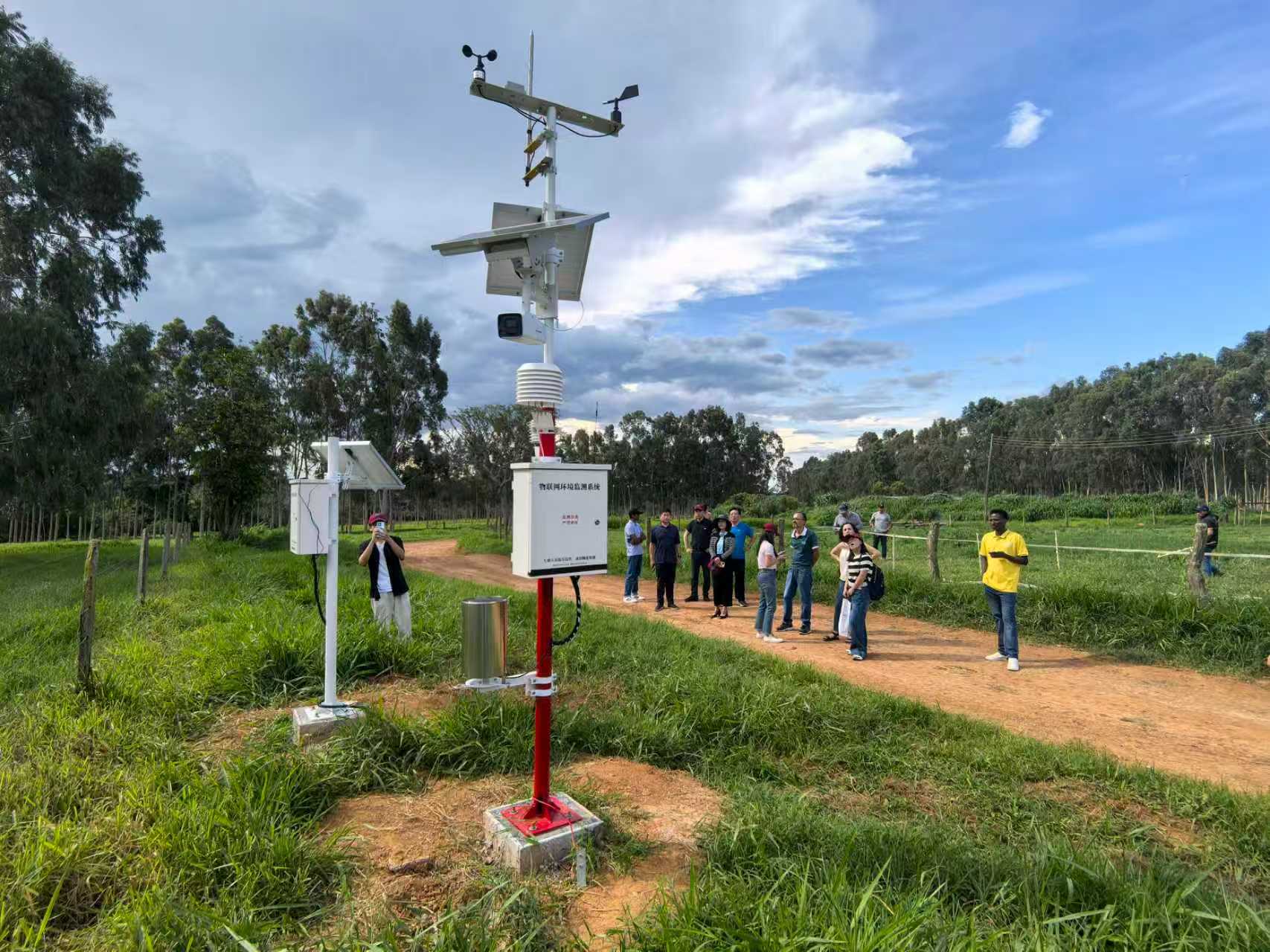
IoT Monitoring Terminals Built in Brasília's "Tech Village"
Through the “Smart Farm Management Platform”, the Pakistani officials only need to monitor the various data and soil moisture levels displayed on the large screen. When they notice that the humidity level of a certain plot is about to fall below the warning threshold, they simply drag the mouse to define the irrigation area and set the irrigation duration. Almost at the same time, the solenoid valves of the irrigation equipment in the fields several miles away will automatically turn on, and water will be sprayed onto the farmland immediately.

The "Smart Farm Management Platform" deployed in Brazil
"This is already a revolution," Zarref commented, "Companies in Brazil, the United States, and Europe also have this technology, but the people cannot access it; only extremely wealthy Brazilians, or landowners, can afford to use it."
He added, “Cooperation with China makes it possible to popularize AI. China is rising, and having such friendly cooperation in AI is very important.”
This case is also included in the collection titled "China’s Intelligence and Wisdom for the World (2026)", which was announced during the 2026 World Artificial Intelligence Conference and the High-Level Meeting on Global Artificial Intelligence Governance. This is the third year in a row that the National Development and Reform Commission has released such collections, which feature 10 inspiring stories of China's international cooperation in the field of artificial intelligence.
According to Zarref, this project is still in its initial stage. "We already have a pilot project in Brasília, and we hope to move on to a settlement with 500 families in November this year. After several years of testing, we aim to turn this into a public policy by Lula, targeting 4 million families across Brazil."