According to Yonhap News Agency's report on August 4th, in the first half of this year, more than one-third of the electric vehicles sold in South Korea were manufactured in China. The share of Chinese-made electric vehicles in the South Korean market even surpassed Germany for the first time, ranking first.
According to the 'Analysis Report on the Current Situation of New Domestic Automobile Registrations in the First Half of 2026' released by the Korean Association for Automotive Mobile Industry (KAMA) on April 4th, from January to June this year, South Korea registered a total of 69,513 electric vehicles manufactured in China. This represents a staggering 178.7% increase compared to the same period last year. The proportion of new registrations of electric vehicles in total registrations increased significantly, from 26.8% last year to 35%. This means that among every three newly licensed electric vehicles on South Korean roads, one is manufactured in Chinese factories.
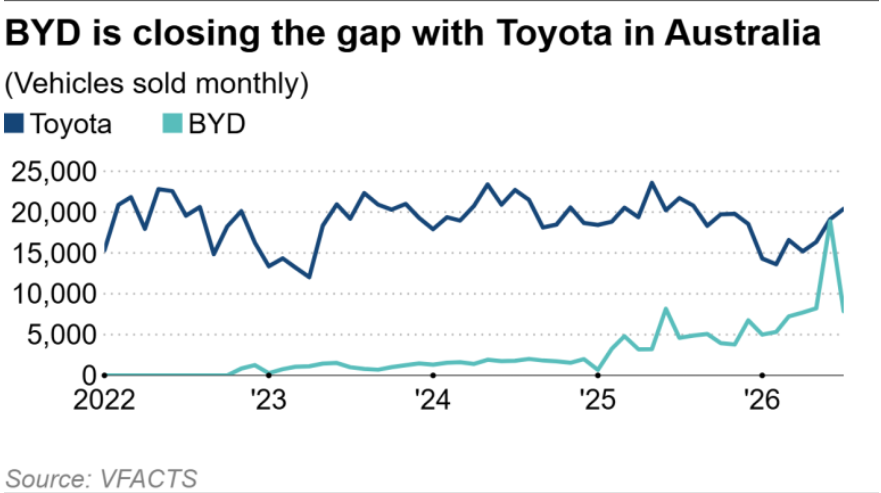
Yonhap analysis indicates that this explosive growth is mainly due to two factors: the continuous large-scale imports of Tesla's Shanghai Supercharger plant-produced Model Y and Model 3, coupled with the accelerated expansion of local Korean brands such as BYD and Volvo's Xpeng in the Korean market. These factors have contributed to the steady increase in the sales of Chinese-made electric vehicles in Korea.
It is worth noting that the influence of Chinese-made vehicles in the Korean import car market has diminished significantly. In the first half of the year, the total imports of Chinese-made cars reached 79,444 units, a year-on-year increase of 127.8%. By production location, the market share of Chinese-made cars reached 41.2%, surpassing Germany for the first time and topping the list of sources of imported cars in Korea. Germany, which had long ranked first, was pushed to second place.
Regarding this, the Korean Automobile Mobility Industry Association commented in its report that the large influx of Chinese electric vehicles helps to promote the adoption of electric vehicles in Korea and expands consumer choices, which is positive. However, the association also acknowledged that this may pose significant operational pressure on Korean domestic automakers and intensify competition between upstream and downstream members of the industry chain. As Chinese electric vehicles continue to gain market share due to their cost and supply chain advantages, it will be a direct challenge for the Korean automotive industry to maintain its local market position.