According to reports by the Islamic Republic of Iran News Agency (IRNA) on August 2, Bahaee, a spokesman for the Iranian Ministry of Foreign Affairs, reiterated during a television interview that the situation in the Hormuz Strait will not return to the state before the conflict began. Iran and Oman will negotiate to determine the future framework for managing the Strait.
Baghaee said that Iran and Oman, as two countries along the Hormuz Strait, share a common responsibility for maritime security and navigation safety. After the temporary ceasefire agreement was reached between Iran and the United States on April 8th, Iran and Oman immediately began negotiations and held several rounds of discussions. Iran's Foreign Minister Al-Aghazi has discussed with Oman's leadership the issue of establishing safe maritime routes.
Baghaee stated that the future management of the Hormuz Strait should be led by Iran, and should be advanced based on consultations with Oman and dialogue with other countries in the region. He revealed that the new Hormuz Strait route agreed upon between Iran and Oman is neither the existing northern route nor the existing southern route, but a new route determined through mutual agreement between the two parties.
He added that the agreement regarding new shipping routes has nothing to do with whether the Strait of Hormuz will be reopened. The Strait of Hormuz “will never return to its pre-war state”. The future situation of the strait and regional security developments depend on US actions.
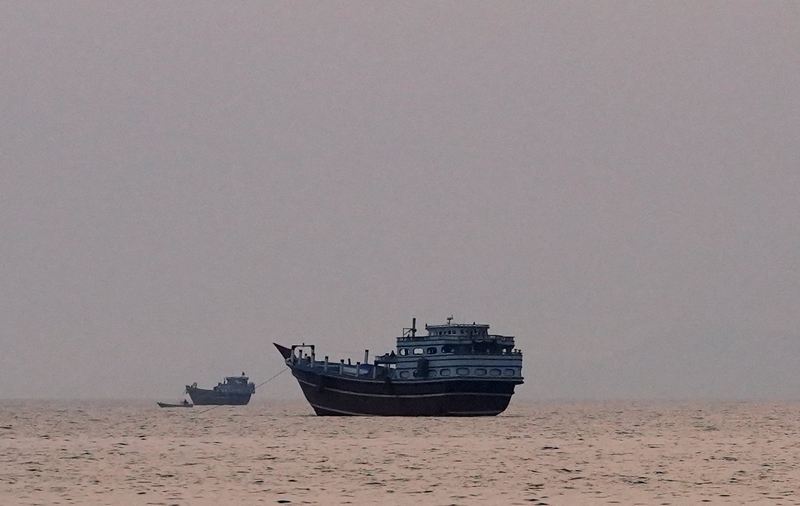
Hormuz Strait IC Photo
Baghaee emphasized that Iran will always act in accordance with its overall national interests and will not change its decisions due to threats or pressure from other countries. He said, "Any idea that claims that threats and media pressure can force Iran to abandon its principled positions is contrary to reality. We will continue to take actions that are in line with our national interests."
In addition, Bagge said that within the past 24 hours, the UK, Bulgaria, and Ukraine have contacted Iran, all stating that they will not participate in any military actions that the United States may take against Iran.
Previously, it was reported that the United States and Israel are considering launching a new round of large-scale attacks against Iran, with potential targets including power plants, refineries, and other energy infrastructure facilities.
However, on the evening of August 1st local time, U.S. President Donald Trump posted a message on social media, stating that Iran and other Middle Eastern countries had requested the United States to postpone launching attacks, on the grounds that all parties had reached an agreement on the framework of the deal. Based on this request, he agreed to cancel the attack, provided that all parties can reach an agreement quickly.
Iran denies having sent such a “request” to the United States. On the 2nd, Iran’s Maher News Agency reported that U.S. President Donald Trump described Iran’s request to stop attacks as “a new lie” and “a desperate attempt to pressure the Gulf countries.” The official stated that Iran’s armed forces are still in the highest level of combat readiness and are prepared for any possible situation.
