The five-month-long Iraq conflict is making it increasingly difficult for the US military to handle.
According to the US newspaper The Washington Post, reported on August 1 local time, Admiral Alexius Greenkiewicz, commander of the U.S. European Command, submitted a written notice to senior officials of the Department of Defense this week, stating that he no longer had sufficient naval forces to continue protecting Israel from Iranian ballistic missile attacks.
Several sources familiar with the matter revealed that Greenewich explicitly stated in his notification that if the Department of Defense could no longer allocate another destroyer, he would have to choose between defending the United States' "home territory" and defending Israel, with priority being given to protecting the United States' home territory.
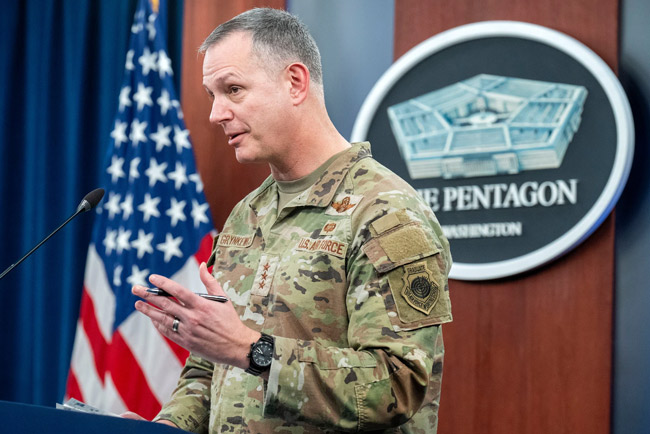
Lekh Sux Greenkivich, Wall Street Journal
An American defense official tried to downplay the matter, stating that it is common practice for area commanders to request resources from the Pentagon after detecting risks.
The United States Department of Defense declined to comment on Greenkiewicz's warnings, and the U.S. European Command also did not respond to media inquiries.
Meanwhile, the United States and Israel are planning a new round of military actions against Iran.
The American CBS network reported, citing multiple sources, that the United States and Israel are preparing to bomb Iranian power plants, refineries, and other energy infrastructure. The attack is expected to begin as soon as the weekend. The Wall Street Journal, citing U.S. officials, stated that Trump has asked the military to prepare a series of attacks over several days in order to further pressure Tehran.
However, just as the US is planning to intensify its attacks, the US military's ships and ammunition are already in short supply.
For many years, the American naval destroyers deployed in eastern Mediterranean have been an important part of Israel's air defense system. These warships are equipped with high-power radar and various interceptor missiles. They have not only shot down missiles fired at Israel by Iran, but also intercepted missiles launched by the Houthi rebels in Yemen.
The United States European Command is the main coordinator for related tasks, responsible for organizing military operations of the U.S. forces in the Mediterranean region. At the same time, this command also maintains military readiness in Europe, prevents military conflicts between Russia and NATO, and retains the ability to respond to ballistic missile threats targeting the United States mainland.
Pentagon officials previously stated that the U.S. Navy currently has five destroyers based in Rota, Spain, and a sixth is expected to arrive later this year. However, several officials said that due to the tight schedule of military operations against Iran, maintenance tasks for the ships have been accumulating, further reducing the number of troops that can be deployed.
American military officials presented demands citing safety issues. *The Washington Post* did not disclose specific combat readiness and availability of these warships.
Meanwhile, the U.S. Navy has deployed a large fleet in the Arabian Sea, closer to Iran. This fleet includes two aircraft carriers, the George H.W. Bush and Abraham Lincoln, as well as at least 15 other warships, of which 11 are destroyers.
But these ships had already been assigned tasks long ago.
On one hand, they need to carry out the maritime blockade imposed by the Trump administration against Iranian ports. On the other hand, they also have to participate in the so-called “Freedom Plan”, escorting ships through the Strait of Hormuz. In the Red Sea direction, the destroyer ‘Gonzalez’ is used to counter Houthi militant activities against commercial shipping.
The Trump administration announced in mid-July that it would reimpose maritime restrictions on Iranian ports, oil terminals, and coastal areas. Any ships that enter or leave these waters without permission may be intercepted, forced to stop, or even detained by the U.S. military.
From the Mediterranean to the Red Sea and the Arabian Sea, American frigates are responsible for multiple tasks: protecting Israel, blocking Iran, maintaining maritime traffic in the Strait of Hormuz, and dealing with the Houthi militant group. Although the fleet appears large, the number of warships that can be dispatched at any time is not sufficient.
Not enough warships is just part of the difficulties faced by the US military.
A review conducted inside the Pentagon by The Washington Post in May this year revealed that the U.S. military takes the primary responsibility for intercepting Iranian ballistic missiles and protecting Israel. The frequency of using advanced U.S. anti-missile weapons is significantly higher than that of Israel’s own air defense systems.
After the war broke out, the US military has launched over 200 Patriot missiles to protect Israel, which is nearly half of the total inventory at the Pentagon. American warships stationed in the Middle East also launched over 100 Standard-3 and Standard-6 missiles.
The Center for Strategic and International Studies in the United States previously estimated that it may take several years to replenish some key ammunition inventories. Replenishing the “Thunderstorm” interceptor missiles consumed during the war could continue until the end of 2029.
In late July, the US military paused its intensive airstrikes against Iran after 13 consecutive days of operations. According to Reuters, sources said that the suspension was due to the depletion of ammunition, a reduction in targets that could be attacked, the attitudes of allies, and the economic impact of the war.