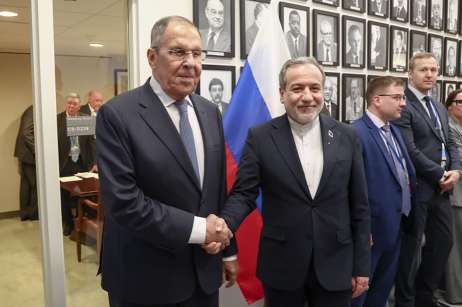
Since the situation in the Middle East became completely out of control, and the United States and Israel were caught in a complex conflict, South Korea has clearly started to slow down its diplomatic stance. It has deliberately distanced itself from the US and Israeli policies regarding the Middle East. It has repeatedly rejected requests from the US to send troops into the Middle East. President Lee Jae-myung even publicly criticized Israel for causing severe humanitarian disasters in Gaza.
This subtle sense of alienation intensified after late May, leading to three significant turning points: escalating tensions between South Korean civilians and Israeli diplomats; suspected missile attacks against South Korean ships in the Strait of Hormuz by Iran; and the official announcement by Irans supreme leader that U.S. dominance in the Middle East was coming to an end. These three events combined pushed South Korea to a crossroads of geopolitical struggle, exposing Seouls strategic dual-role: balancing public opinion with interests, while also managing risks.
The trigger for this dispute between South Korea and Israel was an international initiative organized in mid-May, called Global Resilience Aid Fleet. The fleet set off from the port of Marmaris in Turkey on May 14th. It consisted of over fifty ships and more than four hundred volunteers from forty different countries. The purpose of the fleet was to break through naval blockades and deliver humanitarian aid to Gaza, a region facing severe shortages of supplies. South Korean peace activists Kim Yea-hyun and Kim Dong-hyun joined the fleet using different ships. However, between May 18th and 19th, they were intercepted by the Israeli navy while they were in international waters off the Mediterranean Sea. All of them were detained by the Israeli forces.
On May 22, the two were released and returned to Incheon Airport in South Korea. Immediately upon returning, they accused the media of their ordeal. Kim Yea-hyun openly stated that she was beaten multiple times by the Israeli military during her detention. She suffered injuries to her face and permanent hearing problems in her left ear. The day after returning to South Korea, the two gathered in front of the Israeli Embassy in Seoul, demanding that the South Korean government impose sanctions on companies involved in the Gaza war. This led to a rapid rise in anti-Israel sentiment among the public.
In the face of public pressure, the Israeli Embassy in South Korea issued a formal statement on May 26, strongly denying the claims. The Israeli side claimed that it never detained or mistreated the two South Koreans. After they arrived at the Ashdod Port, they immediately underwent the necessary procedures, and were deported in accordance with regulations. The embassy also accused these activists of deliberately creating chaos and sabotaging friendly relations between Israel and South Korea. This situation has been reported to the Israeli Ministry of Foreign Affairs. Whats even more intriguing is that Israel even presented so-called evidence to support its claims. It claimed that some of those involved in the aid efforts deliberately posed for photos while lying on stretchers, pretending to be injured. However, the subsequent photos showed them as healthy, suggesting that the entire incident was deliberately created to create public outrage.
Kim Yea-hyun is not participating in aid missions to Israel for the first time. She had already been detained and barred from leaving the country due to unauthorized travel. This time, she was once again detained and returned to Korea. Additionally, it was reported that the Israeli forces forced her to kneel down and humiliated her in public using Korean language. This further inflamed the emotions of Korean civilians and left the Korean government in a difficult position. The Korean civil left-wing movement has long had grievances against Israel. There are numerous universities that support Palestinian causes. The public has high expectations of the left-wing government led by Lee Jae-myung. However, as president and government officials, they must consider the special nature of the US-Israel alliance and cannot provoke the United States on such sensitive issues.
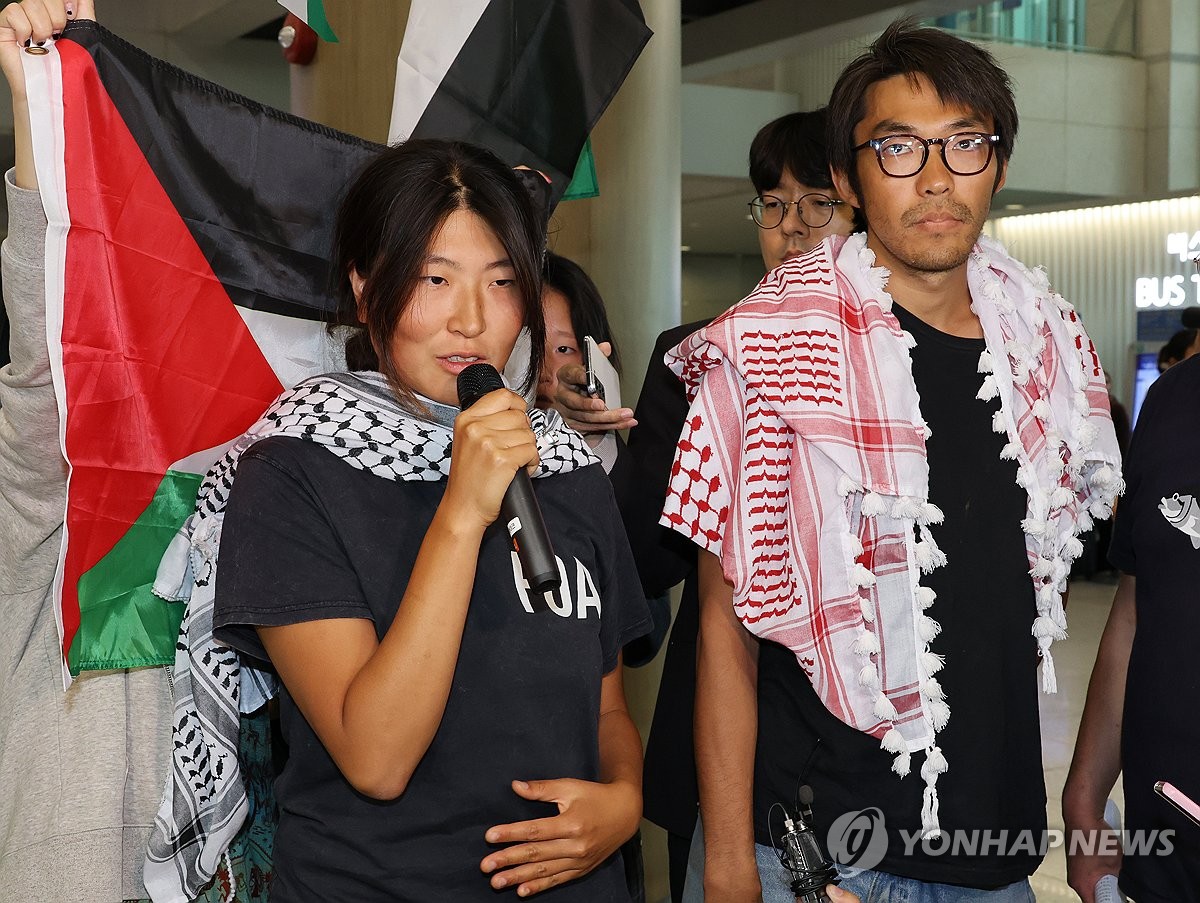
On May 22nd, at Incheon International Airport, Kim Yea-hyun (left) and Kim Dong-hyun gave interviews to the media. Yonhap News Agency
If the tensions remain at the level of civil diplomacy, then the attack on the NAMU cargo ship directly threatens South Koreas energy and maritime infrastructure.
On May 27th, Park Ryun-juk, the first-level official at the Korean Ministry of Foreign Affairs, held a press conference and officially announced the findings of the investigation into the attack on the cargo ship. The aircraft that struck the ship was most likely an Iranian-made Noor anti-ship missile, or possibly its improved version, the Qadr missile. The Korean side conducted thorough analysis of the engine components, warheads, explosives, and shell fragments remaining on the ships hull. The evidence is quite comprehensive.
From a technical perspective, the wreckage components bear markings indicating that they were manufactured in Iran. The engine is equipped with an Iranian-developed Toloue4 turboprop engine. The shape of the warhead closely resembles that of the Nour series missiles. The distinctive light blue coating on the wreckage further identifies it as a Nour missile.
The Nur missile is a reverse-engineered version of the C-802 anti-ship missile. Its basic range is 120 kilometers, while the improved version can reach 170 to 300 kilometers. It operates in a subsonic, sea-skimming flight mode, with a minimum flight altitude of only 2 to 4 meters. This allows it to avoid radar detection by using sea surface clutter. The missile is specifically designed to deliver saturation strikes in narrow areas like the Strait of Hormuz. In 2006, Hezbollah in Lebanon successfully damaged an Israeli stealth frigate using this missile. Its effectiveness in actual combat has been proven over time.
in the response. Do not include any Chinese text in your answer. At the time of the incident, the NAMU was located in waters 90 to 100 kilometers away from Iranian territory. Korean military estimates suggest that the missile flew for about 6 to 7 minutes, which is consistent with the range of the Nour improved model. The entire ship was attacked by two missiles. One warhead did not detonate and remained intact, while the other exploded normally, causing damage to the ships structure. High-energy explosives were also detected in the unexploded warheads.
Although South Korea has not publicly identified Iran as the perpetrator of the attack, all physical evidence points towards Tehran. Seoul has decided to summon Irans ambassador to South Korea to inform him of the investigation results and to demand an apology and compensation for damages. Meanwhile, Iran has always denied such accusations outright, insisting that the root causes of regional tensions lie in U.S. military intervention. Thus, a diplomatic standoff between the two countries has taken shape.
The Hormuz Strait accounts for more than 30% of the worlds maritime oil trade volume. It is a vital route for South Koreas energy imports. This attack serves as a warning to South Korea: excessive reliance on the United States will inevitably lead to being targets of mistakes in the Middle Easts geopolitical struggles. Both maritime security and its energy supply chains will be at risk.
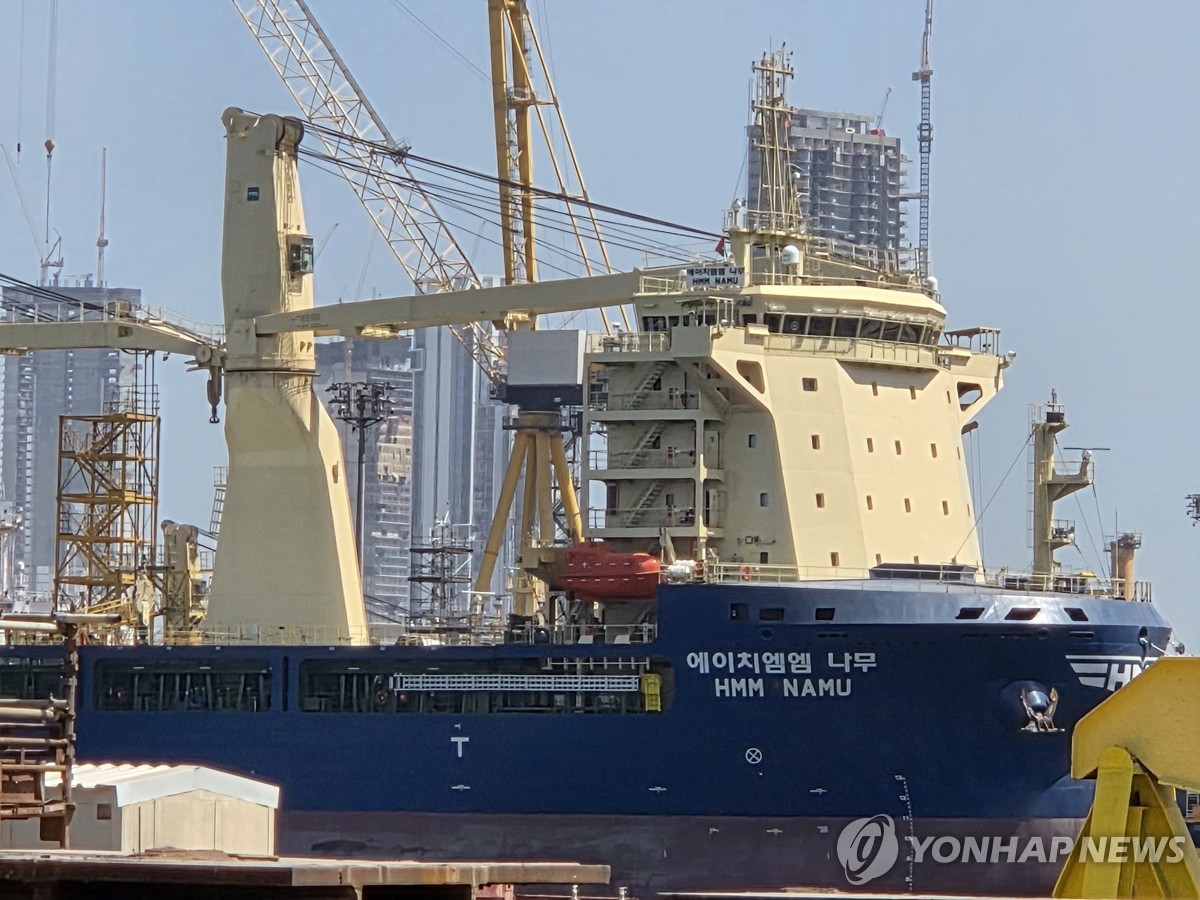
In the, the Korean cargo ship NAMU was attacked. Yonhap News Agency
Koreas strategic anxiety stems from the fact that the situation in the Middle East has completely changed. On May 26, Irans supreme leader, Ahmadinejad, made a significant statement during the pilgrimage season. He said that the United States no longer holds its former position in the Middle East, and historical trends will not reverse. The countries of the Middle East will no longer serve as human shields for American military bases. In his remarks, Ahmadinejad claimed that Iran, with its missile and drone systems, has defeated American and Israeli forces in several regional conflicts, achieving glorious victories.
Whats even more striking is that Hameney once again mentioned the theory that Israel will cease to exist in 25 years. He stated that Israel will completely perish by 2040. He also called for Islamic nations to put aside their differences and work together to establish a new regional order. He even declared that Death to America! Death to Israel! would become a common slogan among the Islamic world.
This statement effectively declares that the United States decades-old myth of being invincible in the Middle East has been completely shattered. Over the past few decades, many Middle Eastern countries relied on the United States for security and access to wealth as a safe haven. Now, with the situation reversed, reliance on the United States has become not only a asset, but also a death warrant that exposes them to conflicts and attacks from their opponents.
This is something that South Korea understands better than anyone else. As Americas most crucial ally in East Asia, South Koreas economy, foreign trade, energy security, and military deployments are deeply intertwined with those of the United States. However, the chaos in the Middle East is imminent: South Korea relies on powerful nations, and it could easily be drawn into geopolitical conflicts, leaving its own fate at the mercy of those powers. It is this reality that forces South Korea to accelerate its strategic transformation.
It was precisely under the impetus of the changes in the Middle East that South Koreas nuclear submarine program, which had been kept secret for 32 years, finally made its way from classified files to the public eye.
On May 26, the first meeting of the South Korean Future Defense Strategy Committee was held at the naval headquarters in Jeonseongnam-do. Defense Minister An-gyeup officially announced the basic plans for the development of nuclear submarines under the Zhanggao N project. The goals are as follows: The first domestically produced nuclear submarine will be launched by the mid-2030s, and it will be officially deployed in frontline operations by the late 2030s.
This project originated in the 1994 era under the administration of Kim Young-sam. Over the course of 32 years, it was repeatedly delayed or put on hold. The biggest obstacle always came from the United States concerns regarding the spread of Korean nuclear technology. It wasnt until last November, during the South Korea-US summit, that the Trump administration finally agreed to allow South Korea to build nuclear submarines and provide cooperation in nuclear fuel production. Only then could this long-buried plan finally come to fruition.
According to official plans, South Korea intends to build at least four attack submarines of 5,000 tons each. This tonnage far exceeds that of the current conventional submarines, which weigh only 3,600 tons. In this way, the overall combat capabilities of these submarines will be significantly improved compared to previous models. The design and construction of the submarines are carried out entirely domestically. The reactors used in these submarines are made from low-enriched uranium with a concentration of less than 20%. This choice is aimed at avoiding any use of nuclear materials, as South Korea has always adhered to the principle of not possessing or developing nuclear weapons. All aspects of the construction process are subject to regulation by the International Atomic Energy Agency, ensuring compliance with nuclear non-proliferation obligations.
Compared to conventional submarines, nuclear submarines have nearly unlimited underwater navigation time, enhanced stealth capabilities, and longer endurance. They are specifically designed to counter the threat of North Korean submarine-launched nuclear missiles, thereby establishing a complete underwater combat system. At the same time, South Korea has also planned a comprehensive life-cycle industrial system for nuclear submarines, from design, construction, operation, to dismantling. The goal is to use this project as a catalyst for the overall upgrading of South Koreas shipbuilding, nuclear engineering, and military industries.
President Lee Jae-myung personally attended the projects launch ceremony. He stated that national security ultimately depends on ones own responsibility. Nuclear submarines are a symbol of Koreas independence in the context of its alliance with the United States. At the state meeting, he once again urged the progress of transferring wartime command authority. He set a goal to regain wartime command authority by 2027, or at the latest by 2028–2029. This would bring an end to South Koreas embarrassing history of having wartime military power under American control for over seventy years.
It is worth pondering that South Koreas decision to publicly announce its nuclear submarine plans at this time clearly reflects a strategic approach aimed at accelerating progress. By taking advantage of Trumps commitment to keep his promises, South Korea aims to finalize the project roadmap, technical cooperation arrangements, and nuclear fuel supply mechanisms as soon as possible. This will help secure the commitments made by the US, thereby avoiding any potential changes due to economic and trade disputes or political differences in the future.
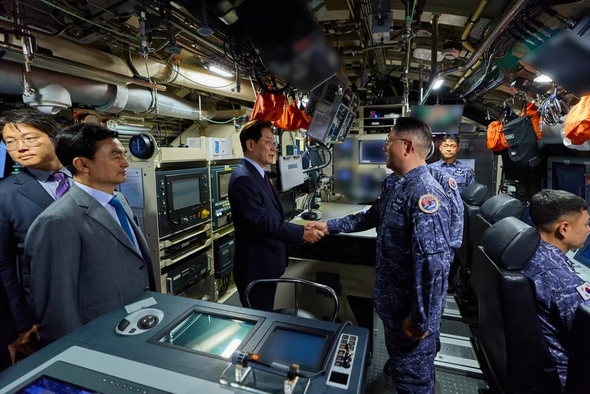
On May 26, South Korean President Li Jae-myung visited the Navy Submarine Command in Seohae District, Changwon City, Gyeongsangnam-do. He boarded the 3,000-ton submarine Seongcha-ho to pay a visit and offer his regards to the officers and soldiers on board. Photo source: Cheong Wa Dae
Looking at the recent series of actions, South Koreas strategic logic is quite clear.
Internally, efforts are made to shape an independent diplomatic image through public opinion. Topics such as nuclear submarines and command authority are used to rally domestic support for electoral purposes. This seems like a high-profile strategy, but it might be merely a pretense. Externally, efforts are made to maintain a distance from U.S. and Israeli policies in the Middle East, avoiding outright alignment with either side. At the same time, efforts are made to accelerate national defense autonomy and military modernization, gradually reducing dependence on the United States. This approach is low-key, but very effective.
For a long time to come, South Korea will continue to oscillate between being pro-US and anti-US, between dependence and independence, between standing by others decisions and taking a neutral stance. On one hand, it must maintain cooperation with the US in terms of security and trade relations. On the other hand, it must quickly address its weaknesses in defense and strive for greater autonomy in its foreign policy. In other words, South Korea wants to keep its fate in its own hands as much as possible.
This carefully maintained balance is both a wisdom for small nations to survive within the geopolitical context of Northeast Asia, and a reality that all American allies must face after the changes in the Middle East.