According to a report by Forbes website on July 31, global leading information and analytics provider LexisNexis recently released the latest analysis. After reviewing patent data related to robots over the past six years, China ranks first globally in terms of patent numbers in the field of humanoid robots, with a significant advantage. Although the average quality of patents in the United States remains high, US companies may need to obtain licenses for Chinese intellectual property in the future.
According to reports, this analysis examined more than 26,000 patent families, covering three core technologies for building a humanoid robot that can move and work: the interaction system, the form (i.e., the body itself), and the control and planning system.
By the end of 2025, China accounted for 73% of the world's patents related to humanoid robots. Other countries cannot match this figure. South Korea ranked second with 11%, Japan third with 7%, and the United States fourth with only 5%.
If patent value is taken into consideration, the ranking changes slightly: China accounts for 63% of the most valuable patents, the United States 11%, and Japan 10%.
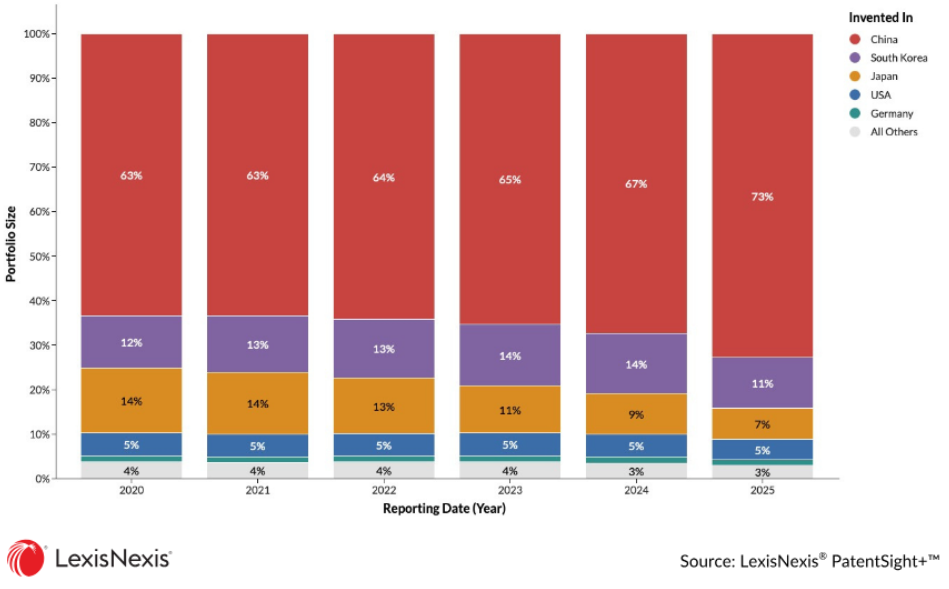
The report indicates that over the past decade, China's patent applications in key areas of humanoid robotics have seen explosive growth: the number of patent applications in interaction systems has nearly doubled, those in morphology-related fields has increased by about 2.5 times, and those in control and planning architectures have increased by about 5 times. In particular, the number of patents related to morphology has risen sharply since 2023. Chinese companies have made significant progress in patents for autonomous decision-making systems, which are crucial for determining whether humanoid robots can truly operate autonomously in complex environments.
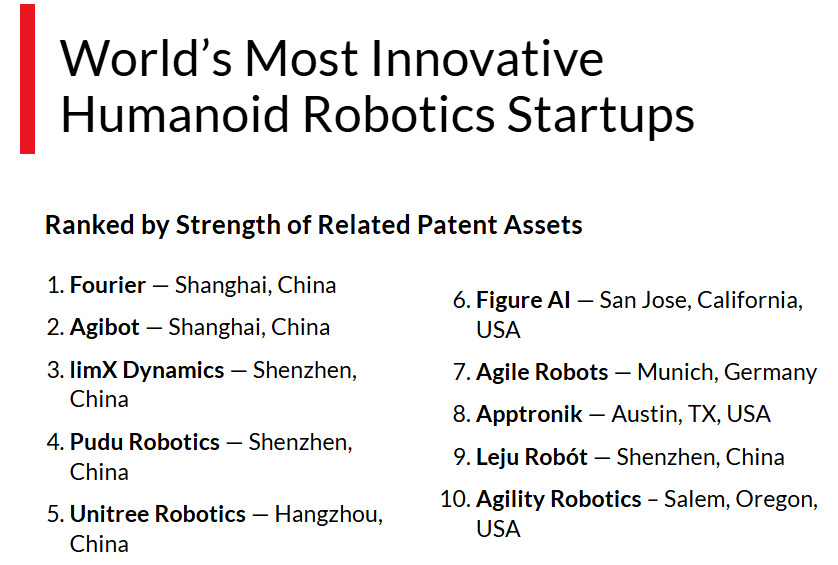
China also plays a dominant role among emerging startups. Among the top ten humanoid robot startups globally based on patent strength, six are from China, and they occupy the top five positions.
According to Forbes, the United States is seeking to ban Chinese and all foreign robots from entering the American market. This could change Goldman Sachs’ previous forecast that the market for humanoid robots will reach approximately $38 billion by 2035.
However, patents have regional characteristics and are not directly affected by import regulations. China accounts for 73% of patent applications related to specific forms, distributed across various patent offices around the world. This means that even if the US market closes its doors to Chinese robots, American manufacturers may still need to circumvent or use Chinese intellectual property rights for core form technologies in the future.

