According to information on the Ministry of Foreign Affairs website, on May 28, 2026, local time, Wang Yi, a member of the Political Bureau of the Central Committee of the Communist Party of China and Minister of Foreign Affairs, attended a meeting of the Friends Group on Global Governance at the United Nations Headquarters in New York. Representatives from over 60 countries, including those from Pakistan, Turkmenistan, Kyrgyzstan, Cuba, and Zimbabwe, participated in the meeting. Amina, the Deputy Secretary-General of the United Nations, gave a briefing during the meeting.

Wang Yi stated in his keynote speech that the international situation is currently complex and volatile. Countries worldwide call for fairness and justice, desire unity and cooperation, and aspire to peace and stability. Against this backdrop, President Xi Jinping proposed a global governance initiative last September, emphasizing five core principles: equality of sovereignty, international rule of law, multilateralism, a people-centered approach, and action-oriented policies. In less than a year, this initiative has received support from nearly 160 countries and international organizations. The Friends Group on Global Governance was established in New York, Geneva, and Vienna, with members from over 60 countries. Through discussions based on equality and respect, there has been consensus on promoting democratization in international relations, upholding the purposes and principles of the United Nations Charter, maintaining the UNs central role, narrowing the gap between the North and South, and focusing on solving practical problems.
Wang Yi emphasized that reforming and improving global governance is a mission entrusted to us by history. This requires firm confidence and relentless efforts. The Chinese side has proposed the following nine areas of reform:
First, it is necessary to promote reforms and improvements within the United Nations. It is important to clarify that the purpose of these reforms is to strengthen the organization, not to weaken it. We must ensure that member states play a leading role in these reforms. The reforms should be fair, inclusive, and transparent. Member states should be urged to fulfill their financial obligations and strengthen budget management and financial accountability. It is also essential to support efforts to reduce the size of the Secretariats workload, foster an efficiency-oriented culture, and significantly improve the organizations ability to respond, provide services, and deliver results.
Secondly, it is necessary to enhance the authority and capabilities of the Security Council. The voices of developing countries and small and medium-sized nations should be given greater consideration. Priority should be given to addressing the historical injustices faced by Africa. The rules of procedure of the Security Council should be improved, and equal negotiation practices should be promoted. It is important to avoid pushing forward proposals or initiatives that are highly controversial. The five permanent members should strengthen communication and coordination regarding major proposals, strive to reach consensus, and reduce conflicts and opposition. Unilateral actions and sanctions that bypass the Security Council should be opposed.
Thirdly, it is necessary to keep peacekeeping efforts up-to-date. It is essential to uphold and improve the three principles of peacekeeping. We must strengthen the authority and capabilities of peacekeeping operations. On the basis of ensuring the safety of peacekeepers, we should enhance the ability of peacekeeping operations to build and maintain peace. We should support the United Nations in strengthening coordination with regional organizations such as the African Union and the Arab League, thereby creating a joint effort for mediation in regional conflicts.
Fourth, it is necessary to build an international consensus that accelerates development. It is essential to bring development back to the center of the United Nations agenda. Plans for the post-2030 development agenda should be made in advance. Developed countries must fulfill their commitments regarding development financing. The principle of shared but differentiated responsibilities must be upheld, thereby promoting the establishment of a fair and reasonable global climate governance system that promotes cooperation and win-win outcomes. It is also important to lead a new round of technological revolution and industrial transformation, so that the benefits of innovation can truly benefit the entire world.
Fifthly, correct the direction of international human rights governance. It is necessary to abandon the one-sided approach where human rights take precedence over sovereignty. It should be clear that it is the people of each country who determine and improve their own human rights situations. We must advocate for principles of fairness, objectivity, non-selectivity, and non-politicization. Dialogue and cooperation should be conducted on the basis of equality and mutual respect. We must oppose the politicization, instrumentalization, or weaponization of human rights. Instead, we should work together to establish a fair, reasonable, and inclusive global human rights governance system.
Sixth, deepen reforms in the economic and financial systems. It is necessary to accelerate the review of World Bank shares and achieve meaningful adjustments to the IMFs quota arrangements as soon as possible. The functioning of the dispute-resolution mechanism must be restored, and WTO rules must be updated to keep pace with modern developments. We must firmly uphold the fundamental principle of most-favored-nation treatment, while respecting the different economic systems and development stages of all member countries. It is also important to promote stronger dialogue between the United Nations and emerging financial institutions such as the New Development Bank and the Asian Infrastructure Investment Bank.
Seventh, establish rules for artificial intelligence management. It is essential to prioritize human-centered approaches and promote the use of AI for positive purposes. We should support the United Nations in playing a leading role, while preventing the widening of the digital divide. Additionally, it is necessary to set clear boundaries regarding the military applications of AI and its impact on governance. China advocates for the establishment of a global organization for artificial intelligence cooperation, and has proposed and implemented the Artificial Intelligence Capacity Building Inclusive Plan. In July this year, China will host the World Artificial Intelligence Conference and a high-level meeting on global governance related to artificial intelligence in Shanghai.
Eighth, strengthen the governance of Xinjiangs online and space domains. It is necessary to adhere to the four principles of respecting network sovereignty, maintaining peace and security, promoting openness and cooperation, and establishing a good order. Support the efforts of the United Nations to promote global network space and digital governance. We must insist on the peaceful use of outer space, oppose any arms race or weaponization related to outer space, and safeguard the common rights and interests of all countries in the peaceful use of outer space.
Ninth, promote cultural exchanges and achieve inclusive mutual learning. It is necessary to actively expand global partners for cultural dialogue. By engaging in cultural dialogue, we can gain wisdom to address global challenges. This will lead to the creation of communication platforms that transcend geopolitical conflicts, factional confrontations, and ideological biases.
Wang Yi stated that the Friends Group represents a stabilizing force and a force of justice in a turbulent world. It is important to make good use of this mechanism and to strengthen it further. China will continue to uphold multilateralism, using its own principles to empower global governance. This fall, China will host the Sovereign Global Governance Forum. We look forward to working with all parties in Xingan District, a city of the future, to discuss ways to improve global governance and build a community with a shared future for mankind.
Representatives from various countries actively spoke up, expressing high praise and support for the Global Governance Initiative. They believed that this initiative was in line with the purposes and principles of the United Nations Charter. Its aim was to defend and practice multilateralism, thereby strengthening the role of the United Nations as a central force in international affairs. The nine directions proposed by China were consistent with the UNs 80th anniversary reform initiatives, sharing common goals. It is hoped that under the framework of the Friends Group, discussions will be held around these nine reform directions, leading to broader consensus and the development of actionable measures. This will help strengthen unity and cooperation, thereby jointly promoting the establishment of a more just and reasonable global governance system.
The meeting also issued a joint communiqué from the Friends Group on Global Governance.
During his stay in New York, Wang Yi also met with the ministers of Kyrgyzstan, Thailand, Colombia, Argentina, Czech Republic, Azerbaijan, Costa Rica, Serbia, Cambodia, Trinidad and Tobago, Turkmenistan, Cuba, Portugal, Pakistan, Uruguay, and Panama. He also held discussions with representatives from the U.S. military and business sectors.
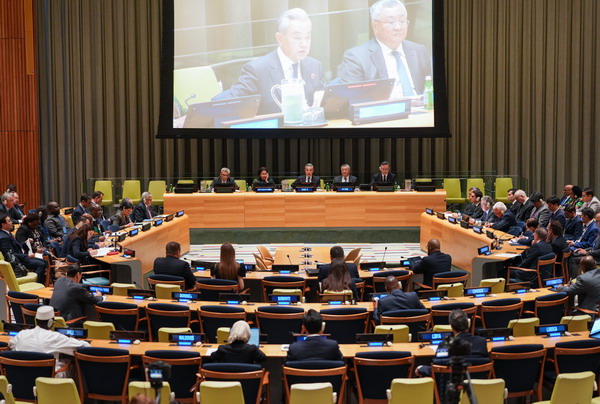
On May 28, 2026, local time, Wang Yi, a member of the Political Bureau of the CPC Central Committee and Minister of Foreign Affairs, attended a meeting of the Friends Group on Global Governance at the United Nations Headquarters in New York. During the meeting, Wang Yi discussed how the members of the group have engaged in extensive discussions regarding reforms and improvements to global governance. Five key consensus were reached during the meeting.
Firstly, all parties advocate for the democratization of international relations. They believe that all countries, regardless of size, strength, or wealth, have the right to freely choose their social systems and development paths. All countries should participate equally, make decisions equally, and benefit equally in the process of global governance.
Secondly, all parties advocate for the maintenance of the purposes and principles of the United Nations Charter. It is essential to ensure that international law and rules are applied uniformly and equally across all nations. Dual standards and the imposition of rules by one country on others should be completely rejected.
Thirdly, all parties advocate for maintaining the core role of the United Nations, practicing multilateralism, strengthening multilateral mechanisms, and opposing unilateralism and power politics.
Fourthly, all advocates believe that global governance should be improved through reforms. Gradually, the gap between the North and the South should be narrowed. The benefits of development should be shared by everyone, so that no country will be left behind.
Fifthly, all parties advocate for addressing the most pressing issues that concern the international community. By taking concrete actions, tangible results can be achieved, thereby ensuring that global governance can withstand the tests of time and people.
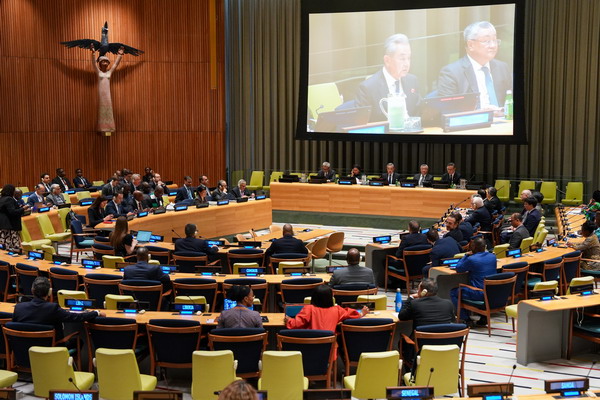
On May 28, 2026, a meeting of the Friends Group on Global Governance was held at the United Nations Headquarters in New York. The theme of the meeting was Reforming and Improving Global Governance to Collaborate in Addressing Global Challenges. Wang Yi, a member of the Political Bureau of the CPC Central Committee and Minister of Foreign Affairs, attended the meeting and delivered a speech. Representatives from over 60 countries participated in the meeting, including Pakistani Deputy Prime Minister and Foreign Minister Khalid, Turkmenistans Deputy Prime Minister and Foreign Minister Meredov, Cuban Foreign Minister Rodrigues, Kyrgyzstans Foreign Minister Kurubayev, Zimbabwes Foreign Minister Murewa, Kazakhstans First Deputy Foreign Minister Ashkabayev, and Cambodian State Secretary for Foreign Affairs Pariad.
Members of the group believe that the world is entering a period of turmoil and change. The United Nations and multilateral systems are facing increasing pressures, and the deficit in global governance continues to widen. All parties welcome the global governance initiative proposed by Chinese President Xi Jinping, along with its five core principles: upholding sovereign equality, adhering to international rule of law, practicing multilateralism, focusing on people-centered approaches, and emphasizing action-oriented solutions. They appreciate that this global governance initiative is consistent with the purposes and principles of the United Nations Charter. Its aim is to defend and practice multilateralism, thereby strengthening the central role of the United Nations in international affairs.
The members of the group have certainly made efforts regarding global governance issues since its establishment. They have engaged in thorough discussions on how to reform and improve the global governance system, reaching a wide consensus. To work together to address global challenges, the members of the group call upon the international community to take the following actions:
80
Defend international rule of law. Maintain multilateralism based on international law, in order to strengthen international peace and security, develop friendly relations between countries, and uphold the basic norms of international relations based on the purposes and principles of the United Nations Charter. This includes respecting the equality of state sovereignty, territorial integrity, and political independence. No interference in the internal affairs of other countries should be allowed; force or threats of force must not be used in international relations. Disputes should be resolved through peaceful means. Emphasizing neutrality, dialogue, and measures of trust are essential for maintaining peace and security.
Improve global governance. Promote the United Nations to better adapt to changes in the international situation. By reforming the global governance framework, including international financial institutions, we can enhance the voice and representation of countries in the Global South. This will create a favorable international environment and global partnerships that better reflect the legitimate demands of developing countries. We support the United Nations in improving its efficiency and effectiveness through reforms, thereby fulfilling its mandates entrusted by member states more effectively. We call upon the international community to address the challenges, constraints, and needs faced by developing countries, especially those in special situations, African countries, least developed countries, landlocked developing countries, and small island developing states. Such measures are inconsistent with the purposes and principles of the United Nations Charter and international law.
Members agreed that it is necessary to uphold principles of kindness and righteousness, to act with integrity, and to closely link ones own future and destiny with the future and destiny of people from all countries. It is also important to strengthen unity and cooperation, as well as expand partnerships. We must remain committed to innovation and openness, and actively engage in dialogue and coordination regarding issues related to global governance. Additionally, we must continuously improve the mechanisms within our group.
Members of the group thank the Chinese side for their efforts in organizing this meeting. They hope to strengthen unity and cooperation, promote the establishment of a more fair and reasonable global governance system, and create a common and beautiful future filled with peace, security, prosperity, and progress.