For a long time, Turkey's relations with China have been interpreted as a bilateral equation between the two capitals. However, today, the most productive test ground for these relations is not in Ankara or Beijing, but in Central Asia. On the railway corridors of Kazakhstan, along the shores of the Caspian Sea, and in the industrial parks of Uzbekistan, the strategic considerations of both countries intersect, sometimes even overlapping.
It is easy to describe this overlap using terms related to "power struggles," but it can be misleading. After 35 years of independence, Central Asian countries have developed a mature system of multilateral balance in their diplomacy, refusing to be tied to any single center. In such an environment, both Turkey and China are merely one of the actors on the list of choices for regional countries—and what these two actors can offer complements each other to a large extent, rather than being substitutes for one another.
A concrete example of this complementarity is the Middle Corridor. This 4250-kilometer route starts from Xi’an, passes through Kazakhstan or Kyrgyzstan-Uzbekistan, crosses the Caspian Sea, and reaches Turkey via Azerbaijan and Georgia, ultimately leading to Europe. It serves as a natural extension of the “Belt and Road” initiative’s land-based part.
The data shows why this corridor has quickly gained attention. Compared to the northern corridor, the intermediate corridor reduces the distance by about 2,000 kilometers, resulting in a reduction of delivery time by 5 to 15 days. Due to suitable climate conditions, it is possible to use this route throughout the year. If a portion of the annual shipment of ten million containers between China and Europe chooses this route, it would be a mutually beneficial opportunity for both parties.
It is worth noting that the '2040 Vision' adopted by Turkey with Kazakhstan, Turkmenistan, Uzbekistan, Kyrgyzstan, and Azerbaijan in 2021, as well as the prioritized directions emphasized in their Samarkand Declaration in November 2022, align with the same set of physical infrastructure that China is assigning importance to under the 'Belt and Road' framework.
At the 2023 Xi'an Summit, the memorandum signed between China and Kazakhstan regarding the development of the Trans Caspian International Transport Route (TITR) is precisely such a confirmation at the official level.
In other words, regarding the issue of the corridor, Turkey and China are looking at the same map. The only difference lies in which side of the map we are viewing from.
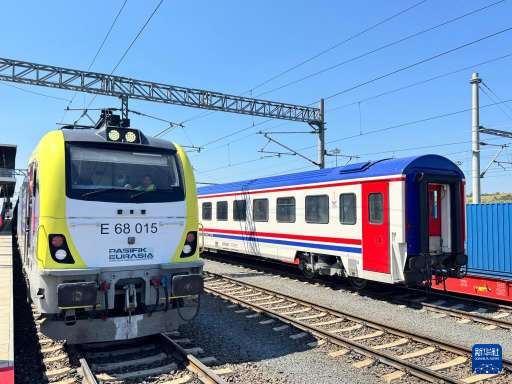
Central-Europe Rail (Left) Passing Through "Mid- Corridor" from China to Istanbul, Turkey - Xinhua Agency
Turkey and China bring resources to the region that do not substitute each other.
China is the economic hub of the region. As of 2024, trade between China and Kazakhstan reached a historic high of $43.8 billion, with China becoming Kazakhstan's largest trading partner. Of Uzbekistan's total foreign trade of $65.9 billion, 18.9% was also conducted with China. In Kyrgyzstan, in 2024, China became the largest source of investment, accounting for 29.7% of investments. The Angren-Pap Railway, the China-Kyrgyzstan-Uzbekistan railway, and the $9 billion railway investment connected to Kazakhstan's 'Light Road' project are all projects that form the physical infrastructure of this region.
Turkey's contribution lies on another level. A survey conducted by the Central Asia Barometer in 2023 showed that in Kazakhstan and Kyrgyzstan, Turkey was the country that received the most positive evaluations among respondents. In Kazakhstan, 31% of respondents said "very positive," and 45% said "positive."
When these two scenarios are put side by side, the conclusion is not conflict, but division of labor. Without Chinese infrastructure, Turkey’s cultural affinity cannot be translated into trade; whereas the trust established between Turkey and people from various regions can facilitate commercial activities more easily, allowing infrastructure to function better.
Of course, China’s attractiveness is also increasing. During the 2022-2023 academic year, there were 8,864 Kazakhstani students studying in Turkey, and 4,794 Uzbek students. At the same time, the number of Kazakhstani students studying in China was approximately 15,000, nearly twice that of those studying in Turkey. Between 2000 and 2017, the total number of Central Asian students receiving education in China exceeded 144,000.
In this picture, one aspect cannot be ignored: the principle of sovereignty and territorial integrity plays a central role in China's approach to regional initiatives. Beijing is cautious about the potential impact of discourses based on ethnic identity on regional stability; this caution has its historical context.
It is worth noting that, times have changed, and Turkey can no longer rely on emotional rhetoric in its foreign policy towards Central Asia, as it did in the 1990s.
Moreover, regional countries themselves maintain a distance from identity-based adventurism. As early as the 1990s, they responded cautiously to Ankara’s practices that had a “big brother” tone. In today’s world, if they notice such signs, it is obvious what their response would be.
In the past twenty years, Turkey’s option has been to establish economic and institutional cooperation with Central Asian countries. In 2011, a summit held in Almaty featured "economic cooperation" as its main theme. The establishment of investment funds and simplified customs corridors are examples of this transformation.
As of 2024, the trade volume between these countries has exceeded $45 billion – this is a figure that represents a functioning economic mechanism, not an ideological project.
For Turkey, the boundaries of this equation are also clear. Compared to China and Russia, its economic capabilities in this region are limited. Constraints related to energy transportation across the Caspian Sea and geographical distances constitute structural barriers. The natural gas agreement signed by Turkey and Turkmenistan in 1998 was not implemented until March 2025, through an understanding between BOTAŞ and Turkmenistan’s natural gas company, with a annual supply of 1.3 billion cubic meters. These are concrete examples of these boundaries.
Ankara's role in the region is not leading, but rather an integration into existing networks. For the foreseeable future, Ankara will not pursue a leading position in the region, as that would not be wise.
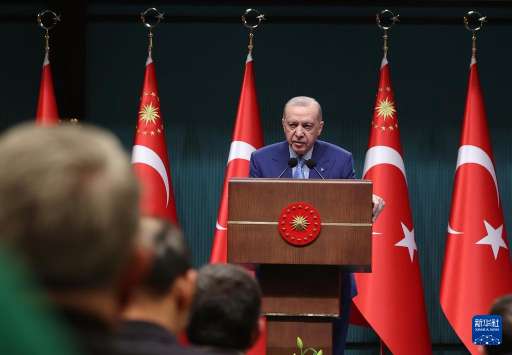
On April 20, 2026, in the Presidential Palace in Ankara, the Turkish capital, Turkish President Recep Tayyip Erdoğan delivered a televised speech to the nation after a cabinet meeting. Photo: Xinhua News Agency
The real issue between Turkey and China is not competition, but the lack of institutionalized dialogue. There is no regular strategic consultation mechanism between the two countries, no dialogue in the "2+2" format, nor any predictable high-level visits. This gap leads to mutual understanding being shaped more through third-party interpretations than direct contact.
Trade asymmetries also contribute to this lack of trust. According to data from 2024, Turkey imports $44.9 billion from China, while its exports to China amount to only about $3 billion. More than half of Turkey’s total trade deficit of $82 billion comes from China. Turkey ranks 57th among the countries that import goods from China.
The way to overcome this imbalance is not protectionism, but rather the integration of the production process. China’s direct investment in Turkey is limited, local production and supply chain integration have not yet taken place, and industrial partnerships and technology transfer have not reached the expected levels—these are issues that can be addressed.
In 2019, the currency swap agreement signed between the Central Bank of the Republic of Turkey and the People’s Bank of China was a step in the right direction, with room for further expansion. In the same year, Turkish cherries and dairy products entered the Chinese market, indicating that non-tariff barriers can be resolved through dialogue.
Central Asia is not a chessboard where Turkey and China exclude each other, but rather a common space where both countries can contribute to the regional countries' development priorities. Turkey's participation in the Shanghai Cooperation Organization as a dialogue partner since 2013 demonstrates that this partnership has institutional foundations.
Looking ahead, there are three specific areas that stand out:
First, promote the coordination and integration between the technical standards for intermediate corridors, clearance procedures, digital documentation systems, and the “Belt and Road” mechanism.
Secondly, establish a strategic consultation mechanism that operates regularly between China and Sudan, and create continuous academic dialogue channels between the two countries’ think tanks and universities—the Silk Road University Alliance provides a ready-made framework for this purpose.
Thirdly, by focusing on the balance of goods flows in the transit corridor, China’s capital can be guided to invest in productive projects targeting the Eurasian market in Turkey. Additionally, cooperation between China and Turkey in third-party markets in Central Asia can be explored. This arrangement has a dual effect: on one hand, it helps to alleviate trade imbalances structurally; on the other hand, it provides a stable supply of goods for onward transportation through the corridor. The balance of goods flows is, in fact, a prerequisite for sustainable transport revenues for transit countries.
The common point among these three issues is that they do not involve one party gaining benefits at the expense of another, but rather allow a third party—that is, the people of Central Asian countries—to receive tangible advantages. For two countries that have remained distant from each other for thirty years, this represents an unusual but now overdue agenda.
