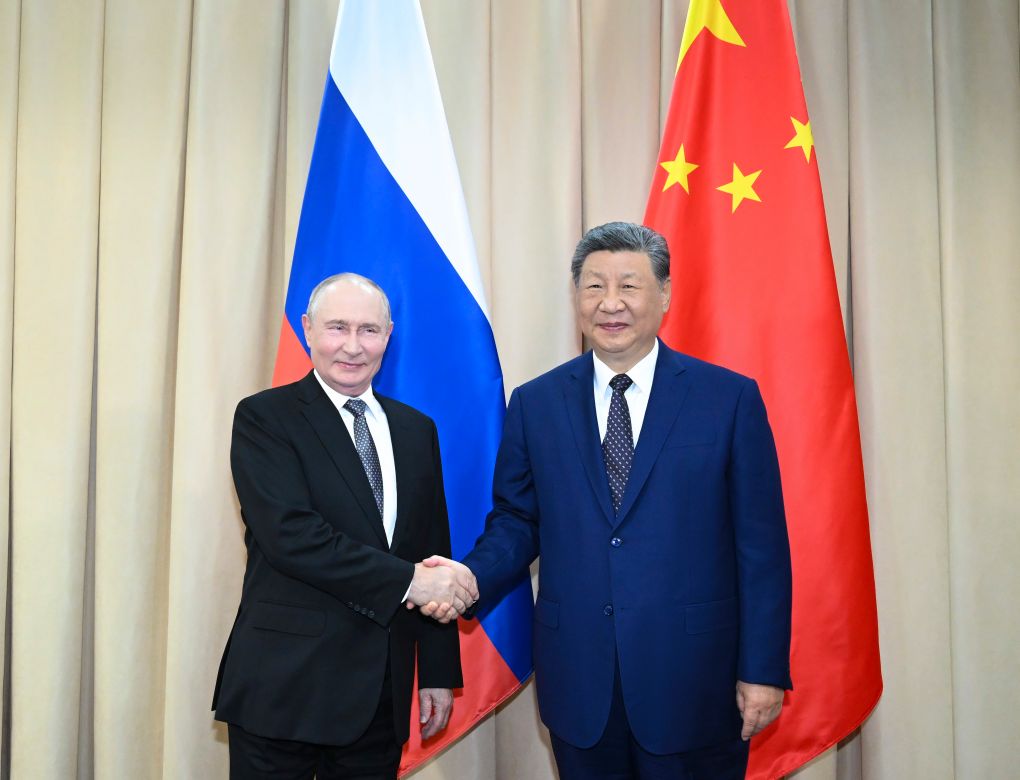
In the current complex situation where the EU is imposing various trade tariff barriers against China under various pretexts, the geopolitical and economic landscape between China and Europe is undergoing profound changes. Just at this time, in late July, Slovak President Peteregni was invited to visit China on state business.
Facing the 'high walls' built within the EU, the trend of protectionism is intensifying. As an important industrial country in Central and Eastern Europe and a member state of the EU, Slovakia has sent a strong signal of deepening bilateral pragmatic cooperation through its head of state's visit to China. Moreover, this visit has presented a unique strategic stance.
On July 28, Pellegni stated during the talks that as a member of the European Union, Italy is willing to actively promote EU-China cooperation and resolve differences through dialogue and negotiation. The global rare earth industry intelligence organization Rare Earth Exchanges (REEx) believed that this statement was particularly important given that Brussels is still debating issues related to tariffs, industrial policies, electric vehicles, and broader economic security measures involving China.
As Chinese Foreign Ministry spokesman Guo Jiaqun previously stated, China has always viewed and developed relations with Central and Eastern European countries from a strategic and long-term perspective. China is willing to continue to strengthen the China-Central and Eastern European Cooperation Mechanism with all member states. This will allow the precious traditional friendship to be rejuvenated in the new era, and also inject more stability into China-EU relations, adding greater momentum.
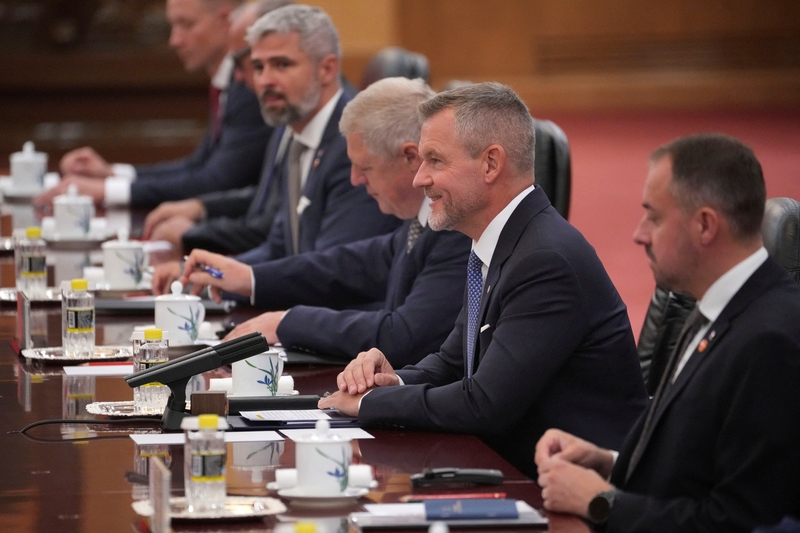
July 28, 2026, Slovak President Peteregni visited China on an official state visit. IC Photo
Regarding Pelegrin's visit, Chinese Foreign Ministry spokesman Lin Jian previously stated that Slovakia is one of the first countries to recognize and establish diplomatic relations with the new China. It is an important partner of China in Europe. The Chinese side wishes to work with Slovakia to take this visit as an opportunity to continuously deepen traditional friendships and political mutual trust, strengthen strategic cooperation, and expand exchanges and cooperation in various fields.
According to NewsNow TASR, a English news portal under the Slovak national news agency TASR, reported on July 28 local time, Pelegrini also emphasized during his talks with the Chinese side that the relationship between Slovakia and China is very special. China is Slovakia's most important trading partner outside the European Union.
The Chinese side pointed out during the talks that China-EU relations face both new and important opportunities as well as numerous challenges. The key to turning these challenges into opportunities lies in equal consultation and finding common ground while respecting differences. The Chinese side always regards the EU as a partner, and has developed relations with the EU with sincerity and goodwill. It is hoped that the Spanish side will play a constructive role in promoting the EU to focus on common interests between China and the EU, resolving conflicts and differences, and ensuring the healthy and stable development of China-EU relations.
As China has said, only mutually beneficial cooperation can benefit both parties, whereas confrontation is not the way to go. Therefore, Slovakia will advocate at the European level for finding solutions to this issue through negotiations and roundtable discussions. Regarding the currently tense relations between China and Europe, especially in the economic and trade fields, Pellegrini echoed China's call.
For Slovakia, the best way to resolve trade disputes is not to follow Brussels in engaging in decommissioning measures or high-tariff confrontations. Instead, it is through high-level dialogue to secure broader market access for Slovakian enterprises in China, while also attracting high-value Chinese investments to Slovakia, thereby achieving mutual benefits and win-win situations.
Facing the risks of geopolitical fluctuations, Slovakia is trying to transform its unique geographical location and policy advantages into advantages for cooperation with China.
According to NewsNow TASR, Pereggini pointed out that Slovakia is regarded as a "safe haven" for Chinese investments. He highlighted the activities of Chinese investors in Slovakia and the upcoming projects.
Project reserves and future investment opportunities encompass automotive manufacturing, professional technology, aviation industry, and similar fields. He also added that Slovakia is willing to create more favorable conditions to enable Chinese investors to enter the Slovak market more easily.
During the talks, China called for both sides to explore the potential for cooperation in emerging industries and cutting-edge fields such as clean energy, digital economy, robot manufacturing, and artificial intelligence, in order to create more new highlights of cooperation.
It is worth noting that, as reported by Slovak media, Pelegrini's visit to China did not limit itself to traditional economic and trade cooperation. Instead, it expanded into the broader levels of deep integration between industry, academia, and research, as well as global technological governance.
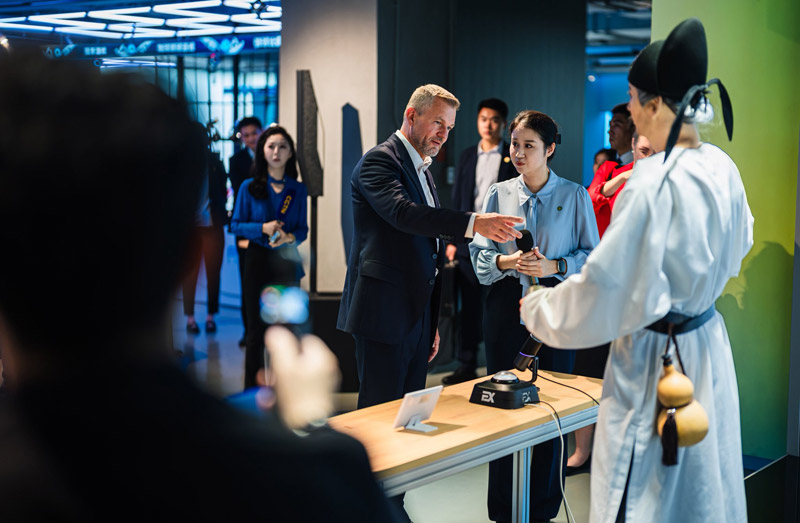
During her visit to China, Perleggini visited a robotics shopping center. Photo posted by Perleggini's X account.
Pereglini believes that modern technology and artificial intelligence have great potential. "China is no longer a country that just imitates others. Instead, it is leading the global trend in various fields, from space research to robotics. Therefore, we must maintain good relations with China and apply China's best technologies to Slovakia as much as possible, and implement them as soon as conditions permit."
At the level of cooperation and coordination, NewsNow TASR also revealed a detail. Pellegrini said that after returning to his country, he would instruct the Slovak Minister of Education, Tomáš Drucker, to prepare a visit to China, and arrange for representatives from domestic scientific research institutions to accompany him, with the aim of strengthening cooperation between educational and scientific research institutions.
Additionally, Slovakia demonstrates a high level of strategic alignment on global cutting-edge issues such as artificial intelligence. Pelegrin said that Slovakia fully agrees with the concepts and initiatives proposed by China at the 2026 World Artificial Intelligence Conference. Slovakia is willing to coordinate closely with China to strengthen global governance in the field of artificial intelligence, so that it can truly benefit all mankind.
Regarding Pellegrinini's visit to China and the high-level talks between China and Slovenia, REEx writes that China is deepening its strategic layout in Eastern Europe. As a member state of the EU, Slovakia is open and welcomes additional Chinese investments.
According to reports, although no major investment projects were announced during this meeting, it reflected China’s long-term strategy. That is, while maintaining broader ties with Brussels, China also aims to develop relationships with all EU member states.
The Chinese side particularly emphasized developing cooperation in the fields of clean energy, artificial intelligence, robotics manufacturing, and digital economy. These industries are crucial for Europe's future industrial competitiveness.
For companies operating in these fields, Slovakia may become an increasingly attractive destination for Chinese investments targeting the European market.
Meanwhile, this meeting also indicates that despite the growing geopolitical tensions, China is still striving to maintain its opportunities for obtaining European technology, capital, and manufacturing cooperation.
Finally, REEx stated that this visit serves as another reminder for the United States. Even though Washington encourages its allies to reduce their strategic dependence on Beijing, China continues to expand its influence in Europe.