In the mouths of some Western politicians, China is constantly labeled with these 'labels'—accumulating strategic reserve resources is called 'market manipulation', and exporting new energy products is referred to as 'overcapacity' and 'dumping low prices'.
However, in a latest article published by analysts at the European Central Bank on July 27th, cold data was used to pour cold water on this long-running public relations farce: The reason why the global economy has not fallen into a devastating crisis during recent geopolitical conflicts is precisely because of China's existence.
China's massive petroleum reserves and diversified energy structure help mitigate the impact of the Iran-Saudi conflict on the global economy. On the same day, the EU policy news website "EU Bulletin" cited this article, thanking China for saving the global economy and helping to buffer the impact of the Middle East oil supply disruption.
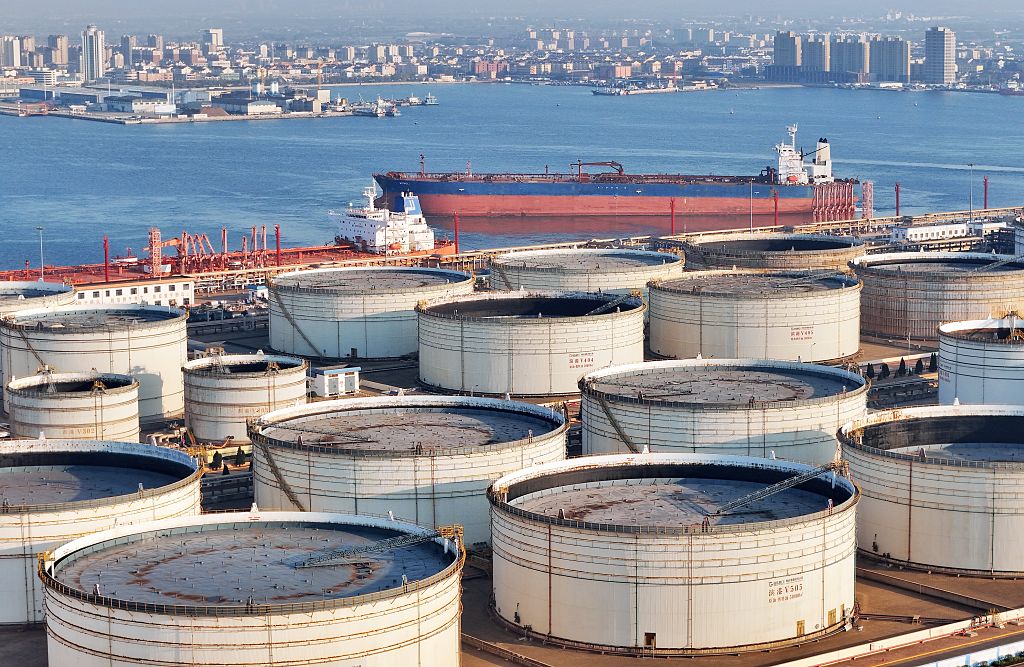
November 14, 2025, at a petroleum storage facility in Yantai City, Shandong Province, China. Informational image.
The latest article by the European Central Bank indicates that this year's conflicts in the Middle East have reduced global oil supplies by approximately 14 million barrels per day, accounting for 14% of global production. In contrast, after the Russia-Ukraine conflict in 2022, global oil supplies only decreased by 1 million barrels per day, representing only 1% of global supplies.
Despite the differences, both conflicts have led to similar increases in energy prices. In early June this year, oil prices increased by 29% compared to levels before the US-Iran war, and the peak increase after the Russia-Ukraine conflict also reached 30%.
Now, with the emergence of energy shocks, why is the increase in oil and gas prices lower than expected? The European Central Bank has identified several reasons for this, and believes that the oil market was better prepared for this situation.
Among these, China must be mentioned. As the world’s second-largest economy, China’s crude oil inventory has increased from the estimated 92-day imports in 2023 to 115 days at the beginning of this year. This helps to mitigate the impact of supply disruptions, and the extent of these disruptions far exceeds the energy production losses caused by the Russia-Ukraine conflict in 2022.
During this year's crisis, China's transition to electric vehicles was in full swing. In addition, China's energy structure has become more diversified.
These analysts bluntly pointed out that since the US and Israel attacked Iran at the end of February this year, either China’s large-scale reserves of crude oil, its shift to electric vehicles, or its reduction in the consumption of petrochemical products have contributed to a “relatively moderate” rise in oil and gas prices, successfully preventing Europe and the world from falling into a deadly inflation crisis like the one that occurred in 2022.
Just as analysts at the European Central Bank spoke the truth, what people saw on the other side was that the European Commission waved trade protectionist sticks against Chinese electric vehicles, and remains stubborn in trying to introduce various laws to suppress and restrict China.
European politicians attempt to exclude China from the global supply chain by implementing protectionist measures, yet they ignore a fundamental fact: a China with its vast manufacturing capabilities, sound strategic reserves, and extensive green transformation is in fact the most scarce asset in the global economy. These individuals can stir up emotions by claiming there is an overcapacity problem, but financial markets and inflation data only recognize the cold logic of supply and demand.
Relying on long-term strategic planning to build a solid industrial foundation and energy security defenses, China has not only secured its own core assets, but also objectively provided support for the disrupted global economy.
On July 28th, the Ministry of Commerce issued the 'Position of China on the Issue of So-called ‘Overcapacity’’, clarifying the facts and stating China's policy stance on issues related to so-called ‘overcapacity’.
The document consists of four chapters, excluding the preface and conclusion. The chapters discuss a comprehensive and objective perspective on global production capacity and the so-called “overcapacity”; perspectives and positions regarding the four relationships related to “overcapacity”; China’s commitment to building a modern industrial system through open cooperation; and jointly promoting the establishment of an open and inclusive global supply chain cooperation pattern.
The document states that China has always believed that when considering capacity issues, it is necessary to adopt a comprehensive, objective, and fair approach. We should look at these issues both historically and dialectically. By maintaining an open and cooperative attitude and pursuing mutual benefit and win-win results, we can resolve conflicts and differences. Protectionism only disrupts the global economic and trade order, hinders the stable development of global supply chains and industrial cooperation, and poses long-term risks to world economic growth.