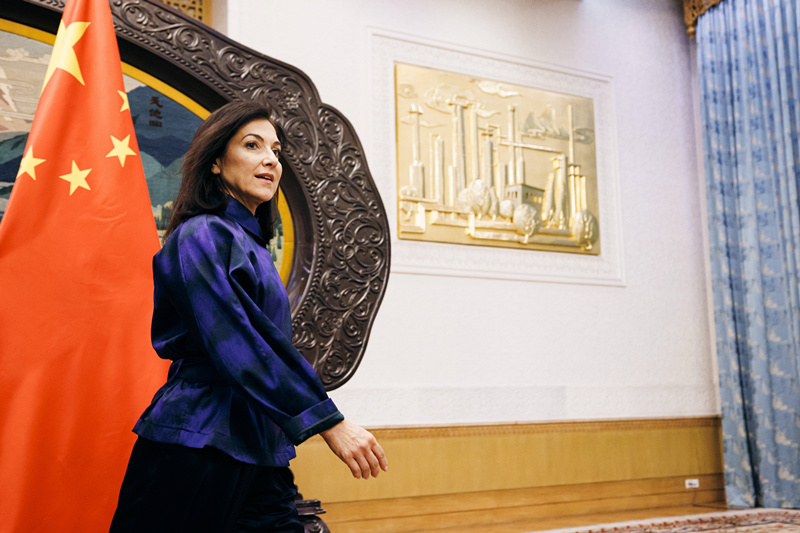
From May 26th to 29th, German Economy and Energy Minister Katharina Ryß made her first visit to China. A total of 40 executives from well-known German companies, including BASF, Siemens Energy, and ThyssenKrupp, were included in this delegation.
According to Reuters report on the 28th, Lai Xi said in a interview in Beijing that during her visit, she raised concerns related to German companies with the Chinese side. The Chinese side is willing to address some of these issues. She emphasized that China has an extremely large economic scale and plays a crucial role in global affairs. Therefore, maintaining stable relations with China is of utmost importance.
Lai Xie said that she has discussed the concerns raised by German companies when seeking investment in China, such as supply chain issues, transparency, and localization requirements. The Chinese side indicated that they will address some of these concerns. She said, I believe this is a very positive signal from the Chinese side, indicating their desire to cooperate with us in a trustworthy and constructive manner.
According to data from the German Federal Statistical Office, by 2025, bilateral trade between Germany and China will reach 251.8 billion euros, a year-on-year increase of 2.1%. China has once again surpassed the United States as Germanys largest trading partner. Germanys exports to China amounted to 81.3 billion euros, a year-on-year decrease of 9.7%. Meanwhile, Germanys imports from China totaled 170.6 billion euros, a year-on-year increase of 8.8%. China continues to remain Germanys largest source of imports.
Lai Xie pointed out: Chinas economy is so important and so significant that maintaining stable, trustworthy relationships with China, based on mutual trust and a focus on the future, is crucial. Such relationships can also withstand the tests of critical issues.
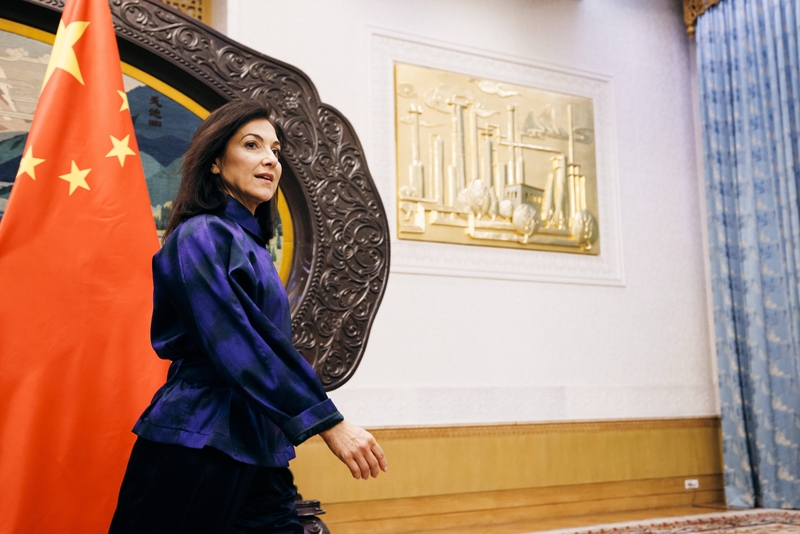
Recently, Stefanique Sajarne, Executive Vice-President of the European Commission and Commissioner for Industrial Policy, has been advocating that the EU take trade protection measures. He proposes using more systematic methods to apply import quotas and tariffs in order to protect European industries from competition from Chinese competitors.
Sjerun said on the 28th to the British Financial Times that the EU will implement more extensive protection measures in various industries, no longer limited to specific companies or raw materials.
Regarding this matter, Lai Xie revealed that she discussed it during her visit to China. She told the Chinese side that European companies were concerned about the influx of Chinese goods into Europe. Lai Xie said, Our opinions were taken into consideration by the Chinese side.
Lai Xis visit focused on cooperation. Upon arriving in Beijing, she said, Competition makes us stronger, while cooperation creates stability. Innovation leads to mutual progress. She emphasized that Germany seeks dialogue with China. What connects Germany and China is one of the most important economic relationships in the world. Our common goal is to maintain this relationship stable.
According to Bloomberg, Riechel supports the protection of European domestic industries. However, she also urges the EU to maintain trade relations with Central Europe. On the 27th, Riechel said, Thousands of German companies rely on exporting their products to the vast Chinese market. Therefore, in Brussels, we advocate for a balanced trade strategyone that includes effective protection measures while also maintaining openness towards exports.
Senior executives from well-known German companies such as BASF, Siemens Energy, and ThyssenKrupp accompanied Rieche on this trip. ThyssenKrupps CEO, Miguel Lopez, said that fair trade is crucial, and Europe should welcome Chinese companies. He told German TV channel 2: We have received strong support from the Chinese side. Now I believe that the same should be true in return.