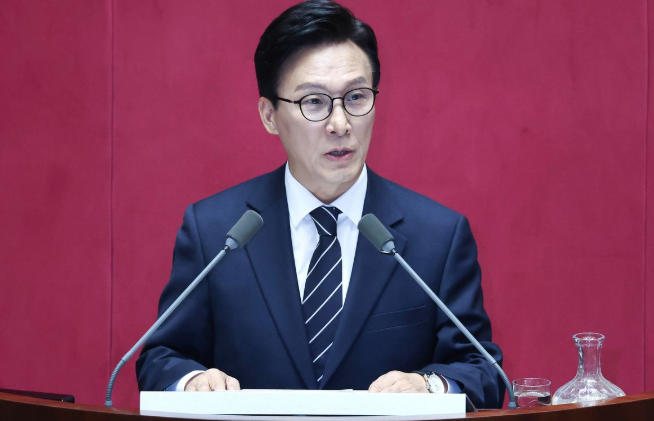
On July 22 local time, South Korean Mayor Oh Se-hun was sentenced to a fine of 10 million Korean won (approximately 46,000 yuan) for violating the Political Funds Act. If this judgment becomes final, Oh Se-hun will lose his position as Mayor of Seoul.
According to Yonhap, the Seoul Central District Court issued a first-instance judgment on the day regarding the case involving Oh Se-hun's alleged violation of the Political Fund Law. The court determined that before the 2021 Seoul Mayor Election, Oh Se-hun entrusted political agent Myung-Tae five times to conduct public opinion surveys, and his supporters paid the survey costs on his behalf. These payment expenses were considered political funds, and it is very likely that Oh Se-hun will be disqualified from holding public office.
After the first trial judgment, Wu Shixun's side stated that they could not accept the judgment result and would continue to argue that he is innocent in the second trial.
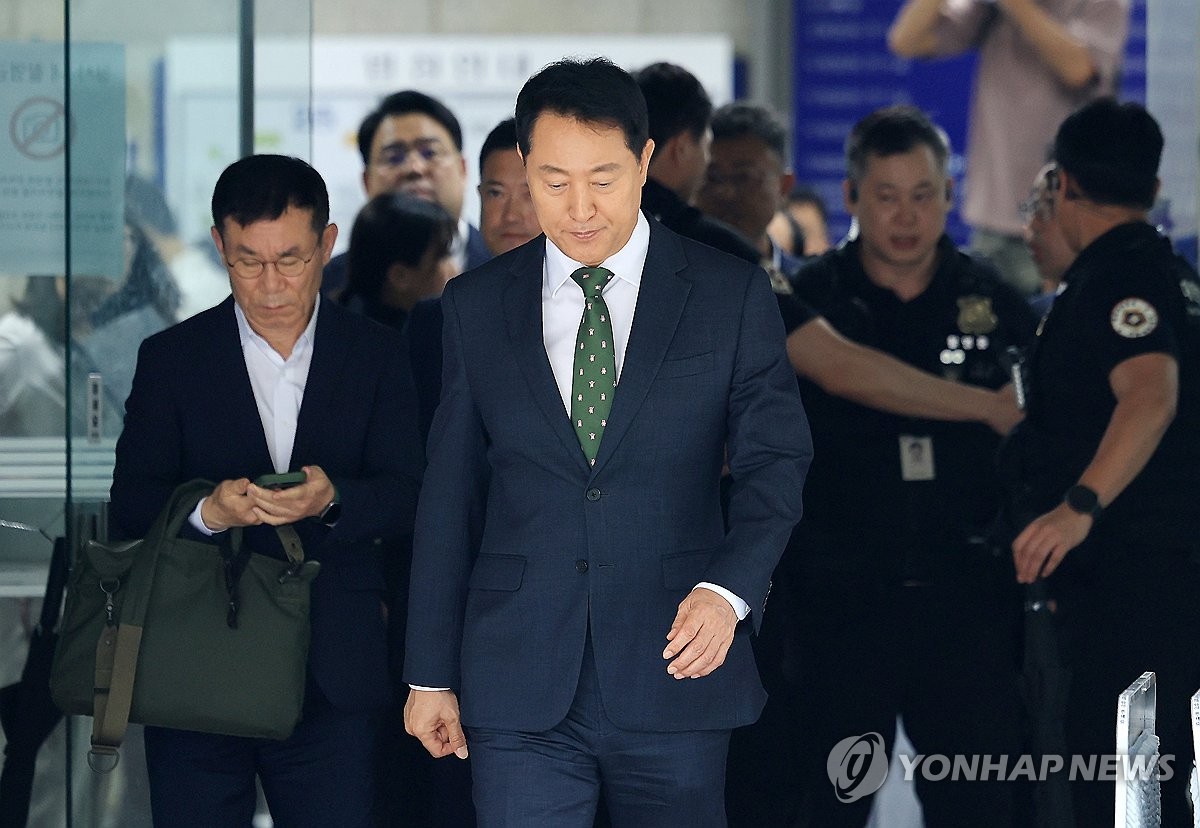
On the afternoon of the 22nd, Seoul Mayor Oh Se-hun walked out of the court after the sentencing and public hearing at the Seoul Central District Court. Yonhap
According to Korean law, a elected public official who is sentenced to imprisonment or fined more than 1 million Korean wons for violating the Political Fund Law will have their elected position revoked.
Wu Se-hun, born on January 4, 1961, in Seong-dong District, Seoul, South Korea. He graduated from the Law Department of Korea University, earning a Bachelor’s, Master’s, and Doctoral degree in law. A lawyer by profession, he was elected as a member of the 16th National Assembly for the Grand National Party in 2000, officially entering the political arena.
In 2006, Wu Shixun was elected as the mayor of Seoul for the first time, and was re-elected in 2010. However, in August 2011, due to the failure of the citizen vote for the "Free Lunch for Students" program led by him, where the voting rate did not meet the legal threshold, Wu Shixun resigned in order to take responsibility for the outcome.
After that, Wu Shixun went into a period of silence. He participated in the parliamentary elections in 2016 and 2020, but failed to be elected both times.
In April 2021, due to the death of then-S Seoul Mayor Park Won-soon, Oh Se-hun participated in the mayor's by-election and won. He returned to the stage of Seoul politics and was re-elected in 2022.
In the local elections in South Korea held in early June this year, Oh Se-hun defeated Chung Doo-Han Party candidate Yang-woo and successfully re-elected as the mayor of Seoul. He became the first person to be elected as the mayor of Seoul five times since the implementation of the local autonomy system in South Korea.
The ruling party won 12 seats out of 16 in the metropolitan administrative districts, but their defeat in Seoul, with a narrow margin, cast a dark shadow over their victory.
As the region with the largest Korean population and the greatest political influence, Seoul has always been regarded as a national political benchmark. Its outcomes are often interpreted as important indicators of public opinion. For the ruling party, winning control over Seoul means that voters in the capital area endorse their policy agenda. Conversely, even if they win most regions, losing in the capital still makes it difficult to claim full popular support.
According to Korean law, elected public officials who are sentenced to a fine of over 1 million Korean won for violating the Political Fund Law will have their public office revoked. However, since the first-instance judgment has not yet taken effect, Oh Se-hun can continue to serve his duties.
If Wu Shixun loses his position as mayor due to the fine judgment, Seoul will have to hold a runoff election for the mayor’s seat. At that time, the ruling party will surely strive to win this highly symbolic position. Meanwhile, the National Power Party, which has lost its ‘five-term mayor’ position, will face a tough battle to defend its seat.