The quadrennial International Congress of Mathematicians will be held in Philadelphia, USA on July 23, 2026. The Fields Award, known as the "Nobel Prize" in the field of mathematics, was officially announced.
Consistent with the list leaked earlier, the four winners are Yu Deng, John Pardon, Jacob Tsimerman, and Hong Wang.
Chinese mathematicians Deng Yu and Wang Hong were both listed on the list. This is the first time that a Chinese mathematician has received the Fields Medal.
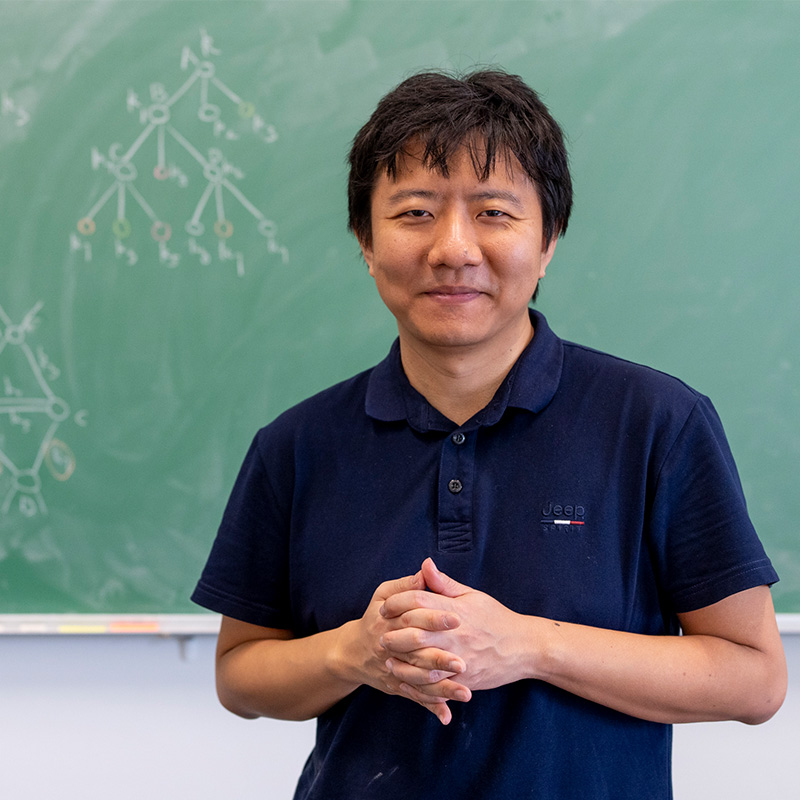
Deng Yu International Mathematical Alliance Website
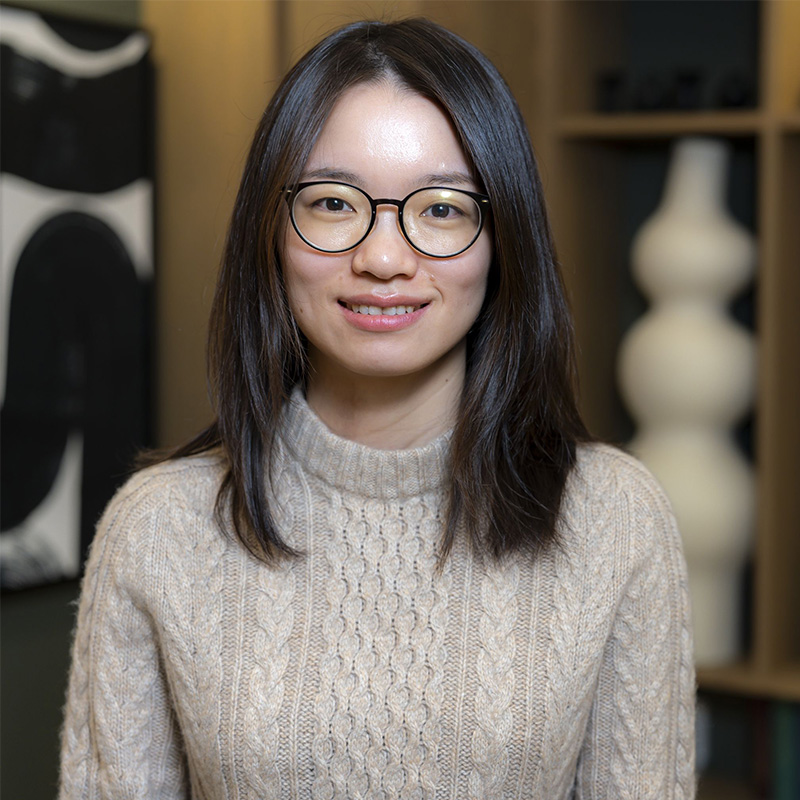
Wang Hong - Website of the International Mathematical Union
The Fields Medal is a prestigious award established by the International Mathematical Union, dedicated to recognizing young mathematicians under the age of 40. It is awarded every four years, with no more than four winners each time. The names of Wang Hong and Deng Yu being awarded at the same time represents not only a "breakthrough from zero" in Chinese mathematical history, but also a complete rewriting of a historical pattern that had been hidden for 90 years. What does it mean for China when Wang Hong and Deng Yu win the award?
Wang Hong, born in Guilin, Guangxi in 1991, was admitted to the School of Earth and Space Sciences at Peking University at the age of 16, and later transferred to the School of Mathematical Sciences. In February 2025, she and Joshua Zahl published a 127-page paper, announcing their achievement in solving the century-old problem of "the smallest area that a needle can sweep across in three-dimensional space," known as the Three-Dimensional Huggle Conjecture. Mathematician Nets Katz from Rice University described this achievement as "a once-in-a-century breakthrough." Wang Hong is currently a tenured professor in mathematics at the Institut des Hautes Études Scientifiques in France, becoming the first Chinese and Asian tenured professor at this institution. Out of the previous 13 tenured mathematicians at IHES, 8 had won the Fields Medal. The prediction market estimated Wang Hong's chances of winning the award as over 80%.
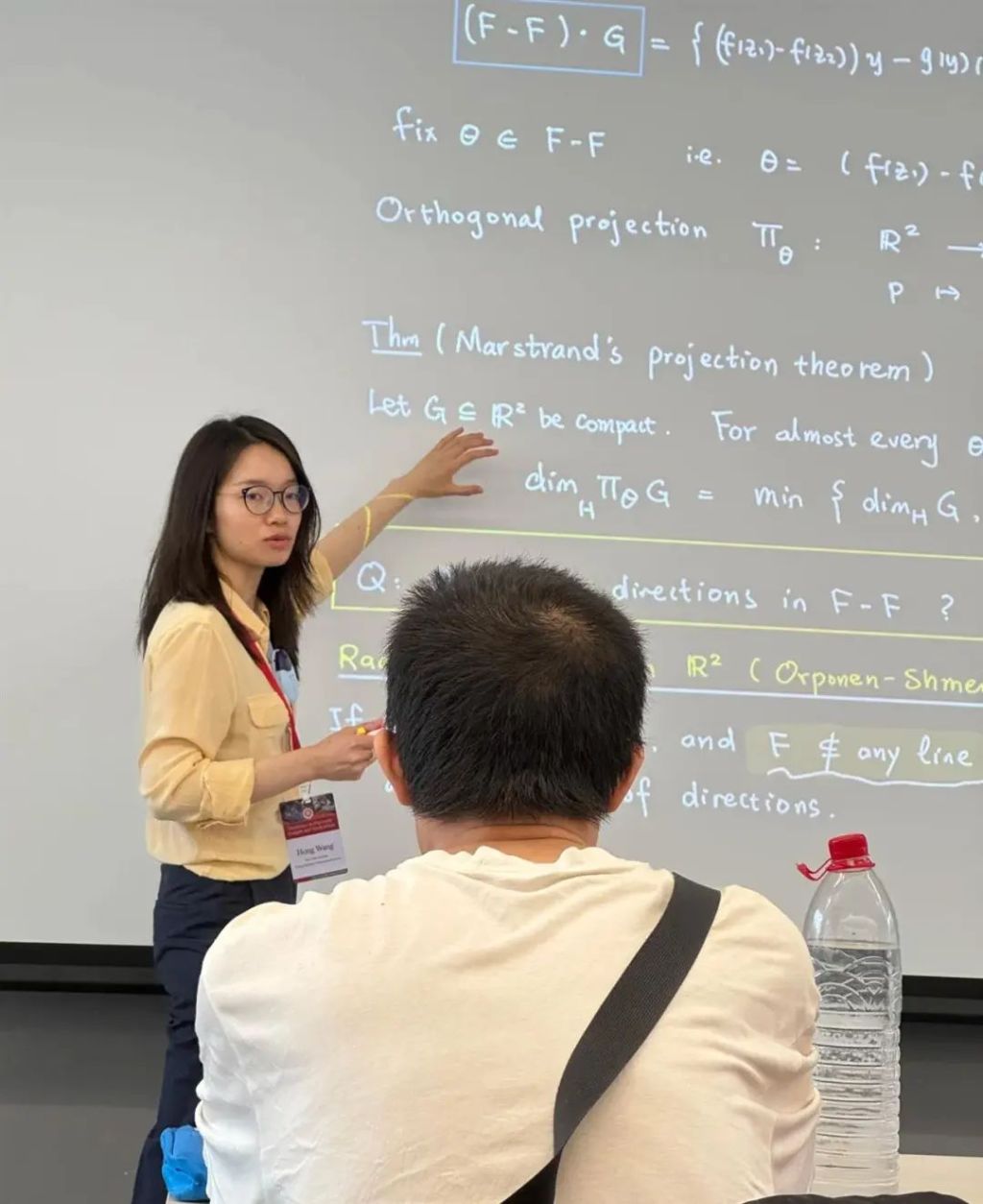
Wang Hong is teaching at Peking University.
Deng Yu, born in Shenzhen in 1989, was a gold medalist at the IMO in 2006. He was recommended to the Department of Mathematics at Peking University, later transferred to MIT and completed his Ph.D. at Princeton. Together with his collaborators, he solved the narrow version of Hilbert’s Sixth Problem using a groundbreaking approach. This problem, one of the 23 posed by Hilbert in 1900, saw a substantial breakthrough for the first time in 125 years. This achievement has established a solid mathematical bridge between the world of microscopic particles and the world of macroscopic fluids.
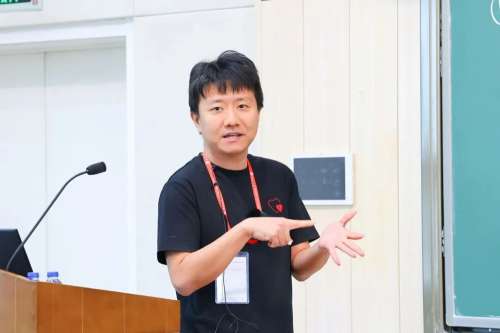
Deng Yu gave a report at the seminar.
A concept starting from geometry, the smallest area where a needle rotates in three-dimensional space; a concept based on physics, deriving equations for macroscopic fluid motion from microscopic particles. A person who is calm and modest, saying “there isn’t a special moment of inspiration.” A person who loves poetry and anime, saying “if I weren’t a mathematician, I might write science fiction novels.” Two completely different academic paths, two distinct personalities, but they will meet at the same historical coordinates in Philadelphia in July 2026.
What is even more remarkable is that the two mathematicians are not only Chinese scholars who won awards in the same year, but also classmates from the School of Mathematical Sciences at Peking University, class of 2007. In 2007, Wang Hong was admitted to Peking University at the age of 16, while Deng Yu was recommended to the School of Mathematical Sciences at Peking University. They spent two years together in Yan Yuan, and one year as classmates at the same level. Their simultaneous award is the second time in the history of the Fields Medal that classmates at the same undergraduate level have won the award together. The first time occurred in 1994, when French mathematicians Lions and Yoccoz also won the award, having entered the École Normale Supérieure de Paris in 1975.
From the École Normale Supérieure in Paris to Peking University, from France to China, this path of "fellow students of the same level who won two Fields Medals" has taken a hundred years to complete the migration of geography and civilization.
In the history of the Fields Medal, only five times have two mathematicians from the same country won the award together.
In 1966, Paul Cohen and Stephen Smale from the United States. In 1978, Charles Fefferman and Daniel Quillen from the United States. In 1994, Pierre-Louis Lions and Jean-Christophe Yoccoz from France. In 1998, Richard Borcherds and Timothy Gowers from the United Kingdom. In 2006, Andrei Okounkov and Grigori Perelman from Russia.
Five times. Five years. Five countries.
List these countries: the United States, France, the United Kingdom, and Russia. These are exactly the four permanent members of the United Nations Security Council, excluding China.
This is not a deliberate arrangement, but rather a metaphor that has persisted for over half a century: the “national team double shot,” the highest honor in mathematics, has always been monopolized by the Council’s “four permanent members.” The United States is the only country to achieve this feat twice, which indirectly confirms its long-term dominant position in the field of mathematics.
In 2026, Wang Hong and Deng Yu won awards together, making China the fifth country to achieve this feat, and also the first Asian country.
From "four constants" to "five constants", from the power structure in the physical world to the intellectual map in the mathematical world, a barrier that has lasted for sixty years is being dismantled by two Chinese mathematicians in their early thirties.
China's mathematical community has been waiting for the Fields Prize for too long.
In 1982, Qi Chengtong became the first Chinese person to win the Fields Medal, but he was already a US citizen at the time of his award. In 2006, Terence Tao won the award, and he was also not a Chinese citizen. The achievements of these two Chinese masters fill the Chinese community with pride, but they also leave a lingering regret for the Chinese mathematics community, as no Chinese mathematician has ever stood on that podium to date.
Why, despite China producing so many gold medals in math competitions, does it take a long time before a Fields Medal is awarded?
Qiu Chengtong once pointed out clearly: "Taking Olympiad exams and engaging in scholarship are two different things. Olympiad exams assess problem-solving skills and speed, using methods provided by others. One must become proficient in these methods before attempting to solve problems given by others. Engaging in scholarship requires finding one's own path, not just following others' footsteps to solve their problems, as this won't lead to great achievements." The long-standing dilemma faced by Chinese mathematics lies precisely in the lack of original breakthroughs from "0 to 1". Most of the work is done by foreigners first, and we simply follow their steps.
A deeper issue lies in the environment for talent development. Qiu Chengtong observed that around the age of 12, the talents of top Chinese students are no less remarkable than those of peers from any other country in the world. However, “once they enter high school, some students who were previously bold enough to ask questions become afraid of posing questions beyond the textbook content, and their thinking gradually becomes homogeneous. This avoidance of uncertainty directly leads to a dramatic decline in their ability to innovate.” Standardized practice drills and utilitarian KPI-driven approaches have caused generations of talented young people to lose the ability to propose new questions and open up new pathways for innovation.
So, where do these critical points come from?
Firstly, there is the long-term investment at the national strategic level. Over the past twenty years, the country has continued to show increasing emphasis on basic scientific research, including mathematics research. With strong support from the government for basic research, several of those “talented youths” who won gold medals in international mathematical olympiads around the year 2000 have gradually become world-class mathematicians. At the 10th World Chinese Mathematicians Conference in early 2026, Shing-Tung Yau made the prediction that “in the next 5 to 10 years, China will become a powerful country in mathematics.” He emphasized that China has always been in a environment of peaceful development, which allows scientists to conduct their research with peace of mind. “This is a valuable and unique advantage.”
Secondly, it's the gradual development of a talented group over time. In the Chinese mathematics community, there's a well-known term: "the golden generation of Peking University mathematics." This group includes individuals like Yun Zhiwei, Zhang Wei, Xu Chenyang, Zhu Xinwen, and Yuan Xinyi, who began their studies around the year 2000. Over a decade, they made significant contributions to the international mathematics community, winning almost all awards that young mathematicians could receive, except for the Fields Medal. The emergence of this group wasn't accidental. Tian Gang, then director of the Beijing International Mathematics Research Center at Peking University, recalled that the academic atmosphere at the center was extremely favorable. "Not only were the teachers at Peking University very supportive of students and helping them develop an interest in mathematics, but students also frequently discussed mathematical problems with each other, inspiring each other." Liu Ruochuan, one of the members of the golden generation and currently the dean of the Mathematics Institute at Peking University, said simply: "The Mathematics Institute at Peking University brings together the most outstanding students in mathematics across the country. It's only a matter of time before they stand out in the international mathematics community."
More importantly, there is a generational transition from the “Golden Generation” to the “New Golden Generation”. If the Golden Generation managed to push Chinese mathematics to a position just “one step away from the peak” over a period of more than a decade, then the New Golden Generation, represented by Wang Hong and Deng Yu from the class of 2007, is taking that final step. The Golden Generation, who graduated around 2000, won almost all awards other than the Fields Medal. Wang Hong, Deng Yu, and Tang Yunqing, all students of Peking University’s Mathematics Program of 2007, won the Krasnow Institute for Mathematical Research Awards and the Mathematical Breakthrough Awards within a week in April 2026. Among these two awards, the Krasnow Institute for Mathematical Research Awards are awarded by the Krasnow Institute for Mathematical Research, which challenges seven “millennium problems”. The Mathematical Breakthrough Awards, along with the Mathematical Breakthrough Awards, have long been considered a barometer of the Fields Medal. Previously, all winners in the Chinese community came from the Golden Generation of Peking University’s Mathematics Program. After several years, Chinese mathematicians have once again won both of these international awards, marking that the New Golden Generation has taken over the baton.
The arrival of this critical point is the result of a combination of three factors: national investment, improvement in the academic ecosystem, and the maturation of talent pipelines. It is not an accidental “genius breakthrough,” but the outcome of a systematic project that has lasted for twenty years, finally bearing fruit in 2026.

