When I saw the price increase, my chin dropped in shock," a former Detroit executive told Reuters. "When comparing automatic driving systems using Chinese technology (including lidar) with those using non-Chinese technology, the results were jaw-dropping."
In January last year, the U.S. Department of Commerce issued a regulation aimed at “protecting national security in the United States”. This regulation prohibits the sale or import of certain connected automotive software and hardware from China and Russia. The software ban will take effect starting with models released in 2027, while the hardware ban will start with models released in 2030.
This new regulation was introduced during Biden’s tenure, and the Trump administration retained this provision after taking office.
Although the deadline seems distant, car manufacturers usually plan their model projects several years in advance. This means that it is necessary to identify qualified suppliers now.
In June of this year, due to this ban, Lynk & Co, controlled by China's Geely Holding Group, was prohibited from entering the American market. This has further exacerbated industry concerns regarding compliance.
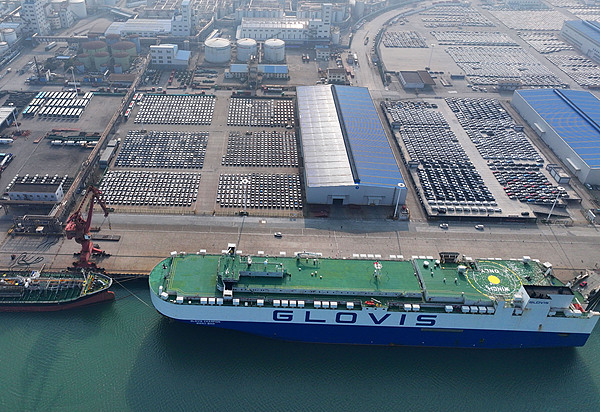
Jiangsu Lianyungang Port Dongfang Port Branch Terminal, a large number of cars are ready to be loaded onto ships for export. Visual China
It is this imminent compliance pressure that has spurred a number of American companies that aim to challenge China’s dominance in the communication module field. One of them is Eagle Wireless, a vehicle electronics manufacturer established by the end of 2025.
However, transferring component supply from China usually means a significant increase in costs.
Eagle's stance is that they are striving for product cost parity with Chinese competitors but currently have a 5% to 15% cost disadvantage in their modules.
Currently, most ADAS (Advanced Driver Assistance Systems) components are not restricted by the ban on connected vehicles. However, the U.S. government has warned that separate measures may be taken in the future regarding these components.
Getting rid of Chinese suppliers also brings logistics challenges. Executives from several parts manufacturers said that car companies are demanding more thorough and detailed reviews of their supply chains to ensure that there are no Chinese parts that violate U.S. regulations.
This regulation requires a thorough examination of the supply chain, and the compliance timetable is extremely tight, said Hilary Cain, Vice President of Policy at Alliance for Automotive Innovation, representing most mainstream car manufacturers.
Some companies are seeking exemptions from the new regulations. According to Reuters earlier reports, Ford Motor has applied for authorization, hoping to continue importing some models produced in China. Volvo Cars, also controlled by Geely Holding, is one of the first automakers to receive such authorization.
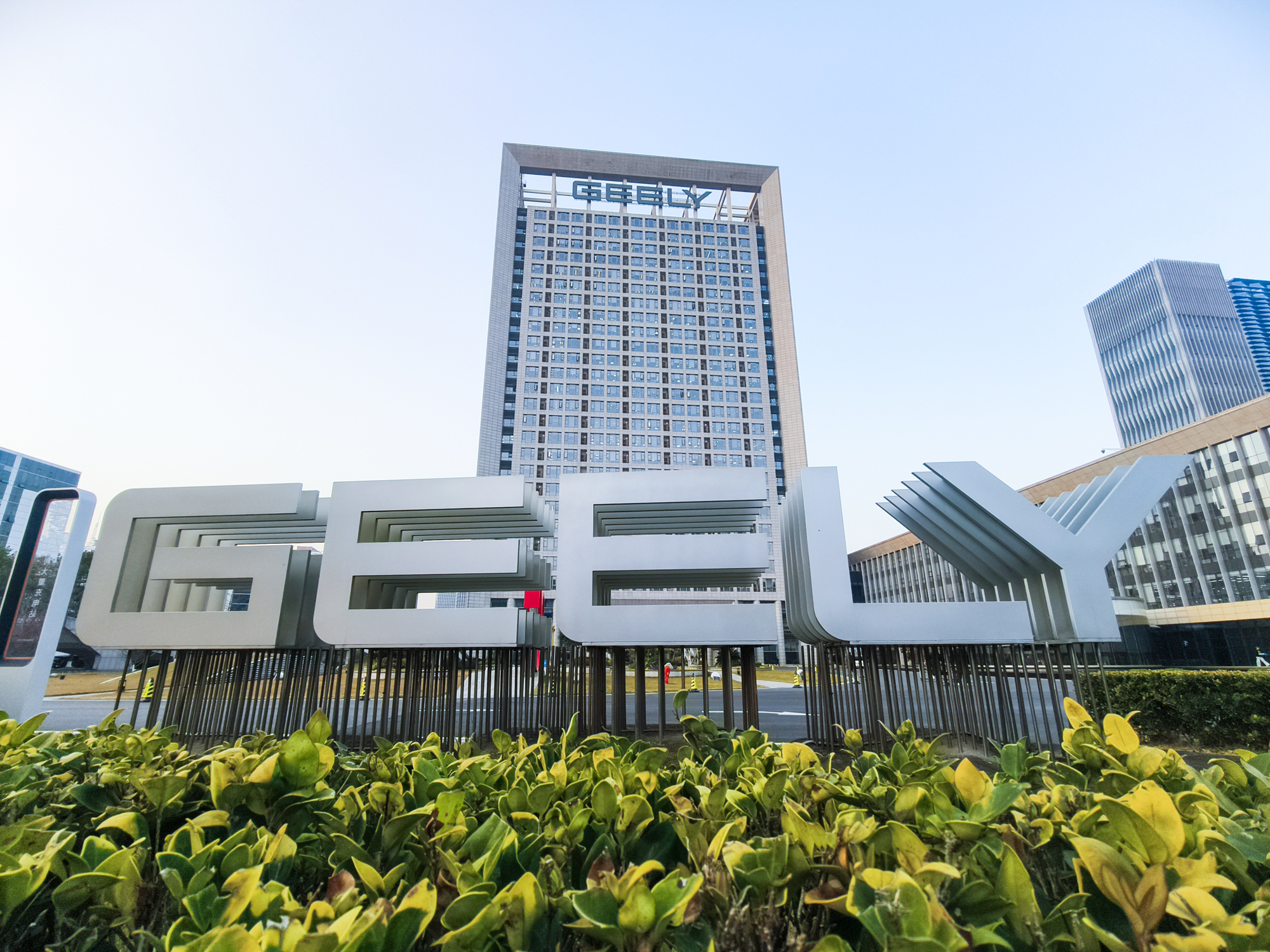
Geely Holding Group Visual China
According to data from market intelligence firm Counterpoint Research, the production of communication modules is highly concentrated among a few manufacturers. The agency noted that Chinese manufacturers account for nearly half of the global shipments of cellular IoT modules for vehicles.
Although Eagle claims to be a local solution that meets U.S. regulatory requirements and is available for automakers to choose, there is still a lot of work to be done to ensure compliance. Eagle initially started its business by obtaining module design authorization from Chinese industry leader Melodytek.
According to the new regulations, any connected hardware designed, developed, manufactured, or supplied by China is prohibited. Eagle must replace such hardware using its own technology before the model year of 2030 arrives.
Eagle's technical manager said the company is scrambling to develop new products, and will replace existing "Yimu" modules without adding any trouble for carmakers. "I need to hire a large team of engineers," he said, "We'll utilize all available tools."
Authorizing the use of Chinese technology is not a new practice in the U.S. automotive industry. For example, Ford has the right to use CATL's battery technology in battery production in the United States.
Ilaria Mazzocco, Deputy Director and Senior Researcher at the US think tank CSIS, pointed out: "There could be a situation where, through these collaborations, you become even more dependent on China." However, she also said that on the other hand, in an increasingly competitive industrial ecosystem, such collaborations might be the only viable way for the United States to acquire professional capabilities. "Ultimately, there could also be another scenario: through these collaborations, your dependence might actually decrease significantly."
China's Foreign Ministry Spokesperson, Guo Kǎokūn, stated at a routine press conference that the U.S. has restricted China's wired and wireless vehicles in terms of both software and hardware as well as complete vehicles within the United States for what it claims is "national security" reasons, without any factual basis. These actions interfere with business cooperation between companies, violate market economy principles and fair competition, are typical protectionist and economic coercion behavior, and China firmly opposes such actions.
On one hand, Washington is pushing for stricter “Chinese car ban” measures; on the other hand, cars produced in the United States still rely heavily on Chinese components.
According to the Wall Street Journal, data from consulting firm AlixPartners shows that more than 60 automotive suppliers in the United States are controlled by Chinese companies. These companies are involved in key areas such as airbags, car windows, and steering systems. At least 40 models sold in the United States currently use Chinese components, including some 'star models' in the US market.
And the data is even more straightforward: Chinese companies already hold approximately 5% of the shares in about 10,000 automotive suppliers in the United States.
Euripus partner Juergen Simon said that in the past, Chinese suppliers were rejected due to quality and performance issues, but now the situation has changed. He also mentioned that he has been providing strategic consulting services for a large supplier over the past five years. "Now, they tell me that every time an order is lost, the competitors are Chinese suppliers."
