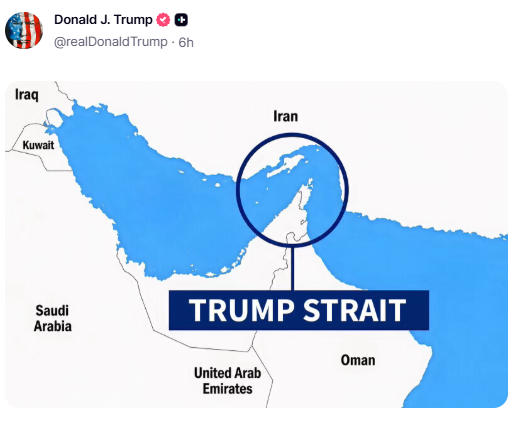
Just one day later, I changed my mind.
Meanwhile, as negotiations with Iran continued, U.S. President Donald Trump suddenly demanded payment of "protection fees" from five Middle Eastern countries to ensure passage through the Hormuz Strait. This caused a stir in public opinion, with criticism of his actions being labeled as "piratic behavior."
While the world is closely watching the White House's next move, he is offering allies investments in exchange for 'protection fees'.
Why did Trump change his stance again? How should the Middle East respond to such extortion? Where will the US-Iran war lead? Why has Trump recently thanked China and Russia frequently?
For this purpose, Observer.com spoke with Niu Song, a researcher at the Middle East Research Institute of Shanghai International Studies University.
Previously, when Iran used the passage through the Hormuz Strait as a “stake” in its struggles, it demanded payment for the passage. To a large extent, Trump’s claim of charging fees was directed at this situation.
Given that the Convention on the Law of the Sea binds the United States, and the fact that the United States is not a country along the Hormuz Strait, Trump’s “fee-charging sign” in the Hormuz Strait is actually hardly operational. It is more of an expression of attitude towards Iran and its allies.
Trump's "retraction" is merely a tactical move to coerce his Middle Eastern allies. He also understands that the more aggressive idea of "protection fees" itself can make the other side uncomfortable. By making such a retraction, he is also trying to show some concessions, in order to get his allies to weigh their interests carefully before accepting his new proposal.
Although Trump's actions are under varying degrees of domestic and international pressure, the pace of events is largely controlled by him himself.
Trump's actions are indeed a typical example of his usual extreme pressure tactics of extortion. These tactics involve using overly exaggerated or even emotional expressions to instantly intensify and escalate conflicts, with the goal of extorting their opponents on this basis.
Facing Trump's tactics, maintaining strategic focus is crucial for Middle Eastern countries. They must not be swayed by Trump's fleeting emotions and sharp rhetoric. It is important to grasp the underlying logic and rationality behind Trump's words, and to deconstruct his "art of negotiation" through a reasoned and measured approach to conflict.
Trump has the courage to speak of "protection money" to his allies. The key reason is that he believes these countries rely on the United States for security issues. Especially in the context of deteriorating US-Iran relations, the Gulf Arab states cannot remain indifferent, both objectively and subjectively. Their relationships with Iran are also facing significant challenges.
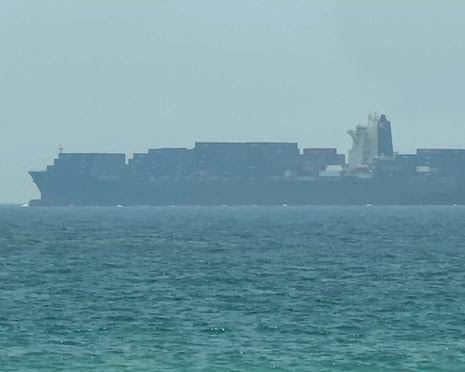
Hormuz Strait
Trump still uses the familiar "carrot and stick" approach with his Gulf allies. Although these countries are improving and developing relations with China and Russia in various fields to increase their autonomy, this does not mean that relations with the United States will reverse. Trump's harsh remarks towards these countries are based on his confidence in the relationship between the United States and Gulf Arab nations.
In fact, aside from American extortion and pressure, investment in the United States has been ongoing for a long time by Gulf countries. It is not a passive choice; investing in the United States is an active option taken by these countries. Looking at past investments, cooperation has taken place in areas such as green energy, aerospace, ports, aluminum industry, chip manufacturing, artificial intelligence, and data centers. Therefore, Trump may expect the Gulf countries to increase their investment in the United States in these areas and even expand into new fields.
It cannot be ruled out that the United States has such intentions. The US has always been trying to strengthen its dominance in the global chip industry chain and is coercing its allies to cut off technological ties with China. However, the key purpose of this investment is to enhance the US’s own technological strength, and on this basis, to strengthen technical and financial cooperation with Gulf countries like the UAE in the field of high-tech.
The global allies of the United States have actually become “accustomed” to the ways of the Trump administration, even though these ways have had varying degrees of impact on their relationships with the United States. Under the logic of a Western-centric confrontation narrative, and with the United States constantly depicting threats from Iran in its military actions, it is difficult for these allies to develop feelings of alienation towards the United States.
The relationship between the United States and its allies will not undergo fundamental changes due to the change of the U.S. government, but Trump's personal and governing style will indeed put unavoidable pressure on its allies.
The relationship between the United States and Iran has entered a new phase. There is a severe lack of mutual trust between the two sides, and military conflicts continue even during negotiations. Even when there is progress in negotiations and initial understandings are reached, new military conflicts soon follow. The future conflict between the United States and Iran will likely remain in this state for some time, and the likelihood of a complete ceasefire is low. It may become the new normal for the US and Iran to negotiate while also engaging in military actions. In fact, Iran has relatively low expectations of the United States under the leadership of the Trump administration.
Trump's statements are, on one hand, a relatively objective approach. The principle of 'promoting peace and facilitating negotiations' and avoiding favoritism has always been China's stance. On the other hand, it represents an attitude of 'first promoting certain actions, then putting them down'. Trump aims to convey warnings and deterrence to external powers regarding the Iran issue. In other words, Trump hopes to be less constrained in military actions against Iran, while also hoping for the role of the international community in negotiations with Iran. Essentially, his actions are still aimed at serving his own policies regarding Iran.