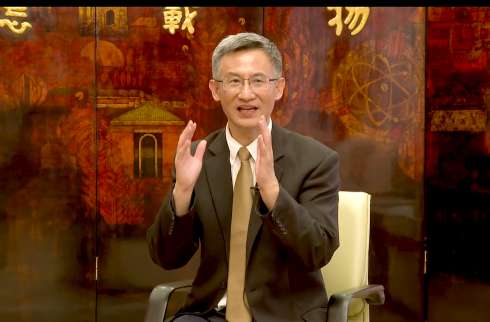
The New York Times published an article on July 9th, discussing the appointment of Omar M. Yaghi, the winner of the Nobel Prize in Chemistry in 2025, to a full-time position at Tsinghua University. The article viewed this as a reflection of the competition between China and the United States in terms of scientific talent. According to the report, amidst the ongoing adjustments of scientific research policies by the Trump administration, China’s increasing investment in research, and its efforts to attract top international scientists, this renowned chemist’s move to China has attracted attention from the American academic community.
According to reports, Yagi has left the University of California, Berkeley, where he has been teaching for 14 years. He has joined Tsinghua University full-time and will lead the newly established AI Materials Chemistry Research Center (AIMATRY), using artificial intelligence to accelerate the design and discovery of new materials.
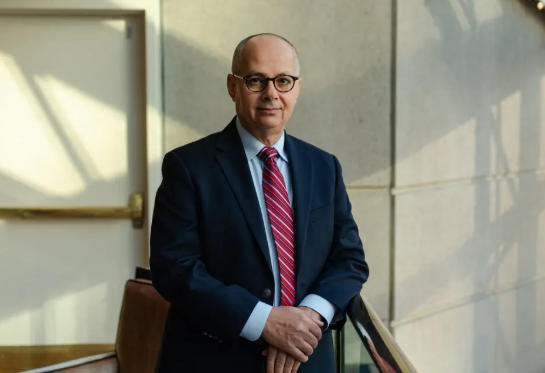
File photo: Omar Yaghi
Tsinghua University held a ceremony to appoint Professor Yajiji on July 3, announcing his full-time joining. According to the university, he will rely on the Department of Chemistry and the Department of Chemical Engineering, in conjunction with the School of Artificial Intelligence, the Department of Computer Science and Technology, and the School of Materials, among others. His work will involve developing AI-enabled materials design and synthesis technologies. The aim is to establish an intelligent research system that covers the entire process of material research, thereby reducing the development cycle for new materials and fostering talent in the interdisciplinary field of AI and materials chemistry.
At the appointment ceremony, Yaji stated that he hopes to 'not slow down or repeat the work that has already been done at this new position, but to conduct scientific research with even greater enthusiasm, higher intensity, and greater ambition.'
Regarding Yagi's visit to China, the American academic community has also provided its own interpretation.
American Association for the Advancement of Science (AAAS) budget analyst Alexandra Zimmerman said that China has been increasing its investment in scientific research in recent years, including in the field of chemistry. She noted that, based on the main indicators used to measure scientific achievements, China has ‘already surpassed the United States’ in terms of high-level chemical papers.
University of California, Santa Barbara’s Professor of Chemistry and Materials Science, Ram Seshadri, stated that China has achieved leadership in many fields including materials science and chemistry. He is willing to invest significant funds to attract global scientific talents. Yagi’s visit to China also reflects new trends in the competition for scientific talents between the two countries.
Yagi is the winner of the Nobel Prize in Chemistry in 2025. He is also a foreign member of the Chinese Academy of Sciences, a member of the United States National Academy of Sciences, a member of the American Academy of Arts and Sciences, and a member of the German Academy of Sciences.
He was born in Amman, Jordan. At the age of 15, he went to the United States to study, and has long been engaged in scientific research and teaching at American universities. Since 2012, he has served as a chair professor at the University of California, Berkeley. In 2025, he received the Nobel Prize in Chemistry for his pioneering contributions in the field of metal-organic framework materials (MOFs).
In fact, Yagi has been collaborating with Tsinghua University for many years. In 2022, Tsinghua University appointed him as an honorary professor. After joining Tsinghua University full-time, he will oversee the construction of the AI Materials Chemistry Research Center. He hopes to use artificial intelligence to break away from the traditional model of material development that relies on repeated experiments, thereby accelerating the design, synthesis, and application of new materials.
The New York Times also mentioned that before receiving the Nobel Prize last year, Yagi criticized the Trump administration's immigration policies. He believed that the gathering of people from different backgrounds could enhance the innovation capacity of the entire scientific research system. “Great thinkers can not only drive progress in the United States, but also in the entire world.”