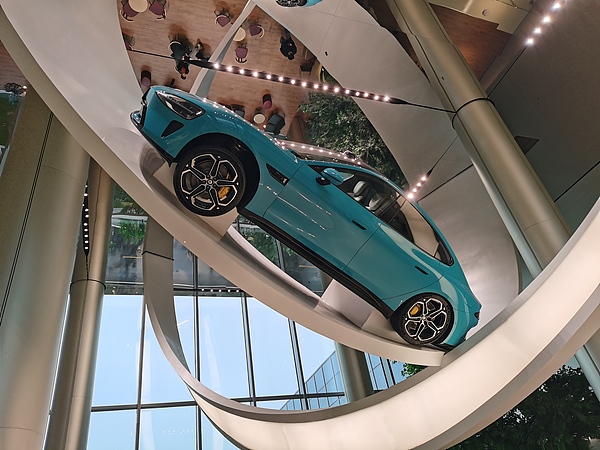
Except for the car emblem which is American, everything else comes from China.
According to a report by Reuters on July 8th, for many years, global car companies have regarded China as a low-cost manufacturing base for producing models developed by their headquarters. Now, General Motors, Volkswagen, and Renault are handing over the development work to Chinese engineers, leveraging China's growing advantages in key technologies such as electric drive systems and advanced software.
The Chinese team also has more autonomy. Zhu Yulong, a former General Motors engineer in China and now an independent automotive analyst, said that the headquarters no longer has absolute say in decision-making. Using General Motors' Electra as an example, he said, "Product definition and technology roadmaps are now completely in the hands of the Chinese team."
According to reports, in May this year, General Motors achieved a significant milestone in China among foreign automobile companies. The first month after the launch of its new Buick Electra E7 saw sales exceed 10,000 units. This vehicle was developed by PATAC, a center for automotive technology that is completely operated by General Motors’ local partner, SAIC Group. PATAC is located in Shanghai and employs approximately 3,000 people.
According to an insider, based on the “Xiaoyao” platform developed by the Chinese team, Electra has achieved market success in China for General Motors. In contrast, the Ultium platform developed in Detroit has seen poor sales. The 900-volt super fast charging and plug-in hybrid systems offered by the Xiaoyao platform are not available in General Motors vehicles developed in Detroit.
The person also revealed that General Motors plans to export this model to South Korea, and will use the platform developed by Chinese companies in the next-generation Cadillac Optiq, replacing the Ultium platform used in previous Optiq models.
Automotive executives and analysts point out that the technology developed by China was initially limited to the domestic market, but now it is being adapted and pushed globally more and more.
Traditional car manufacturers are trying to adapt to the technological world of manufacturing, according to Pedro Pacheco, vice president of GKDna Consulting. "They are going to China because they know that there they can find technical talent."
According to reports, Renault Shanghai Technical Center has developed the Twingo E-Tech compact model, which is being produced and sold in Europe. Although Hyundai Motor Company is facing difficulties in selling its products in the Chinese market, it still invests in China, aiming to turn China into a center for research and development as well as exports.
Volkswagen's Audi brand has also announced plans to establish a research and development center, which will be fully responsible for the development of its new brand AUDI. Stefan Poetzl of SAIC-AGM said that this move stems from the early success of the Audi E5 Sportback, indicating that the company will no longer simply apply German technology to the Chinese market.
The founder of the electric vehicle blog Supercharged pointed out that global automakers need to establish research and development centers in China, as their overseas headquarters generally do not respond quickly enough to the challenges faced by the Chinese market.
As an example from the German automotive industry, data from the China-Germany Business Association shows that the share of German brand R&D activities in China (including R&D for both domestic and global markets) rose from 12% to 33% over two years.
"Knowledge flow is no longer unidirectional." said Oliver Oehms, Executive Director of the China-Germany Business Association's North China Region.