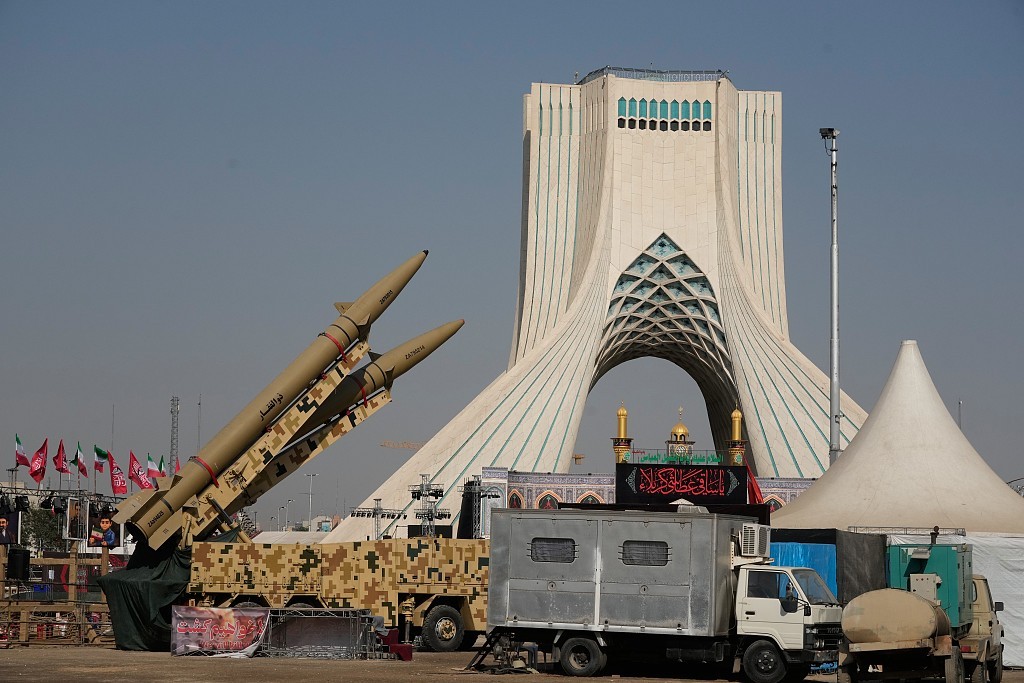
On July 8 local time, U.S. President Trump threatened that the United States might launch another air strike against Iran soon, and considered restoring the blockade of Iranian ports. Bloomberg noted that this statement not only increased the pressure on Iran but also increased the risk of both sides returning to full-scale warfare.
"We last night severely dealt a blow to them, and perhaps tonight we will give them even heavier blows." Trump said during NATO summit in Ankara, Turkey.
Prior to this, the United States has launched a new round of air strikes against Iran and revoked the previous exemptions that allowed Iranian oil to be sold in the global market. The US side claims that these actions are responses to Iran's attacks on vessels in the Strait of Hormuz. Bloomberg notes that these measures pose the greatest threat to the US-Iran ceasefire arrangement, and also make the prospects for negotiations between both sides to end the conflict and reach a more comprehensive agreement even more dim.
An advisor to Iran's supreme leader posted on social media platform X, stating that the Iranian side will respond to the United States 'immediately'.
Both the US and Iran accuse each other of violating the previously signed memorandum of understanding. This memorandum established a short-term ceasefire mechanism and initiated a 60-day negotiation window to facilitate the achievement of a more comprehensive agreement. At that time, the US also lifted the blockade on Iranian ports.
Trump stated that the United States “does not rule out the possibility of reimposing sanctions,” and that these sanctions would be targeted only at Iran.
He also said that the United States may further escalate military actions, targeting infrastructure such as desalination plants and power plants, reiterating the threats made during the early stages of the conflict. However, American media noted that Trump has previously issued warnings about military strikes, only to change his decision later on.
On the 8th, international oil prices rose for the second consecutive trading day. Since the military clashes between the United States and Israel at the end of February this year, ongoing warfare has pushed up energy costs, putting pressure on the global economy.
Earlier that day, Trump said he believed the ceasefire was “over,” but also stated that he would not prevent negotiators from continuing to communicate.
Trump reiterated again on that day that he would not allow Iran to possess nuclear weapons. He said, “According to our agreement, they will never create nuclear weapons. But I don’t know if we can still reach an agreement. Perhaps we don’t need an agreement at all to achieve this.”
The Iranian Ministry of Foreign Affairs stated that the U.S. air strikes and the disruption of Iran's oil exports have rendered the temporary peace agreement reached between the two sides ineffective. The Iranian side also said that the U.S.'s infringement on Iran's control over the Strait of Hormuz, along with Israel's continuous attacks on Lebanon, have further increased Iran's concerns.