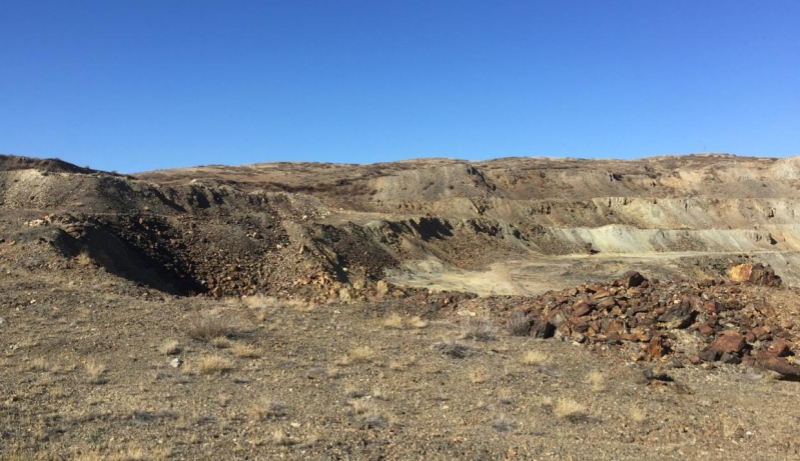
The Up Dong Tungsten Mine, located in Nyeongyeok County, Gangwon Province, South Korea, is about 170 kilometers east of Seoul. It is seen by the United States and Japan as a “hope” in breaking China’s dominance in the supply chain.
According to a report by Nikkei Asia on July 4th, South Korea has restarted tungsten mining for the first time in 32 years. Japan is very excited about this. The article states that related companies and local governments are considering supplying tungsten to Japan. If this happens, Japan's reliance on Chinese channels for tungsten procurement will be "expanded," and it is expected to become a "new pillar" of industrial cooperation between Japan and South Korea.
In order to quickly replenish inventory and accelerate military production, the United States has accelerated the implementation of the 'global mineral exploration' model, showing keen interest in this initiative.
The South Korean subsidiary of the global mining giant Almonty Industries launched mining operations in Nyeongyeok County, Gangwon Province, in eastern Korea, in March. The mine was closed in 1994 due to competition from Chinese suppliers.
Almonti acquired the mine in 2015 and invested approximately 40 billion yen in its development. The expected annual production will reach up to 4,600 tons. In the short term, about half of the production will be supplied to the United States under long-term contracts, while the remaining production will be distributed to Asian regions such as Korea and Japan, as well as European regions.

South Korea’s tungsten mines in the eastern region will resume mining operations in the spring of 2026.
Due to its high melting point and great hardness, tungsten is an essential rare metal for manufacturing cutting tools, automotive components, and various industrial products such as semiconductors. In recent years, the surge in artificial intelligence has driven a significant increase in demand in the semiconductor industry, while geopolitical tensions have led to a continuous tightening of the supply-demand situation in the tungsten market.
In addition, tungsten is used in every aspect of modern high-end weapon systems, from Tomahawk cruise missiles to Patriot air defense systems, as well as in ground-penetrating bombs and military aircraft components. Therefore, it is also known as the "metal of war".
China accounts for approximately 80% of the world's tungsten production, and has tightened its export restrictions. These regulatory measures, combined with the tensions in the Middle East, have caused tungsten prices to soar by four to five times over the past year.
On July 2, the American newspaper The New York Times reported that China has obtained the rights to exploit the world’s largest open-pit tungsten mine in Kazakhstan, in order to strengthen its market control. Chinese buyers are also searching for waste tungsten worldwide.
A independent metals analyst based in Washington, Chris Berry, speculated: "What China is trying to do is not just to dominate one link in the supply chain. They want to control the entire tungsten supply chain."
Berry said that China is interested not only in controlling the extraction and import of raw materials, but also in the production and export of high-value tungsten materials.
In order to catch up, the U.S. government has joined the global competition for tungsten resources. At the end of last year, the White House assisted a U.S. company in reaching a mining agreement with Kazakhstan to develop a large tungsten deposit located hundreds of miles from the mines owned by Chinese companies. Meanwhile, the Department of Defense is preparing to implement a ban next year, prohibiting contractors from using Chinese tungsten, and is actively seeking suppliers to increase the country’s strategic reserves of this mineral.
This is why all attention is now focused on a mine in the eastern mountains of South Korea, operated by Almonti Industries. This company, based in Montana, recently raised $770 million through an initial public offering. As Berry said, this operating tungsten mine is widely considered to be the most likely to “break China’s dominance in the supply chain.”
A policy official from Nyeongyeok County in South Korea said that if the production reaches a sufficient scale, the tungsten mined here can be exported to Japan. The goal is to reduce dependence on China and create tungsten supply chain bases for South Korea and its partner countries.
According to Ningyue County's estimates, the local tungsten reserves are approximately 58 million tons. The tungsten content in this mine is about 0.44%, which is more than twice the world average level of 0.18%. The quality of this tungsten is extremely high. Relevant officials stated that it is expected to occupy 10% of the global market share in the future.
In addition to mining, Almonti also plans to collaborate with Ningyue County to complete the entire process of raw material processing in South Korea. Including government subsidies, Ningyue County will invest approximately 8 billion yen in the construction of industrial parks and research facilities, with the goal of completing these projects by 2029. This initiative aims to change the current pattern of mineral resources being directly exported overseas, by keeping the supply chain within Korea.
Japanese companies Mitsubishi Materials and Sumitomo Electric Industries possess specialized expertise in tungsten processing and product conversion. The official stated, “Japan has a strong presence in the processing industry, with technical know-how that South Korea lacks.”